
Japan Earthquake Rescue Operations:
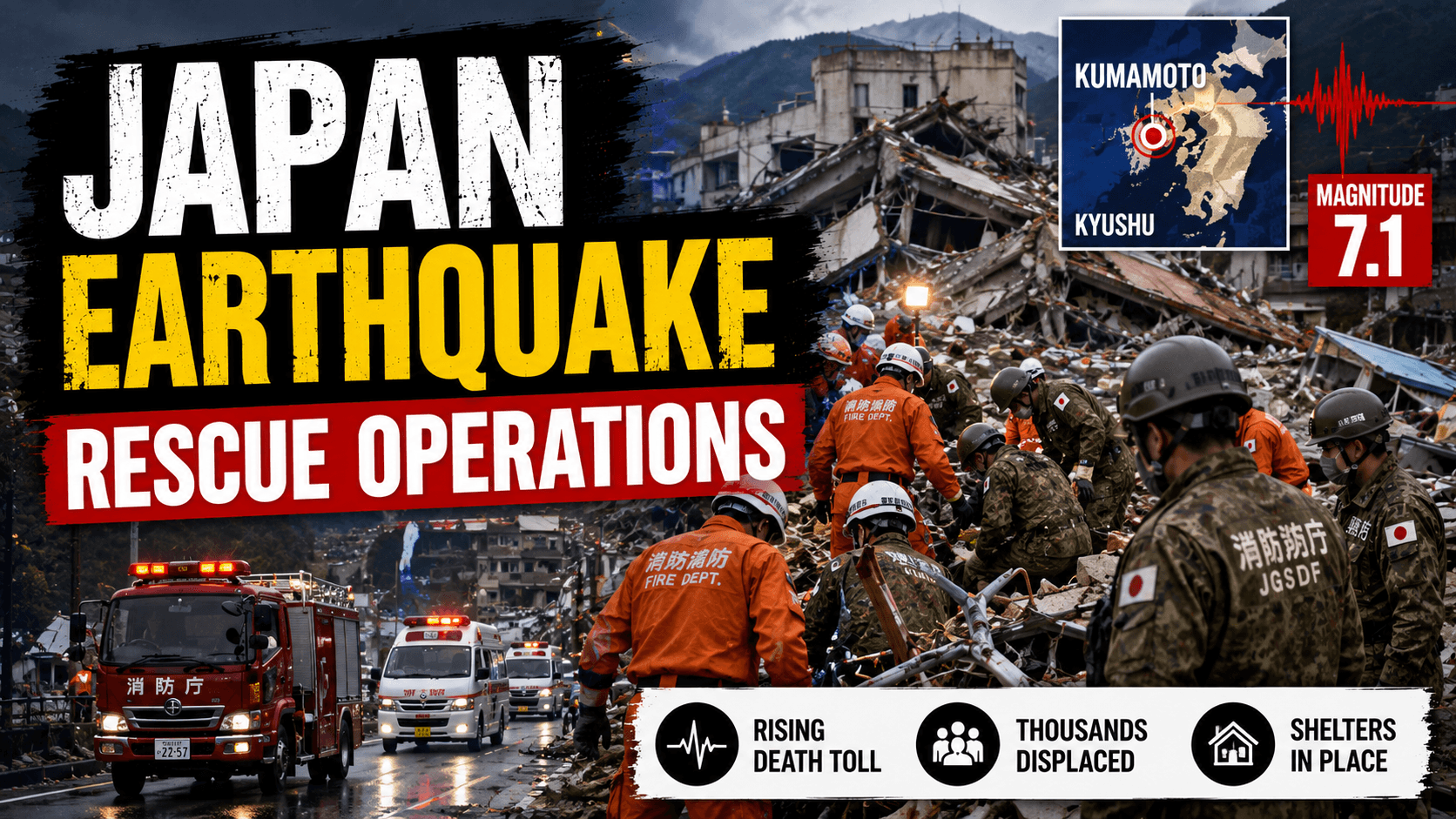
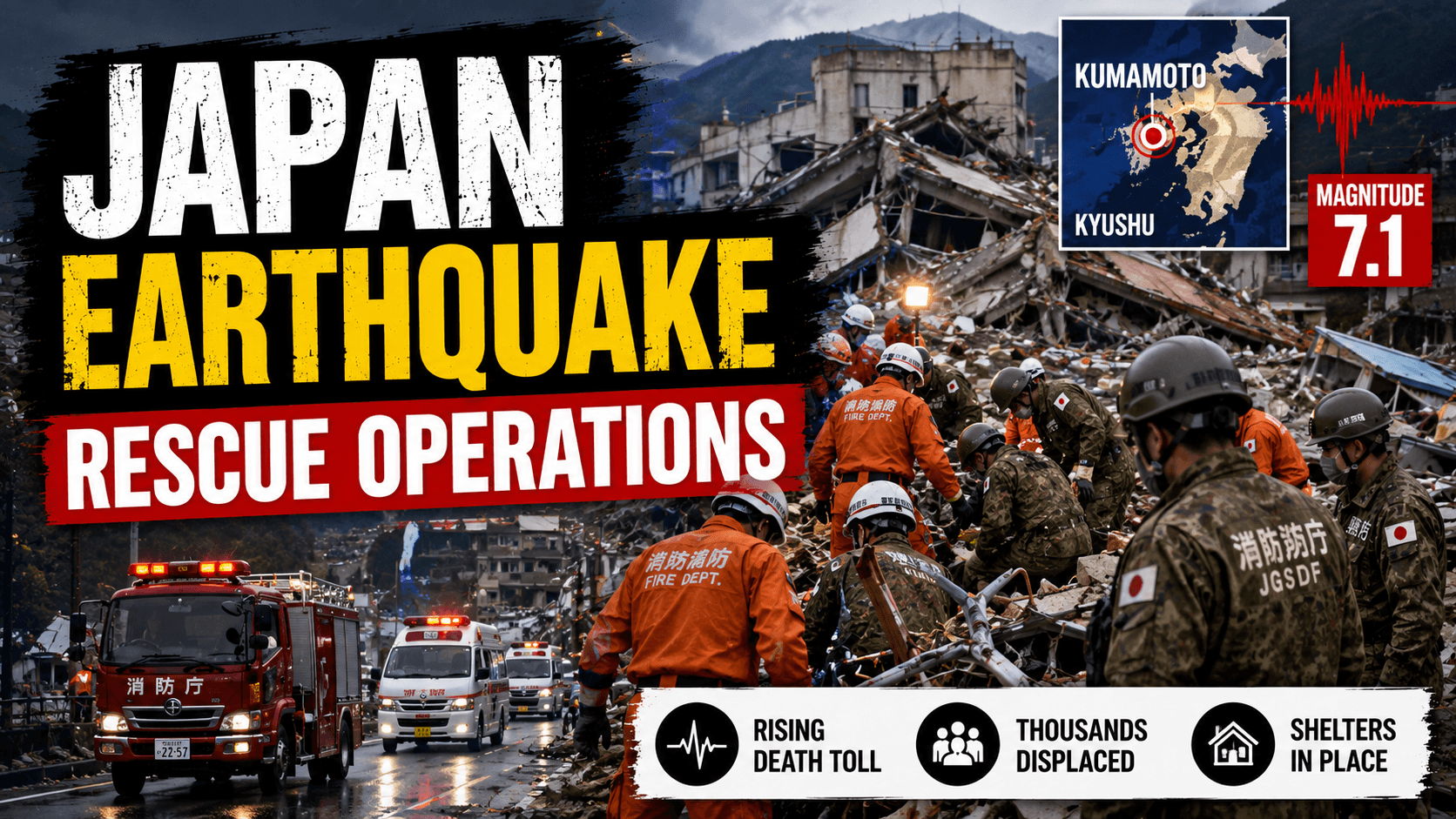
apan's emergency response teams are continuing intensive rescue operations following a powerful 7.1-magnitude earthquake that struck Kumamoto Prefecture on the southern island.
Siddhaanth Raghav
Japan Earthquake Rescue Operations: Search for Survivors Continues as Death Toll Rises After Powerful Kumamoto Quake
Thousands of Rescue Workers Race Against Time as Aftershocks Hamper Relief Efforts in Southern Japan
Japan's emergency response teams are continuing intensive rescue operations following a powerful 7.1-magnitude earthquake that struck Kumamoto Prefecture on the southern island of Kyushu, leaving widespread destruction, multiple casualties, and thousands displaced.
Firefighters, police officers, Japan Self-Defense Forces (JSDF), and medical personnel have been deployed across the affected region to search for survivors trapped beneath collapsed buildings and damaged infrastructure. Rescue operations remain underway despite frequent aftershocks, damaged roads, and difficult weather conditions that continue to complicate emergency efforts.
The earthquake has once again highlighted Japan's vulnerability to seismic disasters, even as the country maintains one of the world's most advanced earthquake preparedness systems.
Powerful Earthquake Strikes Kumamoto
The earthquake struck Kumamoto Prefecture, shaking buildings across Kyushu and triggering panic among residents.
Strong tremors were felt in neighboring prefectures, causing structural damage to homes, commercial buildings, roads, bridges, and public infrastructure.
Authorities immediately activated Japan's disaster response system, dispatching emergency services and coordinating large-scale rescue operations in the hardest-hit communities.
Officials warned residents to remain alert for additional aftershocks that could further weaken damaged structures.
Rescue Operations Continue Around the Clock
Thousands of emergency responders have been working continuously to locate survivors trapped beneath collapsed buildings.
One of the most challenging rescue sites has been a partially collapsed shopping mall, where rescue teams have been carefully removing debris while using thermal imaging equipment, search dogs, and listening devices to detect signs of life.
Heavy machinery is being used where conditions permit, while specialized rescue personnel are manually clearing unstable structures to avoid further collapses.
Officials say every hour remains critical as search teams continue their efforts.
Self-Defense Forces Join Emergency Response
Japan's Self-Defense Forces have deployed thousands of personnel to assist local authorities.
Their responsibilities include:
- Search and rescue operations.
- Medical assistance.
- Transportation of emergency supplies.
- Debris removal.
- Establishment of temporary shelters.
- Restoration of essential services.
The coordinated response reflects Japan's well-established disaster management framework, which brings together national, prefectural, and local agencies during major emergencies.
Casualties and Evacuations
Authorities have confirmed multiple fatalities and dozens of injuries following the earthquake.
Thousands of residents have been evacuated to emergency shelters established in schools, community centers, and public buildings throughout the affected region.
Many families remain unable to return home because of structural damage or ongoing safety inspections.
Emergency shelters are providing food, drinking water, blankets, medical care, and psychological support to displaced residents.
Officials continue assessing damaged neighborhoods while urging people not to enter unsafe buildings.
Aftershocks Create Additional Challenges
Rescue operations have been repeatedly interrupted by strong aftershocks.
These secondary earthquakes increase the risk of additional building collapses, landslides, and falling debris, forcing rescue workers to pause operations whenever conditions become unsafe.
Seismologists warn that aftershocks may continue for days or even weeks following a major earthquake.
Residents have been advised to prepare emergency supplies and follow evacuation guidance issued by local authorities.
Damage to Infrastructure
The earthquake caused significant damage to transportation and public infrastructure across parts of Kumamoto Prefecture.
Authorities reported:
- Cracked highways and local roads.
- Damage to bridges.
- Disruptions to railway services.
- Temporary suspension of some manufacturing operations.
- Power outages affecting thousands of households.
- Interruptions to water supply in several communities.
Engineers are conducting structural inspections before transportation networks fully reopen.
Hospitals and Emergency Services Under Pressure
Hospitals across the affected region have activated emergency protocols to treat injured residents.
Medical teams continue caring for patients suffering from trauma, fractures, and other earthquake-related injuries.
Emergency responders have also established temporary medical stations in evacuation centers to provide immediate assistance for displaced families.
Officials have appealed for blood donations and medical support where required.
Why Japan Is Vulnerable to Earthquakes
Japan sits along the **Pacific Ring of Fire**, one of the world's most seismically active regions.
Several major tectonic plates meet beneath the Japanese archipelago, making earthquakes a frequent natural hazard.
As a result, the country has invested heavily in:
- Earthquake-resistant building standards.
- Nationwide early warning systems.
- Public disaster preparedness education.
- Emergency evacuation planning.
- Advanced monitoring technology.
Despite these measures, powerful earthquakes can still cause extensive damage when they occur near populated areas.
Government Response
The Japanese government has established an emergency task force to coordinate rescue and recovery efforts.
Officials are working closely with local governments to:
- Assess damage.
- Restore essential infrastructure.
- Deliver humanitarian assistance.
- Support displaced residents.
- Monitor ongoing seismic activity.
Prime Minister Sanae Takaichi has expressed condolences to the families of those who lost their lives and pledged that every available resource would be used to support rescue operations and recovery efforts.
International partners have also offered assistance should additional support become necessary.
Long Road to Recovery
While rescue operations remain the immediate priority, authorities are already preparing for the recovery phase.
Reconstruction is expected to include rebuilding homes, repairing transportation infrastructure, restoring utilities, and providing financial assistance to affected communities.
Experts note that recovery from major earthquakes often takes months or even years, depending on the scale of the damage.
The resilience demonstrated by local communities and emergency responders will play a crucial role in rebuilding the affected areas.
Conclusion
Japan's rescue operations following the powerful Kumamoto earthquake remain focused on locating survivors and assisting thousands of displaced residents. Despite challenging conditions created by aftershocks and damaged infrastructure, emergency responders continue working around the clock to save lives and restore essential services.
The disaster serves as another reminder of the constant seismic risks facing Japan, while also highlighting the country's highly organized disaster response capabilities. As rescue efforts continue and the full extent of the damage becomes clearer, attention will gradually shift toward recovery, reconstruction, and supporting communities affected by one of the country's most significant earthquakes in recent years.
Get More News on Swaggbuzz