India-China Power Gap Narrows to Eight-Year Low, PM Modi Ranked Second in Asian Leadership
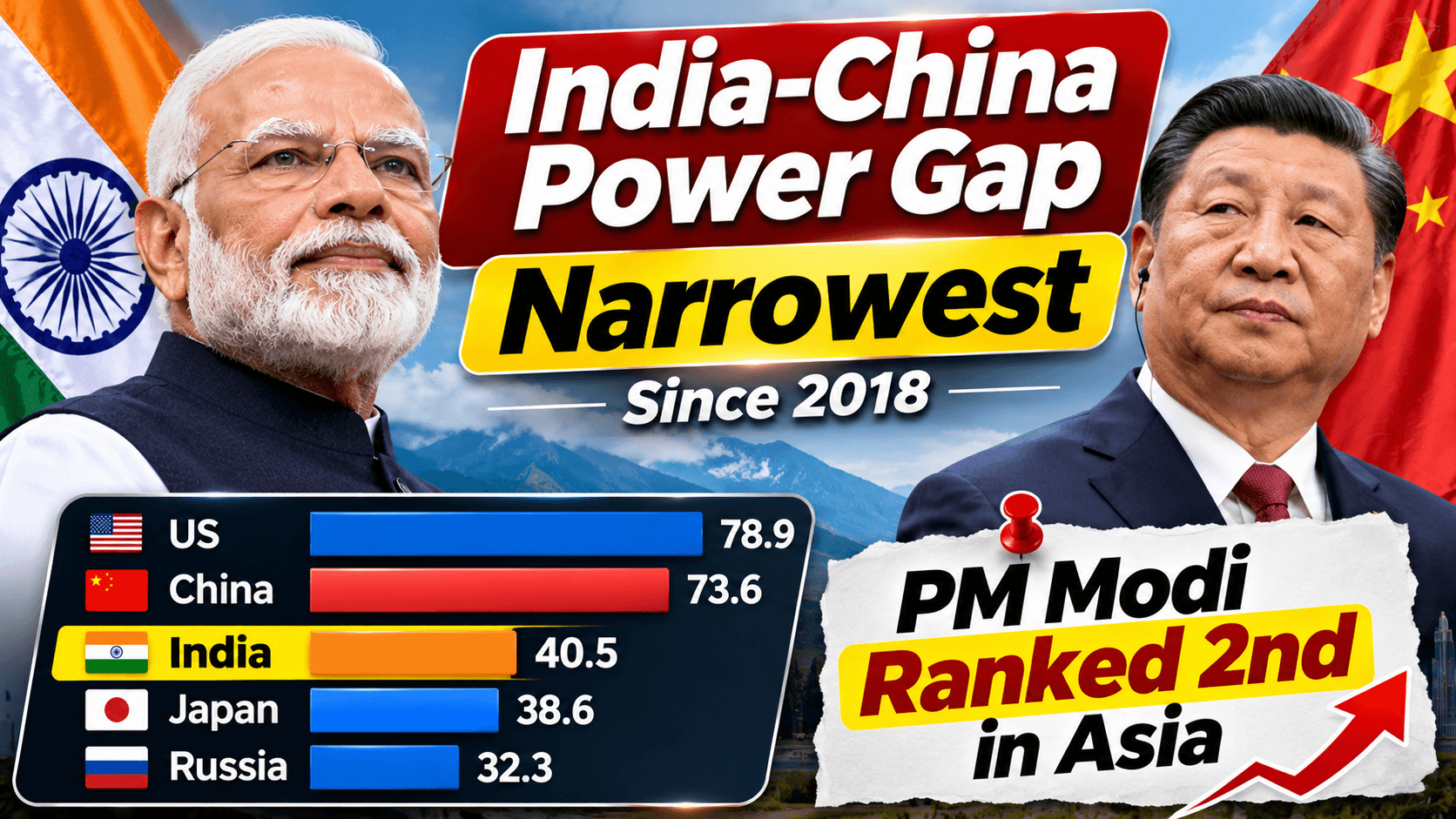
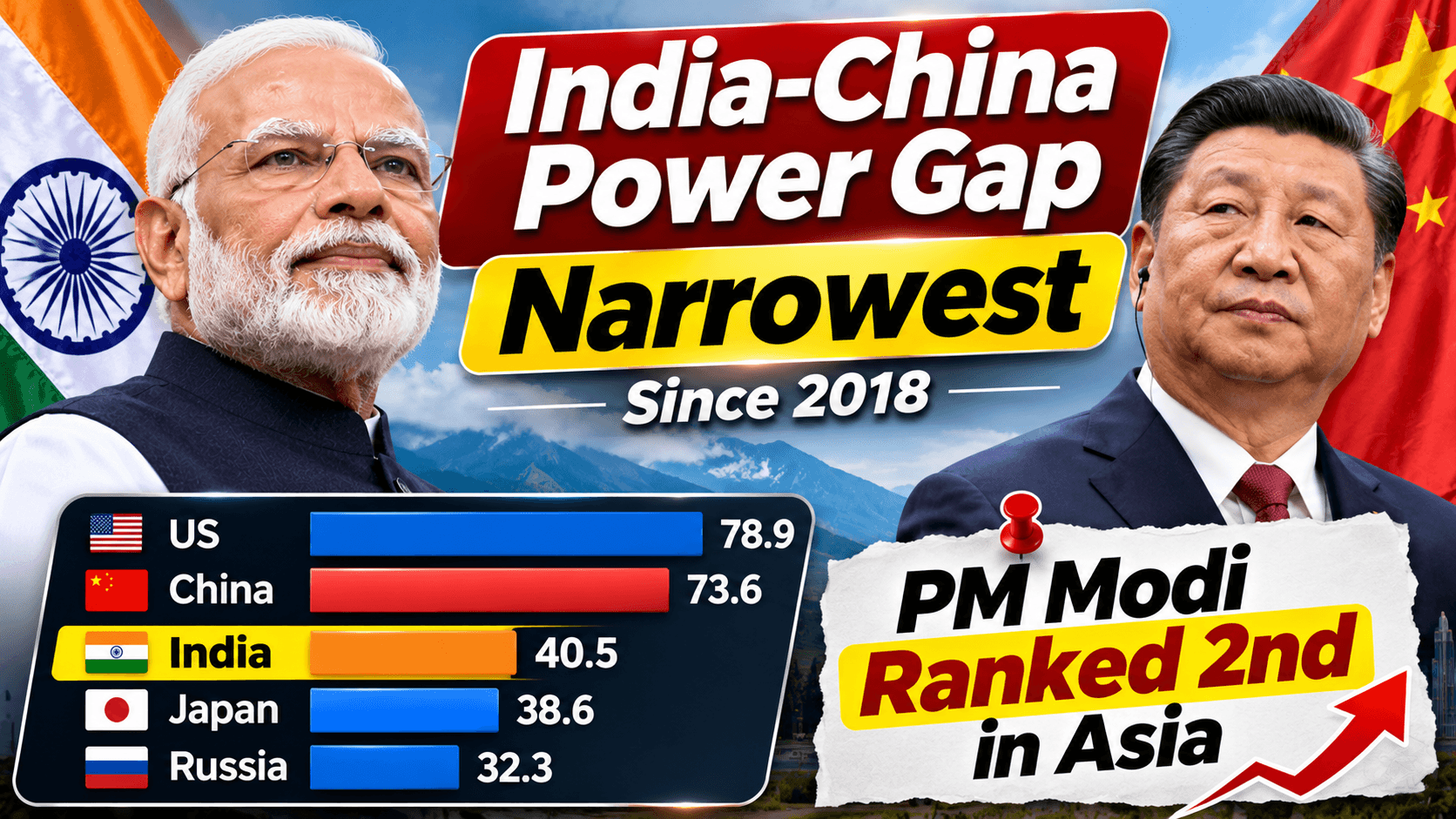
India has strengthened its position in Asia's geopolitical landscape, with the power gap between India and China narrowing to its lowest level since 2018, according to the 2026 Asia Power Index released by Australia's Lowy Institute on November 22.
The report also ranked Prime Minister Narendra Modi as the second-most effective regional leader in Asia, behind Chinese President Xi Jinping. Modi's position improved by three places compared with the previous year's assessment.
The findings highlight India's growing regional influence, although China continues to maintain a substantial lead in overall power.
India Retains Third Position in Asia Power Rankings
According to the 2026 Asia Power Index, India retained its position as the third-most powerful country in the region, behind the United States and China.
India recorded an overall power score of 40.5 out of 100, representing an increase of 0.5 points compared with the previous year.
The top five countries in the index were:
- United States – 78.9 points
- China – 73.6 points
- India – 40.5 points
- Japan – 38.6 points
- Russia – 32.3 points
India's improved score reflects developments across several areas, including diplomatic influence, cultural engagement, defence partnerships and future resources.
India-China Power Gap Reaches Its Narrowest Level Since 2018
One of the major findings of the report is that the difference between India's and China's overall power scores has narrowed to its smallest level since the index was introduced in 2018.
However, the report makes clear that China remains considerably more powerful in overall terms, with its comprehensive power estimated to be approximately 80% higher than India's.
India's progress indicates an improvement in its regional influence, but significant differences remain in economic and military capabilities.
PM Modi Ranked Second Behind Xi Jinping
Another important finding concerns regional political leadership. The Lowy Institute's expert assessments placed Narendra Modi second among Asia's most effective regional leaders, behind China's Xi Jinping.
Modi improved three positions compared with the 2025 assessment. The report associated this improvement with India's diplomatic continuity and its ability to maintain regional engagement during a period of international uncertainty.
However, the assessment also noted weaker perceptions of Modi's global leadership and strategic ambition, partly linked to India's relatively low diplomatic profile during the Gulf conflict.
India's Strengths and Challenges
The report identified progress in several areas of India's regional influence.
India's cultural influence score increased to 43.8 points, while its defence networks score reached 18.6 points. Greater defence engagement with Southeast Asian countries and BrahMos missile sales contributed to improvements in its regional defence relationships.
India's diplomatic influence remained its strongest measure at 70.3 points.
At the same time, economic capability remained an area of concern. India's score in this category declined to 26.4 points, reflecting factors including currency weakness, changes in international economic measurement and a reduction in outbound investment.
What Is the Lowy Institute Asia Power Index?
The Asia Power Index is an annual assessment published by Australia's Lowy Institute. Introduced in 2018, it evaluates the distribution of power and influence across the Indo-Pacific region.
The 2026 edition assesses 27 countries and territories using 131 indicators across eight major measures:
- Economic capability
- Military capability
- Resilience
- Future resources
- Economic relationships
- Defence networks
- Diplomatic influence
- Cultural influence
The index examines not only the resources countries possess but also their ability to influence regional and international developments.
Conclusion
The 2026 Asia Power Index highlights India's expanding influence in Asia and its narrowing power gap with China. India's third-place position and the improved assessment of Prime Minister Narendra Modi's regional leadership reflect important developments in the country's international standing.
Nevertheless, the report also identifies continuing economic and strategic challenges. While India has strengthened its position since the index began in 2018, China and the United States continue to hold considerably higher overall power scores.
The findings provide an updated picture of Asia's changing geopolitical balance and India's growing role in the region.
Get More News on Swaggbuzz
Author
About the author
Siddhaanth Raghav
Topics