Trump, Xi and Putin Hold Historic Trilateral Summit in China, Issue Joint Declaration
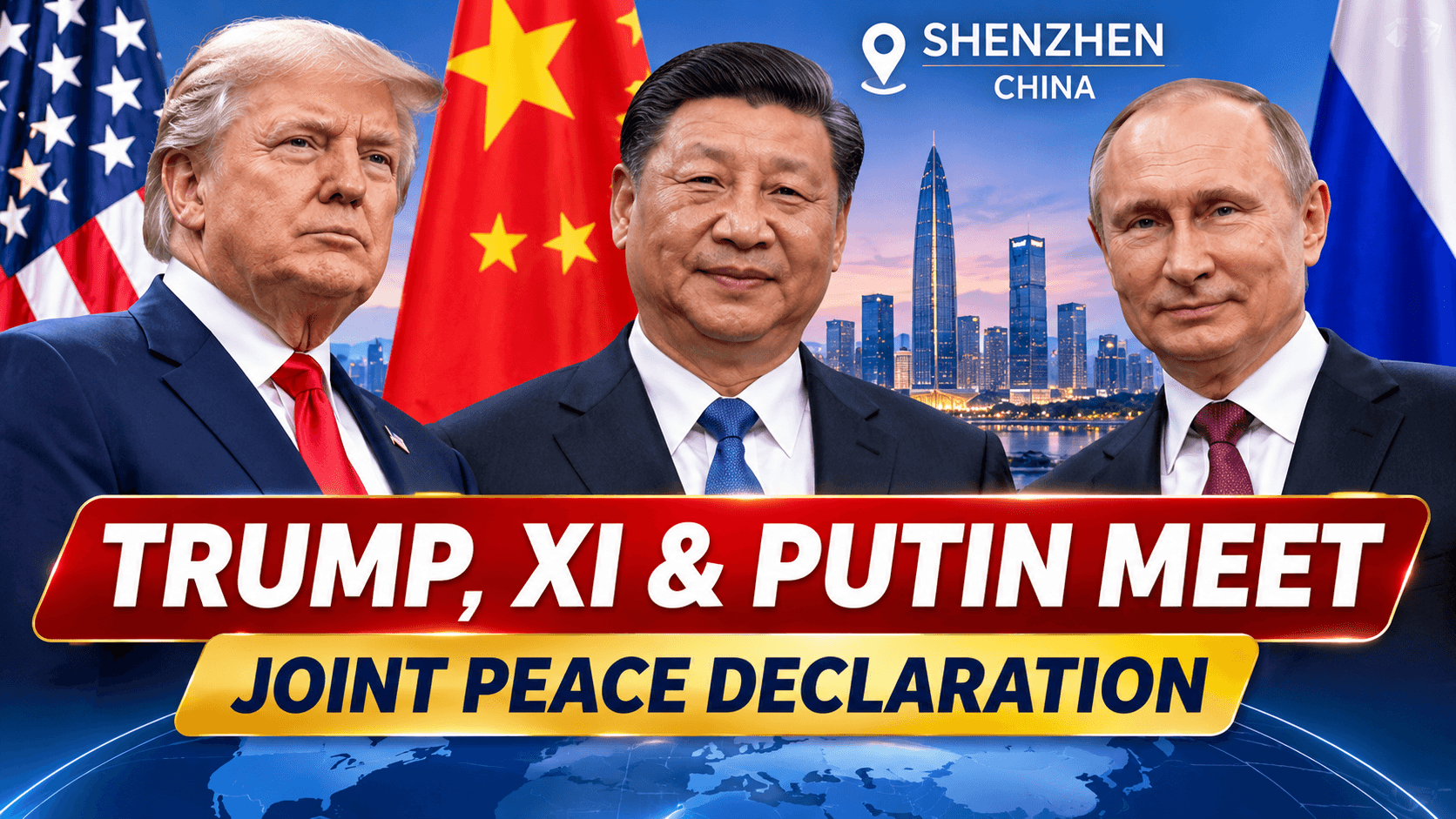
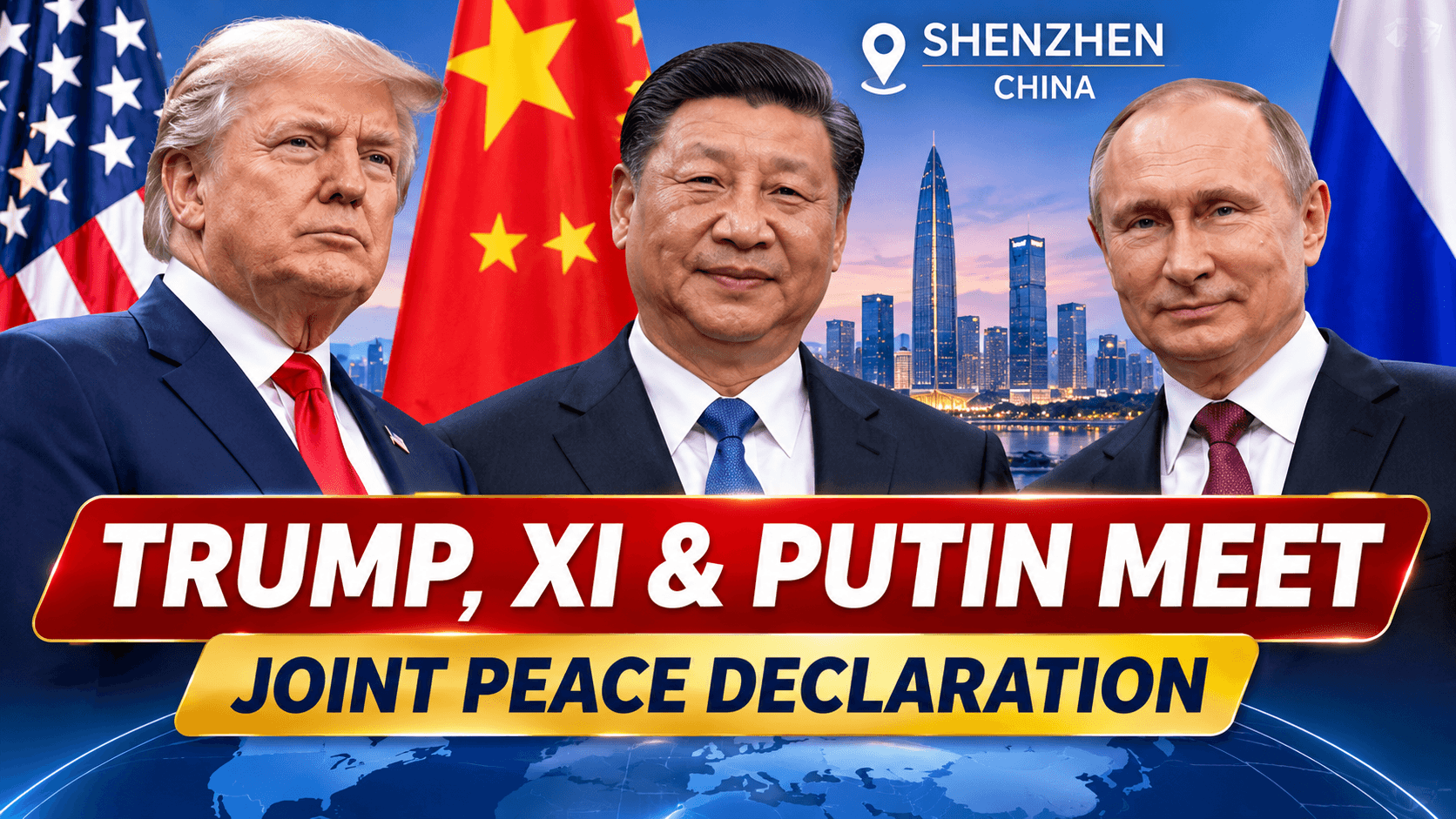
US President Donald Trump, Chinese President Xi Jinping and Russian President Vladimir Putin held an unprecedented trilateral summit in Shenzhen, China, on November 19, 2026. The meeting, conducted on the sidelines of the Asia-Pacific Economic Cooperation (APEC) summit, brought together the leaders of three major global powers for discussions on international security, nuclear risks and global stability.
The approximately 90-minute meeting concluded with a four-point joint declaration titled *Russia-China-US Heads of State Declaration Toward Peace*. The announcement attracted worldwide attention, with analysts debating whether the gathering could influence the global balance of power.
Four Key Areas in the Joint Declaration
The joint statement outlined cooperation across four major areas:
- United Nations reform: The three countries expressed support for reforming the United Nations to improve its ability to respond to international challenges and maintain global peace.
- Energy supplies: They agreed on the importance of stable energy flows and plans to increase the production and supply of refined petroleum products.
- International legal institutions: The declaration emphasised respect for state officials' immunities and argued that international courts, including the International Criminal Court (ICC), should not exceed their jurisdiction.
- Nuclear security: The leaders reaffirmed that a nuclear war cannot be won and must never be fought. They also committed to dialogue on reducing nuclear risks and preventing nuclear proliferation.
Despite the broad commitments, the declaration did not provide detailed timelines or specific mechanisms for implementing the proposals.
Ukraine and Iran Conflicts Remain Unresolved
The ongoing wars in Ukraine and Iran were among the major international issues surrounding the summit. However, neither conflict received a specific mention in the joint declaration.
Trump had indicated before the meeting that Ukraine and other international conflicts would be discussed. Nevertheless, the summit did not produce a publicly announced breakthrough or a detailed roadmap for resolving either conflict.
The limited outcomes raised questions about whether the historic gathering would lead to practical diplomatic progress or remain largely symbolic.
Why the Summit Matters for India
The meeting also carries significance for India because New Delhi maintains important diplomatic, economic and strategic relationships with all three countries.
India is particularly attentive to developments involving Russian energy supplies, its relationship with the United States and ongoing tensions with China. Greater coordination among Washington, Beijing and Moscow could affect international energy markets, security arrangements and the broader geopolitical balance.
India did not issue an immediate official response to the trilateral meeting. Reports indicated that New Delhi was monitoring its possible implications with strategic caution.
Political Debate Emerges in India
The summit also triggered political discussion in India. Congress leader Rahul Gandhi criticised Prime Minister Narendra Modi over India's absence from the meeting, suggesting that an Indian prime minister under a Congress government would have been present at the table.
The BJP responded by defending the government's foreign policy and criticising the opposition's remarks. The exchange brought India's diplomatic position and its influence in international affairs into the domestic political debate.
Separately, a US analyst described Trump's participation in the summit as a form of vindication for New Delhi, recalling his criticism of the earlier Modi-Xi-Putin meeting in 2025.
A Historic Meeting With Uncertain Outcomes
The Trump-Xi-Putin summit was an important diplomatic moment, bringing the leaders of the United States, China and Russia together for their first-ever trilateral meeting.
While the joint declaration highlighted cooperation on nuclear security, energy supplies and United Nations reform, major disagreements and international conflicts remain unresolved.
Whether the meeting leads to meaningful changes in global diplomacy will depend on the actions and negotiations that follow. For India and other countries, the key question is how closer coordination among the three major powers could reshape international relations in the coming months.
Get More News on Swaggbuzz
Author
About the author
Siddhaanth Raghav
Topics