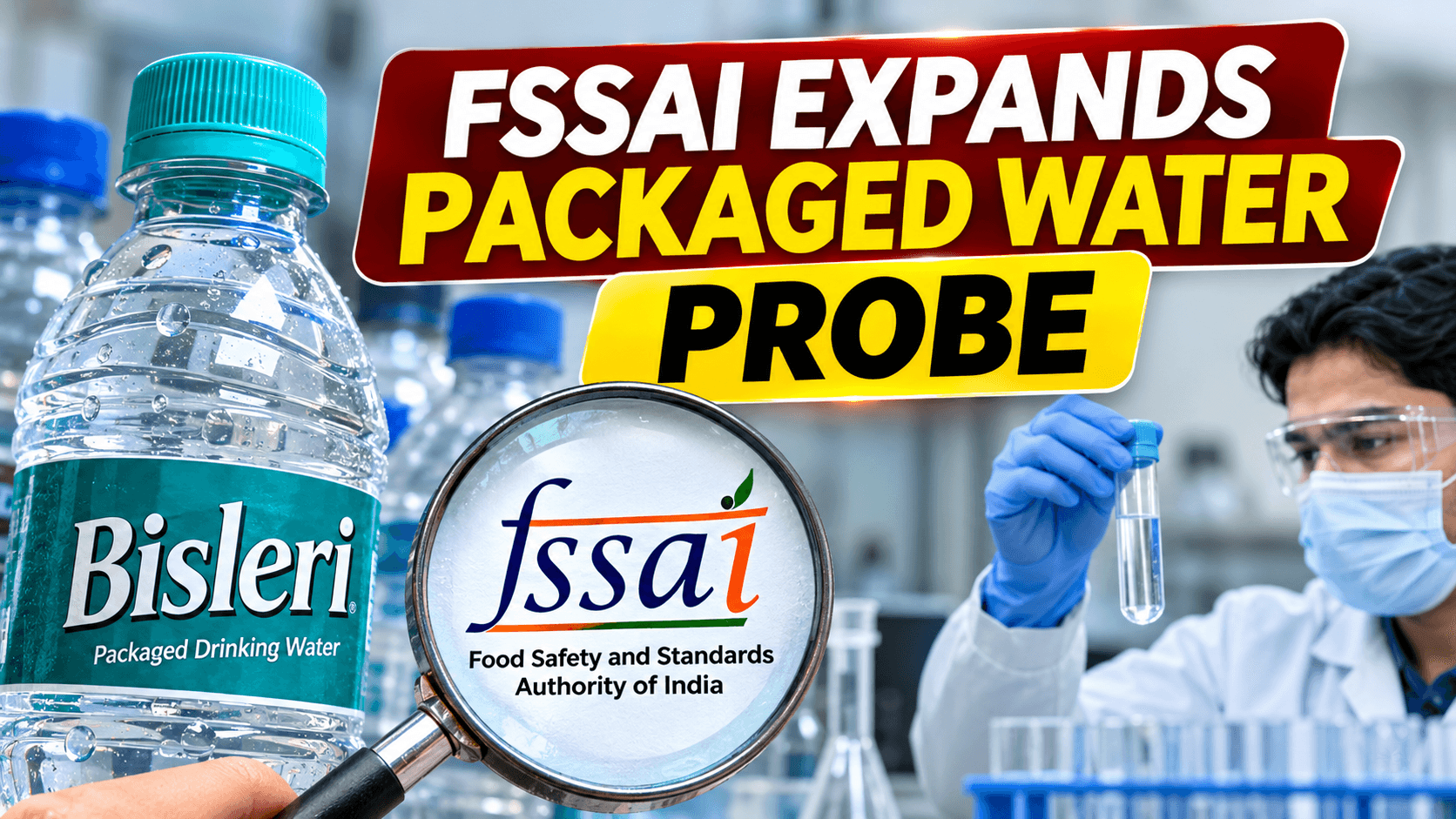
FSSAI Expands Packaged Water Probe Beyond Bisleri, Tests Multiple Brands Across India
The Food Safety and Standards Authority of India (FSSAI) has expanded its investigation into packaged drinking water brands across the country following regulatory action against Bisleri International over a water sample declared unsafe in laboratory testing.
On November 23, 2026, reports confirmed that the food safety regulator had collected random samples from multiple packaged drinking water manufacturers. These samples are undergoing laboratory examination to check whether they comply with prescribed quality and safety standards.
The expanded investigation also includes scrutiny of misleading labels and brand names that closely resemble established packaged water companies.
Why Did FSSAI Take Action Against Bisleri?
The investigation gained attention after FSSAI sanctioned prosecution proceedings against Bisleri International following laboratory findings involving a sample collected from its Goa manufacturing facility in September 2025.
According to the regulator, the initial laboratory examination found that the sample did not comply with prescribed bromate limits. Following an appeal by the company, a referral laboratory also detected polynuclear aromatic hydrocarbons (PAHs) and declared the sample unsafe under the Food Safety and Standards Act, 2006.
Bisleri disputed aspects of the findings and stated that the matter related to a single sample from a particular manufacturing batch.
Bisleri Responds to the Regulatory Findings
Bisleri International said that FSSAI collected six samples from its Goa facility on September 30, 2025. According to the company, five samples met the applicable standards, while one recorded bromate levels of 12 micrograms per litre against the prescribed limit of 10 micrograms per litre.
The company said it appealed against the finding and that subsequent independent testing at an FSSAI-approved laboratory found bromate levels within the permitted limit.
Bisleri also stated that it submitted independent test results to FSSAI's Western Regional Office in February 2026. The company maintained that its packaged drinking water undergoes more than 90 quality tests as part of its manufacturing process and said it would cooperate with the regulator.
The regulatory findings and the company's response remain important parts of the ongoing matter.
FSSAI Widens Quality Checks Across Packaged Water Brands
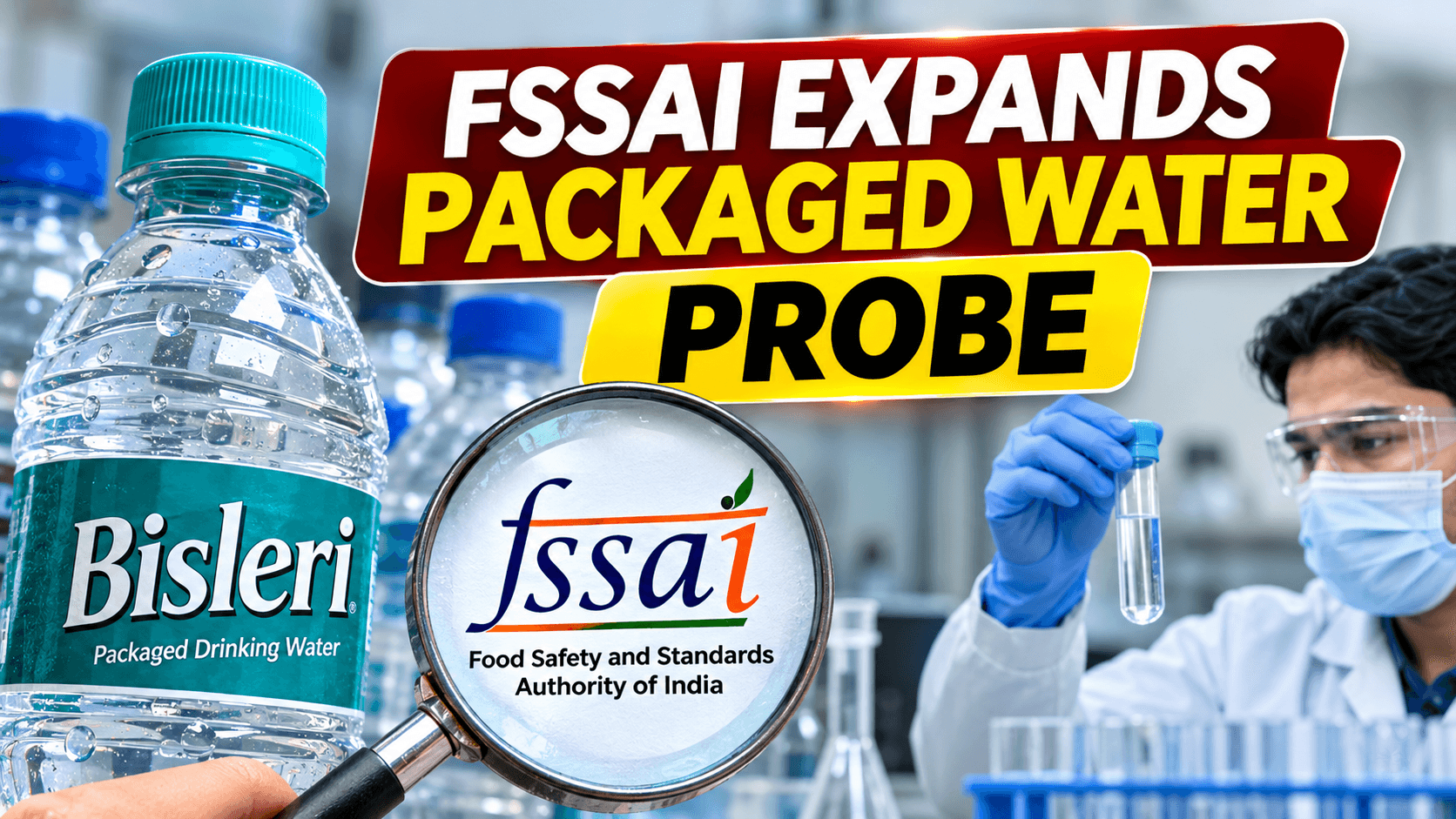
Following the Bisleri case, FSSAI has extended its inspection drive to other packaged drinking water manufacturers.
The regulator has collected samples from multiple brands across India, with laboratory reports expected to provide further information about compliance with food safety standards.
The expanded checks are intended to identify possible quality violations and ensure that packaged drinking water available in the market meets the required standards.
Misleading Labels and Lookalike Brand Names Under Scrutiny
Apart from water quality, FSSAI is also examining companies that use misleading product labels or brand names resembling those of established packaged drinking water manufacturers.
Such packaging may create confusion among consumers about the actual manufacturer, product identity or quality of the water being purchased.
Companies found violating applicable labelling and food safety regulations may face regulatory action under the Food Safety and Standards Act, 2006.
What Does This Mean for Consumers?
The expanded inspection drive highlights the importance of quality control and transparent labelling in India's packaged drinking water market.
Consumers should check the manufacturer's details, product category, batch information, manufacturing date and applicable food safety licence details printed on packaged water bottles.
The investigation does not establish that all packaged water brands are unsafe. Instead, the regulator's nationwide sampling exercise is intended to identify specific products or batches that may fail safety requirements.
Conclusion
FSSAI's expanded investigation marks a wider regulatory effort to strengthen quality monitoring in India's packaged drinking water industry. Following the action involving Bisleri, other manufacturers are also facing increased scrutiny through sample collection, laboratory testing and labelling inspections.
The results of these checks will be important in determining whether further enforcement action is required and in maintaining consumer confidence in packaged drinking water across the country.
Get More News on Swaggbuzz
Author
About the author
Siddhaanth Raghav
Topics