
US Launches 'Heavy' Strikes on Iran After Attempted Attack on American Troops
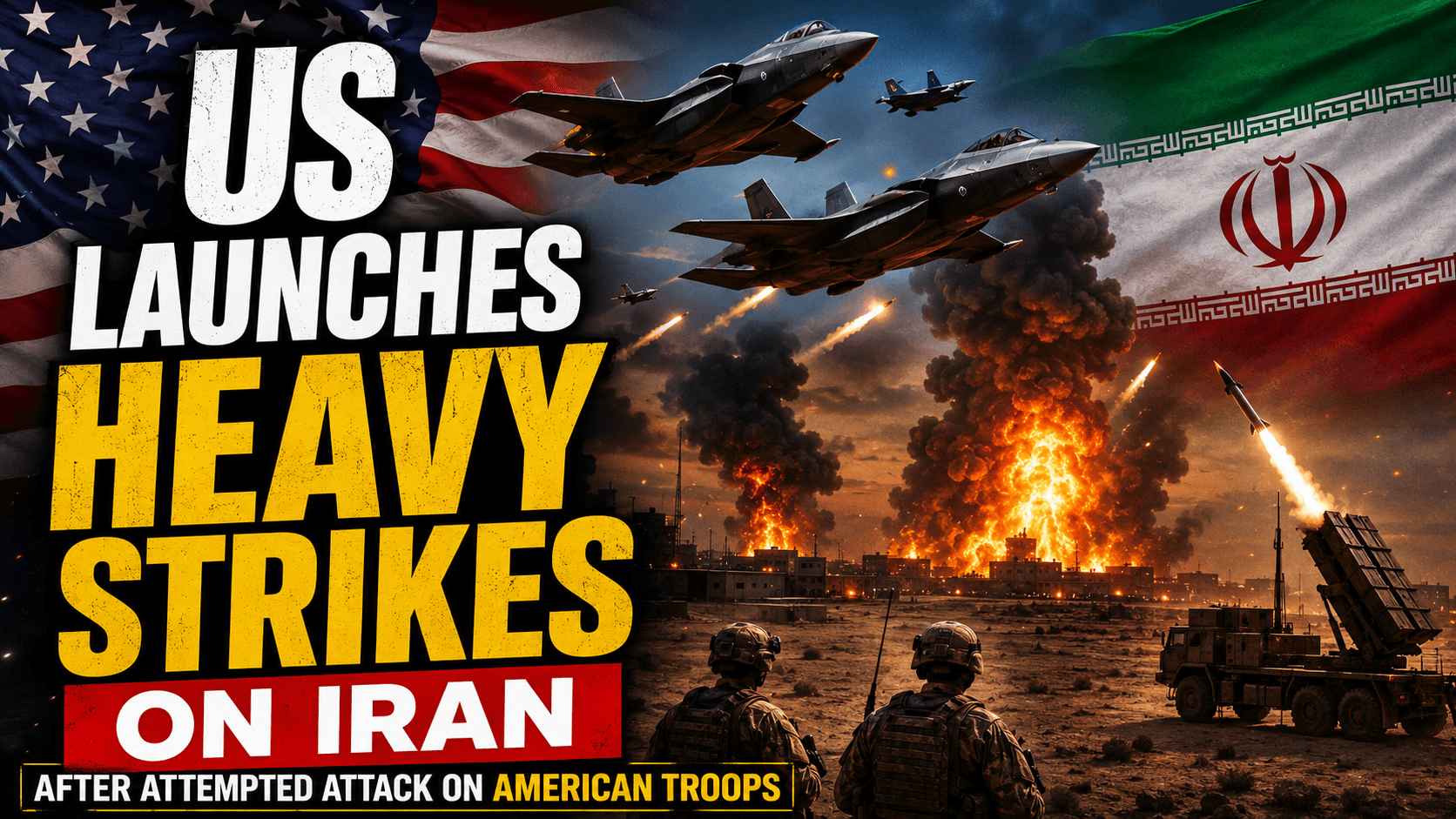
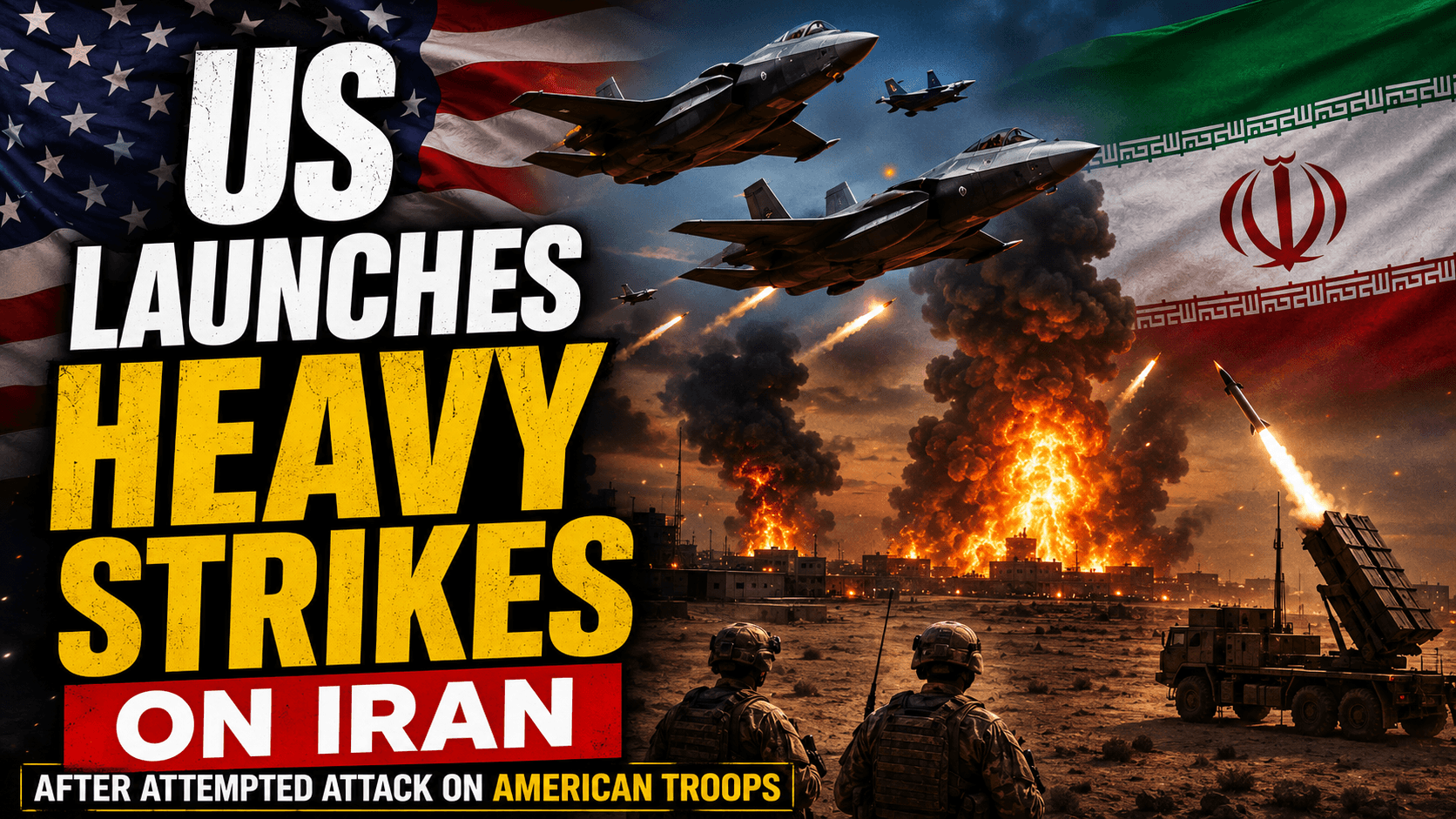
The United States has launched what officials described as **"heavy" military strikes** against Iranian targets following an attempted attack on American troops stationed in the Middle East.
Siddhaanth Raghav
US Launches 'Heavy' Strikes on Iran After Attempted Attack on American Troops
Escalation Raises Fears of Wider Middle East Conflict as Washington Responds to Reported Missile Attack
The United States has launched what officials described as **"heavy" military strikes** against Iranian targets following an attempted attack on American troops stationed in the Middle East. The latest military action marks one of the most significant escalations in tensions between Washington and Tehran in recent months, heightening concerns about the possibility of a broader regional conflict.
According to U.S. officials, the strikes were carried out after American air defense systems intercepted missiles and drones believed to have been launched toward U.S. military personnel. The Pentagon said the operation was intended to neutralize immediate threats and deter further attacks against American forces and allied installations in the region.
The exchange has prompted international concern, with governments calling for restraint while closely monitoring developments across the Middle East.
What Triggered the U.S. Military Response?
The U.S. military said the operation followed an attempted attack targeting American troops deployed at bases in the region.
Officials reported that missile defense systems successfully intercepted incoming projectiles before they could reach U.S. personnel. Following the attempted strike, the United States authorized a series of coordinated airstrikes against locations identified as being linked to Iranian military assets or Iran-backed armed groups.
The Pentagon described the action as a defensive response designed to protect American service members and prevent additional attacks.
Iran has not accepted the U.S. characterization of the events, and details surrounding responsibility for the reported attack remain part of a rapidly evolving situation.
'Heavy' Airstrikes Target Multiple Locations
American aircraft reportedly struck several military facilities and infrastructure linked to Iranian operations and allied armed groups.
While officials have not released the full operational details, reports indicate the strikes focused on command centers, weapons storage facilities, and logistical infrastructure believed to support regional military activities.
Defense officials emphasized that the operation was intended to reduce the capability of hostile forces to launch future attacks rather than signal the start of a wider military campaign.
Damage assessments remain ongoing.
Pentagon Says Priority Is Protecting U.S. Forces
Following the operation, U.S. defense officials reiterated that protecting American troops remains the government's highest priority.
Military commanders said all necessary measures would continue to be taken to safeguard personnel deployed across the Middle East.
The Pentagon also stated that U.S. forces remain on heightened alert amid concerns that additional retaliatory actions could occur in the coming days.
Regional military bases have reportedly strengthened security measures while monitoring potential threats.
Iran Condemns the Strikes
Iran strongly criticized the U.S. military action, describing it as an unjustified escalation.
Iranian officials warned that attacks on Iranian interests could further increase instability across the region and reiterated their position that the country's military activities are defensive in nature.
Diplomatic exchanges between Tehran and Washington remain highly strained, with both sides accusing each other of contributing to rising regional tensions.
Regional Security Concerns Intensify
The latest confrontation has increased fears of wider instability across the Middle East.
Security analysts note that any sustained military exchange between the United States and Iran could have implications for neighboring countries, international shipping routes, and global energy supplies.
Governments throughout the region have increased security preparedness while closely monitoring developments.
Military experts also warn that further escalation could involve Iran-backed armed groups operating in Iraq, Syria, Lebanon, and other parts of the region.
Impact on Global Energy Markets
The renewed military confrontation has affected global financial markets.
Oil prices moved higher amid concerns that prolonged instability could disrupt production or shipping through the **Strait of Hormuz**, one of the world's most important maritime energy corridors.
Energy analysts continue to monitor developments closely, as any disruption in the region could influence fuel prices, inflation, and international trade.
Investors are also watching diplomatic efforts that could help prevent additional escalation.
International Calls for Restraint
Several governments and international organizations have urged both sides to avoid further military escalation.
Diplomatic leaders emphasized the importance of dialogue, crisis management, and protecting civilian populations from the consequences of a broader regional conflict.
Many countries remain concerned that continued exchanges could undermine regional stability and negatively affect the global economy.
Efforts to maintain open diplomatic channels are expected to continue despite the heightened tensions.
Possible Next Steps
Security experts believe the situation remains highly fluid.
Potential developments include:
- Additional defensive military deployments.
- Increased intelligence cooperation among allies.
- Diplomatic negotiations aimed at reducing tensions.
- New economic or political measures.
- Further military responses if additional attacks occur.
The direction of the crisis will largely depend on decisions made by both Washington and Tehran in the coming days.
Global Attention Focuses on the Middle East
The latest escalation has once again placed the Middle East at the center of international attention.
Countries with economic, political, and security interests in the region are closely following developments due to concerns over regional stability, energy security, and international trade.
Financial markets, shipping companies, and diplomatic missions continue assessing the potential impact of further military activity.
Conclusion
The United States' launch of heavy strikes following an attempted attack on American troops represents another significant chapter in the ongoing tensions between Washington and Tehran. While U.S. officials describe the operation as a defensive measure aimed at protecting military personnel, the exchange has raised fresh concerns about the possibility of a wider conflict in the Middle East.
As diplomatic efforts continue alongside heightened military readiness, the coming days are expected to be crucial in determining whether the crisis moves toward de-escalation or further confrontation. The international community will be watching closely as both sides weigh their next steps in a region that remains central to global security and energy markets.
Get More News on Swaggbuzz