
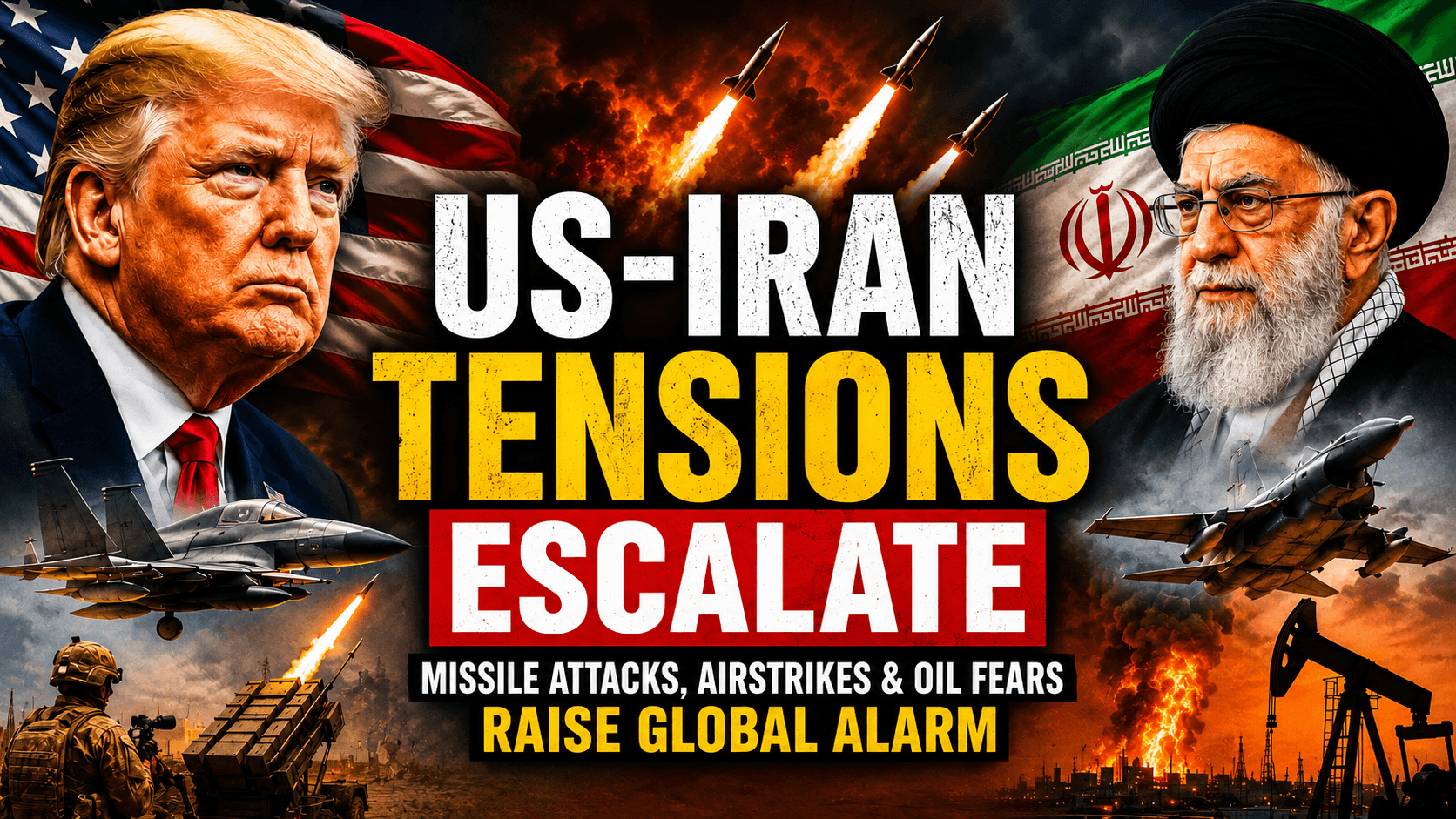
Missile Attacks, Airstrikes, and Oil Market Fears Raise Global Alarm
Tensions between the United States and Iran have escalated sharply once again, raising fears of a broader conflict in the Middle East and prompting renewed calls for diplomacy from governments around the world.
Siddhaanth Raghav
US-Iran Tensions Escalate in Middle East: Missile Attacks, Airstrikes, and Oil Market Fears Raise Global Alarm
Renewed Military Confrontation Sparks International Concern as Diplomats Urge Restraint
Tensions between the United States and Iran have escalated sharply once again, raising fears of a broader conflict in the Middle East and prompting renewed calls for diplomacy from governments around the world.
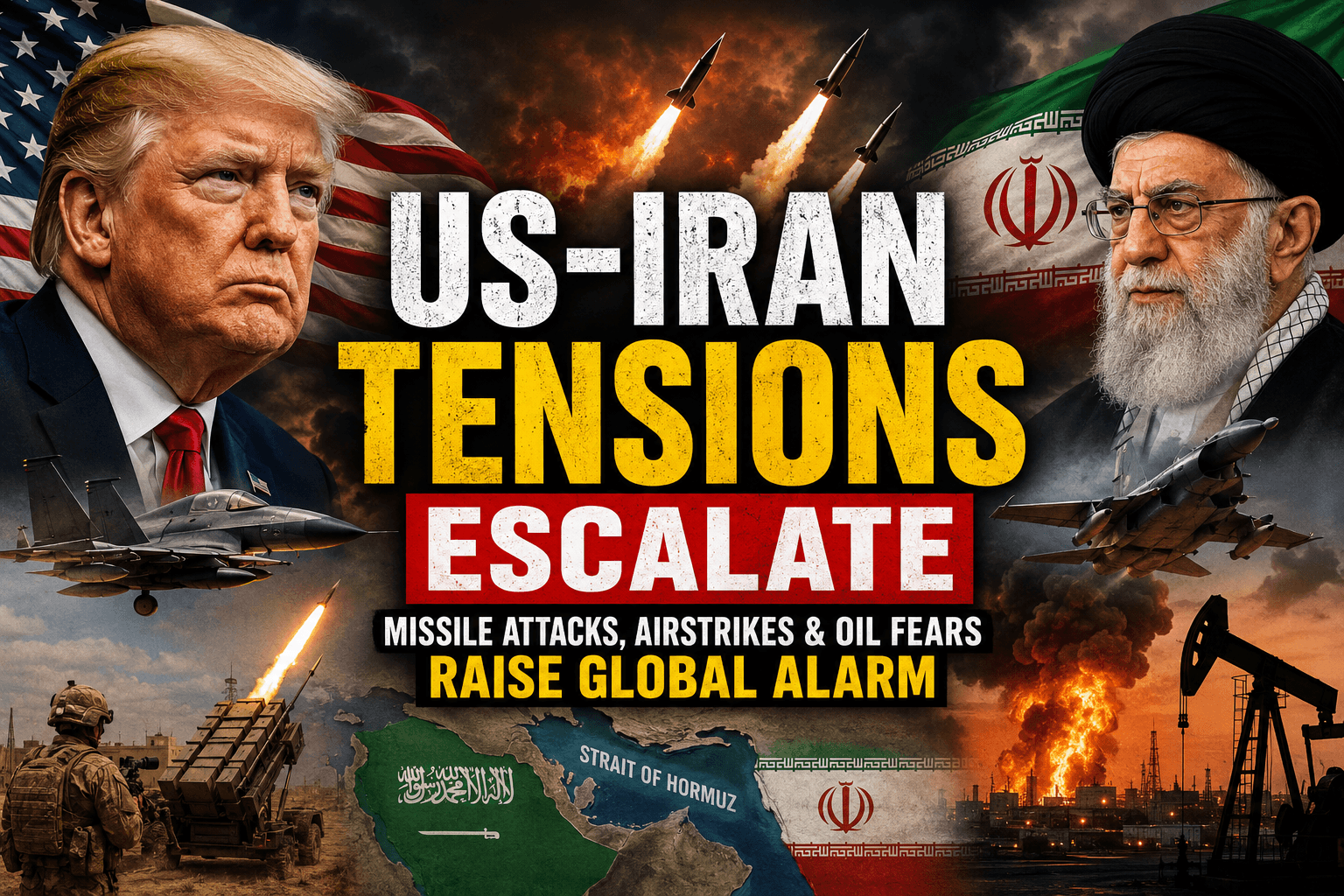
The latest escalation follows reports that the U.S. military intercepted ballistic missiles launched toward American forces in the region, while the United States and Saudi Arabia carried out coordinated airstrikes against Iran-backed militia positions in Iraq. The developments have intensified concerns over regional security, the stability of global energy markets, and the future of diplomatic efforts to prevent a wider war.
With military forces on heightened alert and oil prices reacting to the uncertainty, analysts warn that the coming days could prove critical for the Middle East.
Missile Attack Marks New Phase in the Crisis
According to U.S. military officials, multiple ballistic missiles launched from Iran toward American forces stationed in the Middle East were successfully intercepted by air defense systems before they reached their intended targets. Washington described the launch as a serious escalation and reaffirmed its commitment to protecting U.S. personnel and allies in the region.
The reported missile attack has increased concerns that the confrontation between Washington and Tehran could move beyond proxy conflicts into more direct military exchanges.
Joint Airstrikes Target Iran-Backed Militias
In response to recent attacks attributed to Iran-backed groups, the United States and Saudi Arabia launched coordinated airstrikes against militia positions in Iraq.
Officials said the operation was intended to reduce the ability of armed groups to conduct further attacks on military bases and critical infrastructure. The strikes followed a series of drone attacks targeting Saudi oil facilities, which Riyadh blamed on Iran-backed militias.
The military action represents one of the most significant coordinated responses in recent months and highlights growing cooperation between Washington and regional partners.
Strait of Hormuz Remains a Global Flashpoint
The renewed confrontation has once again focused attention on the **Strait of Hormuz**, one of the world's most strategically important maritime routes.
A substantial share of global crude oil exports passes through the narrow waterway each day, making any disruption a major concern for international markets.
Security analysts warn that prolonged instability around the Strait could affect shipping, insurance costs, and global energy supplies, with ripple effects extending far beyond the Middle East.
Oil Prices React to Rising Uncertainty
Financial markets responded quickly to the latest developments.
Global benchmark crude oil prices climbed as investors weighed the possibility of supply disruptions resulting from escalating regional tensions. Traders remain particularly concerned that any prolonged military confrontation could affect energy exports or commercial shipping through the Persian Gulf.
Economists note that sustained increases in oil prices could contribute to higher transportation and manufacturing costs worldwide.
Diplomatic Efforts Face New Challenges
Despite the military escalation, several countries continue to call for restraint and renewed diplomatic engagement.
Regional governments, along with international organizations, have urged all parties to avoid actions that could trigger a broader conflict.
Diplomats emphasize that maintaining communication channels remains essential for preventing further escalation and protecting regional stability.
White House Talks Add to Diplomatic Significance
The escalation comes as U.S. President Donald Trump and Israeli Prime Minister Benjamin Netanyahu held high-level discussions at the White House.
Iran's regional activities, missile capabilities, and broader Middle East security were among the major issues discussed during the meeting. The timing has added to the diplomatic significance of both the military developments and ongoing strategic consultations between Washington and its allies.
Impact on Regional Security
Security experts warn that the latest developments could influence several areas across the Middle East.
Potential consequences include:
- Increased military deployments.
- Greater protection for energy infrastructure.
- Enhanced missile defense operations.
- Heightened security around key shipping lanes.
- Expanded intelligence cooperation among regional allies.
Governments throughout the region remain on alert as they monitor further developments.
International Reactions
World leaders have expressed concern about the possibility of further escalation.
Many governments have reiterated support for diplomatic solutions while emphasizing the importance of protecting civilian populations, maintaining freedom of navigation, and preserving regional stability.
International financial institutions are also monitoring the situation because prolonged instability in the Middle East could affect global trade, inflation, and energy security.
What Happens Next?
Military analysts believe the next phase of the crisis will depend on whether additional retaliatory actions occur or whether diplomatic efforts succeed in reducing tensions.
Possible developments include:
Continued diplomatic negotiations.
- Additional defensive military deployments.
- Further sanctions or economic measures.
- Expanded regional security coordination.
- International mediation efforts.
While the immediate situation remains uncertain, governments around the world continue to watch developments closely.
Conclusion
The latest escalation between the United States and Iran underscores the fragile security environment in the Middle East. Reports of intercepted missile attacks, coordinated airstrikes against Iran-backed militias, and growing concerns over the Strait of Hormuz have renewed fears of a wider regional conflict.
Although military readiness has increased across the region, diplomatic efforts to prevent further escalation remain active. The coming days will be critical in determining whether tensions ease through negotiations or continue to intensify, with significant implications for regional stability, global energy markets, and international security.
Get More News on Swaggbuzz