
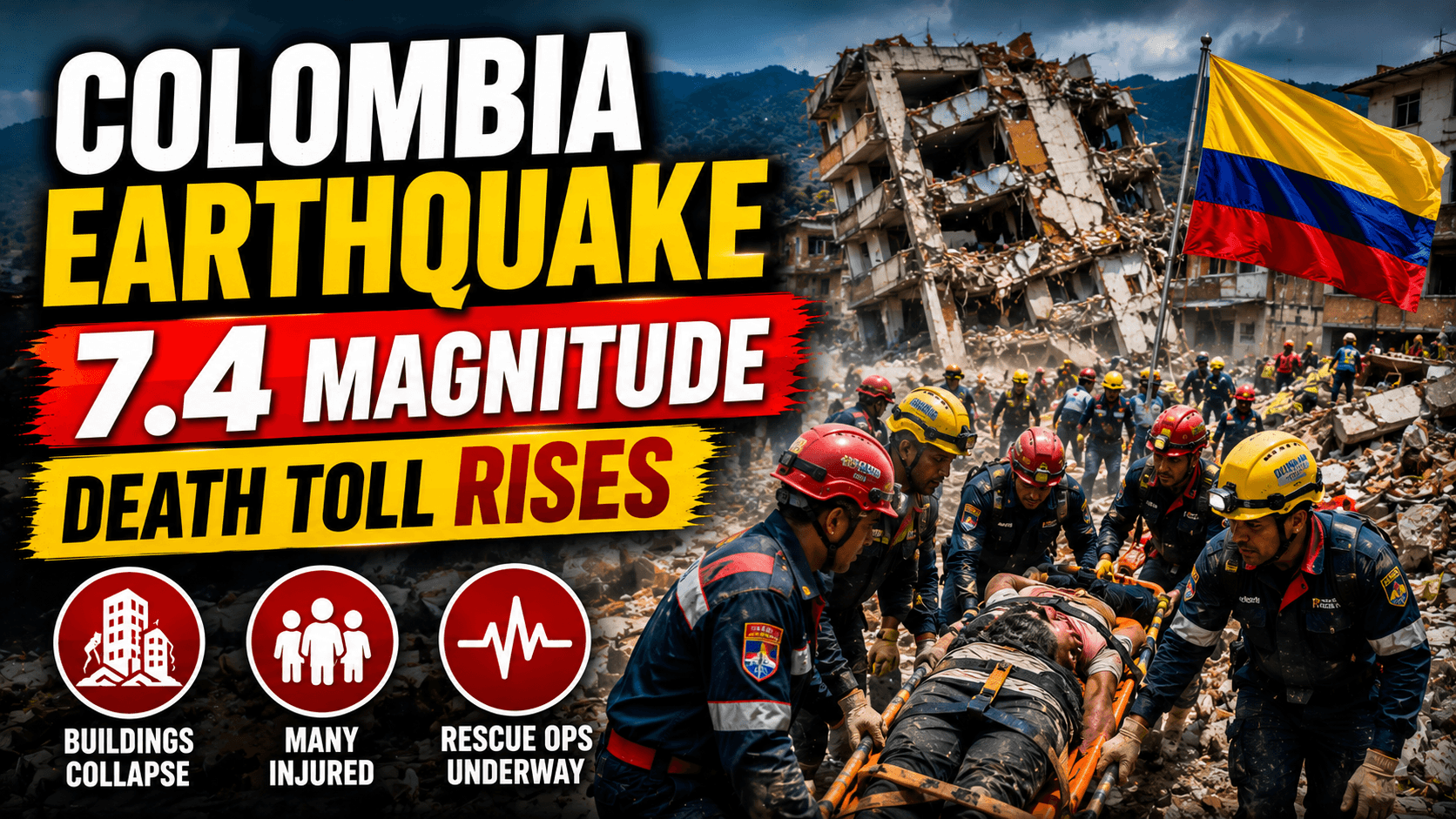
Death Toll Rises as 7.4-Magnitude Quake Devastates Western Region
A powerful 7.4-magnitude earthquake struck western Colombia on August 10, causing widespread destruction and triggering a major emergency response across several parts of the country.
Siddhaanth Raghav
Colombia Earthquake: Death Toll Rises as 7.4-Magnitude Quake Devastates Western Region
Rescue Teams Race to Find Survivors as Buildings Collapse and Emergency Operations Intensify Across Colombia
A powerful 7.4-magnitude earthquake struck western Colombia on August 10, causing widespread destruction and triggering a major emergency response across several parts of the country.
The earthquake was centered in the **Chocó region**, near San José del Palmar, but powerful tremors were felt across much of western Colombia and in neighboring countries. Major cities including **Cali, Pereira, Quibdó and Manizales** reported damage.
As rescue operations entered their second day, the reported death toll had risen to **at least 164 people**, with hundreds more injured and many people still reported missing. Authorities warned that the toll could increase as emergency teams reach damaged areas and continue searching through collapsed structures.
Powerful Earthquake Hits Western Colombia
The earthquake struck on Monday, August 10, with a magnitude of **7.4**.
The tremor was strong enough to cause extensive structural damage across western Colombia. Buildings were damaged or collapsed, roads were affected and emergency services were quickly mobilized.
The earthquake has been described as one of the strongest to hit Colombia in decades and the strongest recorded in the country this century.
The epicenter was located near San José del Palmar in Chocó, an area where difficult terrain and limited infrastructure have complicated rescue operations.
Death Toll Continues to Rise
The number of fatalities has increased as rescue workers have reached more affected communities.
Reuters reported that the death toll had reached **at least 164**, with the hardest-hit areas including Cali and Pereira. Chocó, located close to the epicenter, has also reported fatalities.
Emergency officials expect the numbers to remain fluid as search-and-rescue operations continue.
Hundreds of people have also been injured, while thousands have reportedly been listed as missing or unaccounted for in some affected areas.
Cali Among the Worst-Affected Cities
The city of **Cali** has suffered significant damage.
According to reports, dozens of buildings collapsed in the city, while sections of hospitals were also affected. Some patients had to be moved outside medical facilities as authorities dealt with the damage and the sudden increase in emergency cases.
Rescue workers and volunteers have been searching damaged buildings for survivors.
The scale of the destruction has placed considerable pressure on emergency services and medical facilities.
Pereira Also Reports Heavy Damage
**Pereira**, another major city in the country's coffee-growing region, has also experienced significant damage and casualties.
Buildings were damaged, while the city's airport was affected by the earthquake.
Emergency teams have been working to assess infrastructure and determine which roads, buildings and public facilities remain safe to use.
Chocó Faces Difficult Rescue Conditions
The earthquake's epicenter was in **Chocó**, where rugged terrain and remote communities have made rescue operations particularly challenging.
Some areas have limited road access and communications infrastructure, slowing the delivery of emergency assistance.
Authorities are working to send rescue personnel, medical teams and supplies into affected communities while assessing the extent of the damage.
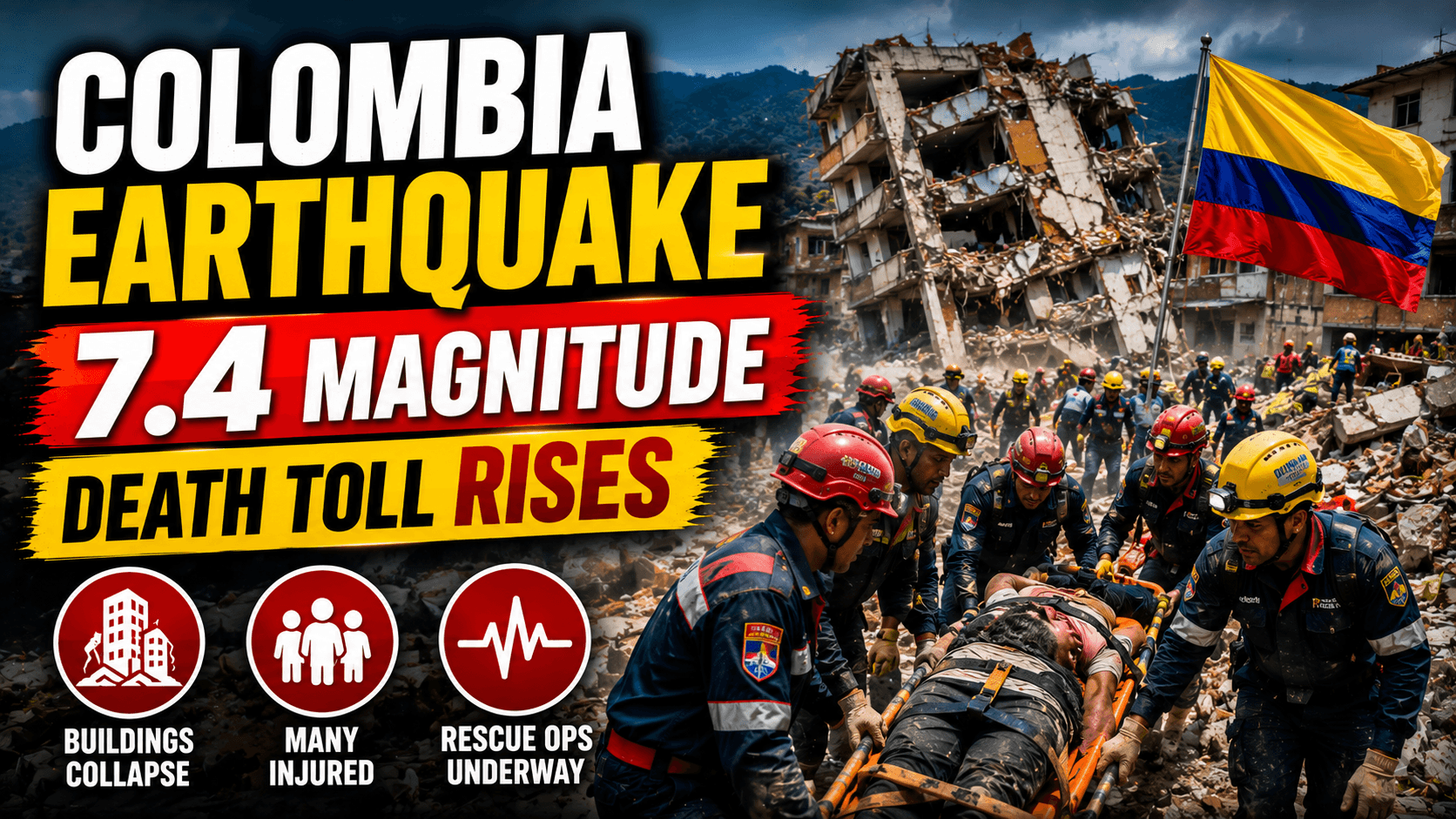
Emergency Teams Search for Survivors
Rescue operations have continued around the clock.
Emergency workers, police officers, firefighters and volunteers are searching collapsed buildings and damaged structures for people who may still be trapped.
Authorities have prioritized:
- Searching damaged buildings.
- Treating injured residents.
- Providing emergency shelter.
- Restoring communications.
- Assessing damaged infrastructure.
- Delivering food, water and medical supplies.
The search for survivors remains the government's immediate priority.
State of Emergency Declared
Colombian authorities have declared an emergency to speed up the deployment of resources and assistance to affected areas.
President **Abelardo de la Espriella**, who had only recently taken office, has placed the government response at the center of his administration's immediate priorities.
Additional security personnel have also been deployed in some affected cities to assist with emergency operations and maintain public order.
International Assistance Offered
The scale of the disaster has prompted offers of international assistance.
The United States announced financial support, while countries including **Mexico, Chile and El Salvador** offered assistance to Colombia.
International support could become increasingly important as authorities assess the full scale of the destruction and the resources required for recovery.
Tremors Felt Beyond Colombia
The earthquake was felt beyond Colombia's borders.
Strong shaking was reported in parts of **Ecuador and Panama**, demonstrating the wide reach of the earthquake.
Authorities in neighboring countries also monitored the situation and assessed whether their territories had suffered damage.
Why the Earthquake Was So Destructive
The earthquake's magnitude, its location and the vulnerability of some structures all contributed to the scale of the disaster.
Earthquakes of magnitude 7 or greater can cause severe damage, particularly when buildings are not designed to withstand strong ground movement.
The rugged geography around the epicenter has also complicated transportation and emergency response.
Rescue Efforts Continue
With people still reported missing, rescue operations remain the central focus.
Emergency teams are expected to continue searching collapsed structures while engineers assess whether damaged buildings are safe for rescuers to enter.
Authorities are also working to establish temporary shelters for people whose homes have been damaged or destroyed.
After the immediate rescue phase, attention will turn toward restoring essential services and rebuilding affected communities.
Colombia Faces Major Recovery Challenge
The earthquake has created a significant humanitarian and economic challenge for Colombia.
Beyond the loss of life, the destruction of homes, hospitals, transportation facilities and other infrastructure could require a lengthy recovery effort.
The government will need to coordinate national resources with local authorities and international partners to support affected communities.
Conclusion
The **7.4-magnitude Colombia earthquake** has caused widespread destruction across western parts of the country, with the reported death toll reaching **at least 164** as rescue operations continue. Cali, Pereira, Chocó and other areas have suffered major damage, while emergency teams are still searching for survivors.
The disaster has triggered a nationwide emergency response and attracted offers of international assistance. With many areas still being assessed, authorities warn that the final impact may become clearer only after rescue teams reach the most severely affected communities.
For now, the priority remains saving lives, treating the injured and providing shelter and essential supplies to people affected by one of Colombia's most serious earthquakes in decades.
Get More News on Swaggbuzz