
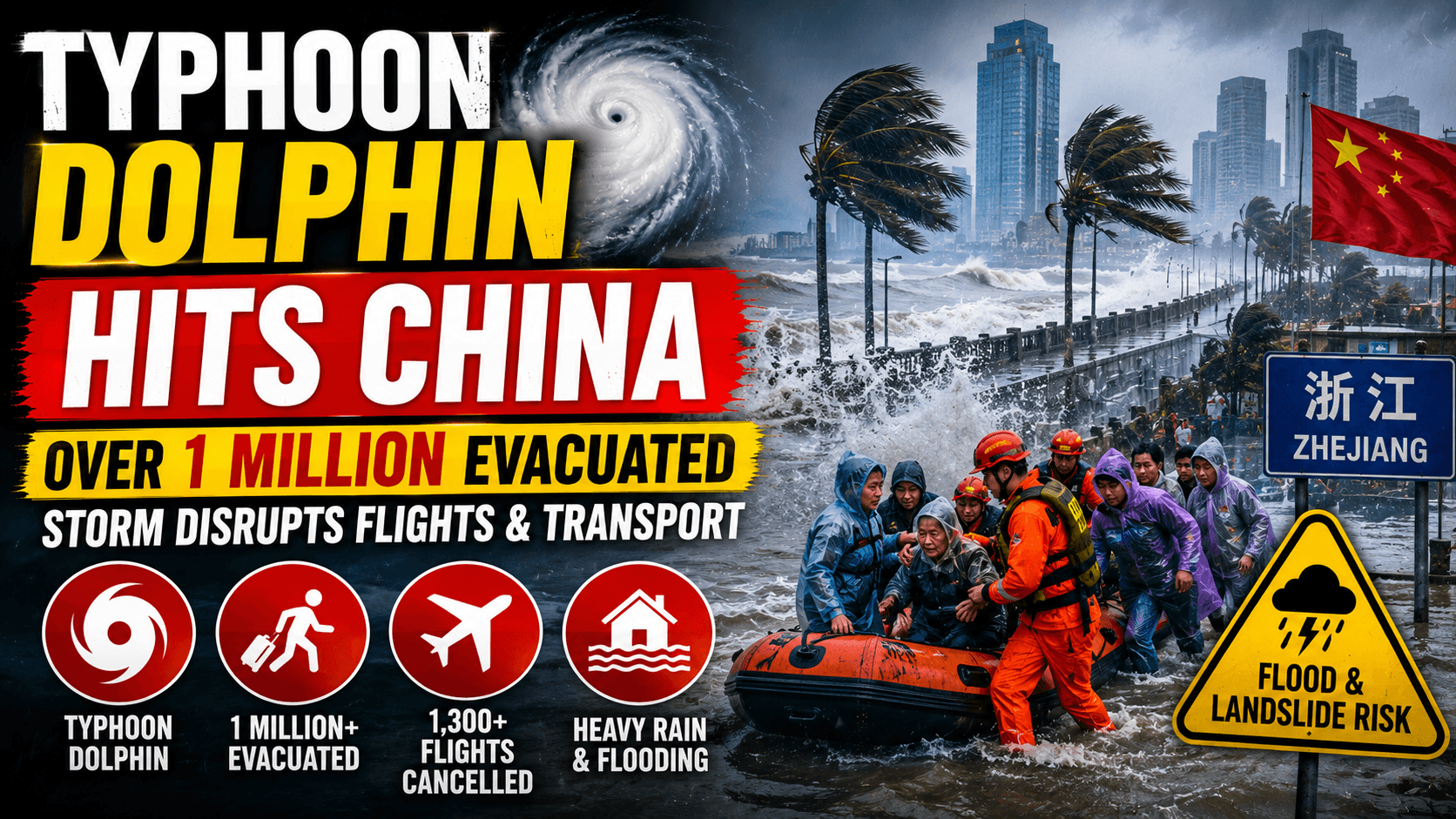
Over One Million Evacuated as Storm Disrupts Flights and Transport
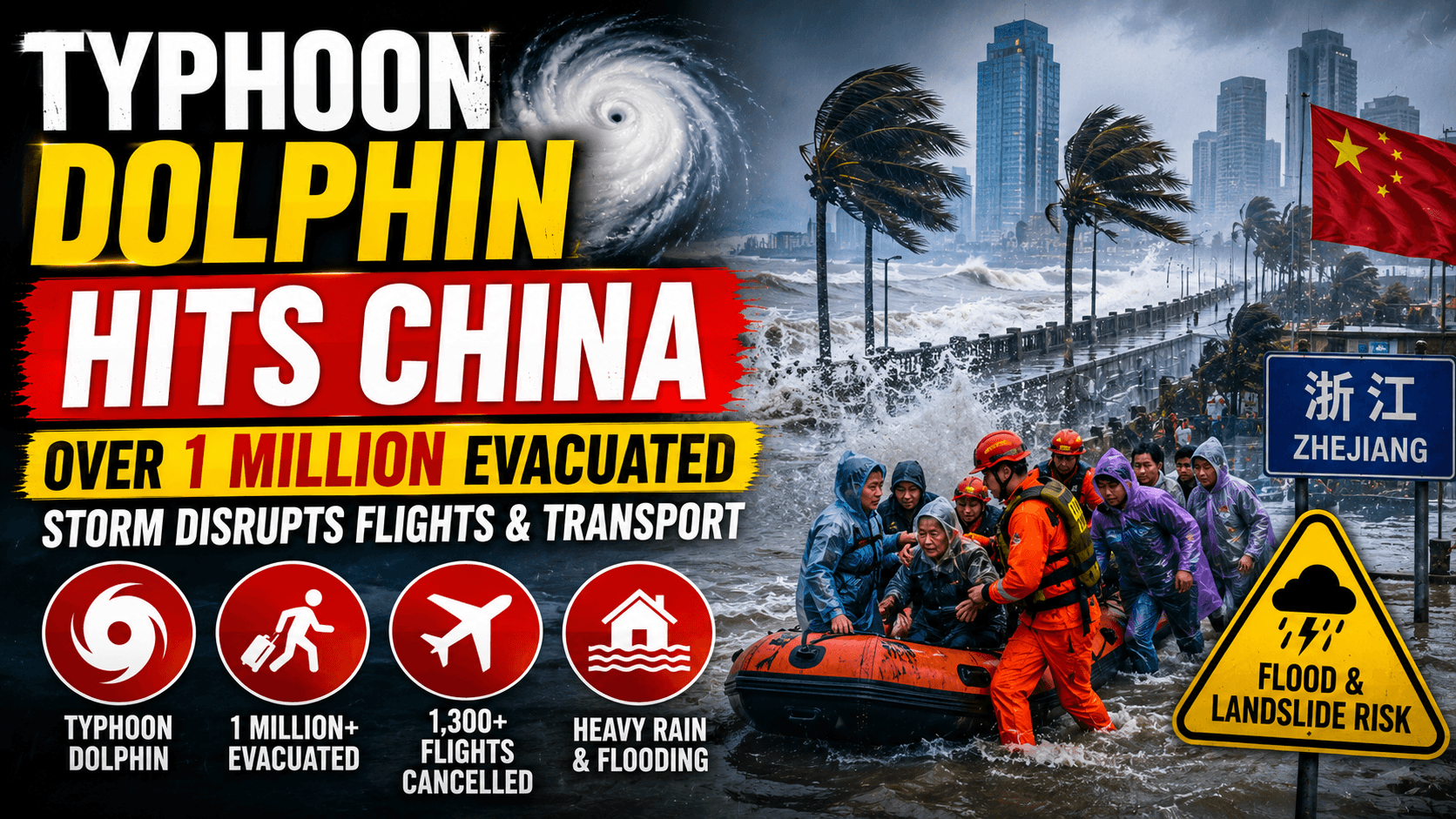
China is facing a major weather emergency after Typhoon Dolphin made landfall along the country's eastern coast, forcing more than one million people to evacuate as authorities prepared for severe flooding, landslides and dangerous winds.
Siddhaanth Raghav
Typhoon Dolphin Hits China: Over One Million Evacuated as Storm Disrupts Flights and Transport
Powerful Typhoon Brings Torrential Rain, Flooding and Landslide Risks to Zhejiang and Eastern China
China is facing a major weather emergency after **Typhoon Dolphin** made landfall along the country's eastern coast, forcing more than **one million people to evacuate** as authorities prepared for severe flooding, landslides and dangerous winds.
The storm struck **Zhejiang province**, one of China's most densely populated coastal regions, before moving inland and weakening. Despite the loss of some of its strength, authorities have continued to warn residents about heavy rainfall and the possibility of flooding across several provinces.
The typhoon has also caused widespread disruption to air and ground transportation, with airports in Shanghai cancelling more than a thousand flights as the storm affected one of China's busiest transportation hubs.
Typhoon Dolphin Makes Landfall in Zhejiang
Typhoon Dolphin reached the coast of Zhejiang on Sunday, bringing powerful winds and torrential rainfall.
The storm was described as the strongest tropical cyclone to hit China so far this year. Authorities had already begun large-scale preparations before landfall, moving residents away from areas considered vulnerable to flooding, storm surges and landslides.
Coastal communities were placed on high alert as emergency services prepared for the possibility of widespread damage.
More Than One Million People Evacuated
The scale of the evacuation operation has been enormous.
In **Wenzhou**, a major coastal city in Zhejiang, more than **900,000 residents** were relocated to safer areas, with more than 1,500 emergency shelters opened.
Other parts of eastern China also carried out evacuations. In neighbouring Fujian province, tens of thousands of people were moved from areas considered particularly vulnerable.
Shanghai also ordered large-scale relocations from areas at risk, bringing the overall number of people moved to safety across the region to more than one million.
Shanghai Hit by Exceptional Rainfall
Shanghai experienced some of the most significant rainfall associated with the storm.
A weather station in central Shanghai recorded more than **300 millimetres of rain within 24 hours**, while another location recorded close to 400mm.
The rainfall was described as exceptional, with one measurement representing the city's highest 24-hour rainfall in more than 150 years of records.
The intense rainfall caused flooding in several areas and placed additional pressure on drainage and transportation systems.
Flights and Public Transport Disrupted
Typhoon Dolphin caused major disruption to transportation across eastern China.
More than **1,300 flights were cancelled in Shanghai**, while other transport services were suspended or restricted as authorities prioritized public safety.
The disruption affected one of China's most important aviation and transportation centres, leaving travellers facing cancellations and delays.
Authorities advised residents and travellers to avoid unnecessary journeys while severe weather conditions continued.
Flooding and Landslide Threat Remains
Although Dolphin weakened after making landfall, the danger has not completely disappeared.
Meteorological authorities warned that heavy rainfall could continue across eastern and central China as the storm moves inland.
Heavy rain increases the risk of:
- Urban flooding.
- River flooding.
- Landslides.
- Road closures.
- Power disruptions.
- Further transportation delays.
Emergency services remain on standby in areas where rainfall could cause additional flooding.
Emergency Response Intensifies
Chinese authorities have mobilized emergency teams and opened temporary shelters to accommodate evacuated residents.
Local governments have also taken precautionary measures to protect infrastructure and reduce the risks posed by flooding.
Residents in vulnerable areas have been urged to follow evacuation orders and remain indoors during periods of severe weather.
Emergency workers are continuing to monitor rivers, roads, drainage systems and other critical infrastructure.
Economic and Transportation Impact
The typhoon's arrival has disrupted commercial activity across parts of eastern China.
Flight cancellations and transportation restrictions could affect tourism, logistics and regional supply chains, particularly in major cities such as Shanghai and across Zhejiang.
Ports and other transport facilities are also expected to operate under restrictions while authorities assess weather conditions.
The disruption demonstrates the vulnerability of major economic centres to extreme weather events.
Storm Weakens but Heavy Rain Continues
By Monday, Dolphin had weakened from a typhoon into a tropical storm.
However, meteorological authorities warned that weakening wind speeds do not necessarily mean the immediate danger has ended.
Tropical systems can continue producing large amounts of rainfall after losing their strongest winds, creating serious flooding risks farther inland.
Forecasts indicated that Dolphin could move toward central Chinese provinces including **Hubei and Henan**, where authorities were monitoring the possibility of additional heavy rainfall.
Regional Weather Impact
The storm's influence has extended beyond mainland China.
Areas including Taiwan and the Philippines have also experienced weather disruptions associated with the system and seasonal rainfall.
The broader regional effects highlight how tropical cyclones can influence weather patterns far from their initial landfall location.
Climate and Extreme Weather Concerns
The latest storm has also renewed discussion about the increasing risks associated with extreme weather.
Scientists have linked warmer ocean temperatures and a changing climate to conditions that can contribute to more intense tropical cyclones and heavier rainfall.
However, the characteristics and causes of any individual storm require detailed scientific analysis rather than being attributed to a single factor.
What Happens Next?
Authorities are expected to continue monitoring rainfall and flooding conditions even as Dolphin weakens.
The immediate priorities include:
* Keeping evacuated residents safe.
* Monitoring flood-prone areas.
* Restoring transportation services when conditions permit.
* Assessing damage to infrastructure.
* Providing assistance to affected communities.
* Preparing for additional rainfall inland.
Transportation networks are likely to return gradually to normal as weather conditions improve.
Conclusion
Typhoon Dolphin has caused a major disruption across eastern China, forcing more than one million people to evacuate and bringing heavy rainfall, flooding and landslide risks to densely populated areas.
Zhejiang province bore the initial impact of the storm, while Shanghai experienced exceptional rainfall and widespread transportation disruption, including more than 1,300 flight cancellations. Although Dolphin has weakened, authorities continue to warn of heavy rain as the system moves inland.
The large-scale evacuation demonstrates the enormous logistical challenge posed by extreme weather in one of the world's most densely populated and economically important regions. Authorities now face the task of protecting communities, managing flooding and restoring transportation as the storm gradually moves away from the coast.
Get More News on Swaggbuzz