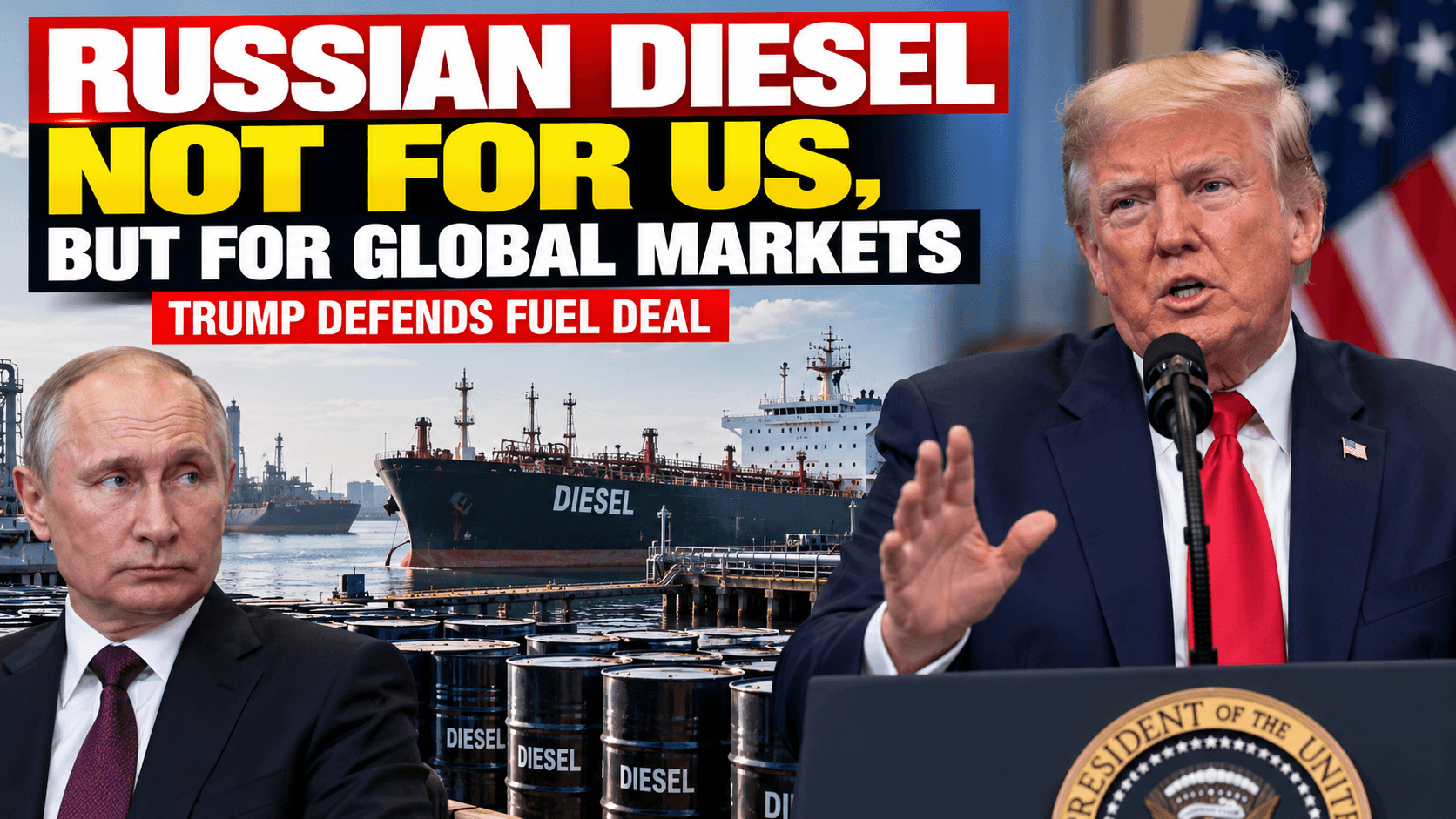
Russian Diesel Not for US, but for Global Markets: Trump Defends Fuel Deal Amid Criticism
Washington, October 14, 2026: US President Donald Trump has defended a deal involving Russian diesel supplies, stating that the fuel is intended for international markets rather than specifically for American consumers. His remarks come amid criticism from lawmakers in both major US political parties over the decision to ease restrictions on Russian fuel shipments.
The arrangement comes at a time when global energy markets are facing uncertainty linked to disruptions in the Middle East, rising fuel costs and concerns about the reliability of international supply routes. The Trump administration has presented the proposed shipments as a way to increase the availability of diesel and ease pressure on global prices.
However, the decision has raised questions about the effectiveness of sanctions against Russia and whether additional energy revenue could undermine broader US foreign-policy objectives.
Trump Explains the Purpose of the Russian Diesel Deal
Trump said the diesel would be released into the international market to address elevated prices rather than being directed exclusively to the United States.
According to reports published on October 14, the president argued that the global market had suffered from high fuel prices and that restoring supplies from affected refineries could help improve availability.
The announcement followed discussions between Trump and Russian President Vladimir Putin. Trump said Russia would supply more than 300,000 tonnes of diesel initially, followed by an additional 500,000 tonnes in November and another one million tonnes thereafter. Further deliveries were described as dependent on the condition of Russian refineries.
The administration's stated objective is to make additional fuel available to international buyers. The actual effect on prices, however, will depend on the volume delivered, the timing of shipments, demand conditions and other sources of supply.
Why Is Russian Diesel Important to Global Markets?
Diesel is a key fuel for freight transportation, agriculture, construction, manufacturing and several other economic activities. Changes in its availability can influence the operating costs of businesses and the prices consumers pay for goods and services.
When supplies become constrained, diesel prices may rise, increasing the cost of transporting products and moving raw materials. Additional supplies can help ease some of that pressure, although the impact depends on market conditions.
The proposed Russian shipments have attracted attention because global energy markets are already dealing with geopolitical uncertainty. Disruptions to shipping routes and energy infrastructure can affect the movement of oil and refined fuels between producers and consumers.
The United States is presenting the deal as a way to increase global availability. Whether it delivers meaningful price relief remains uncertain.
US Treasury Temporarily Eases Restrictions
To facilitate the proposed shipments, the US Treasury Department issued a temporary licence authorising certain transactions involving Russian-origin diesel. Reports say the authorisation remains in effect until April 7, 2027.
The measure represents a limited easing of restrictions for the transactions covered by the licence. It does not, by itself, establish a general removal of US sanctions against Russia.
The decision is particularly significant because Washington has used economic restrictions to limit Russian revenue and exert pressure on Moscow over its war against Ukraine.
The temporary authorisation has therefore prompted questions about how the administration intends to balance energy-market concerns with its existing sanctions policy.

US Senators Criticise the Decision
The diesel arrangement has faced criticism from both Democratic and Republican lawmakers. A bipartisan group of US senators urged Trump to reconsider the decision, arguing that the move could benefit the Russian government without delivering substantial relief to American consumers.
The senators contended that revenue generated by additional Russian energy sales could help finance Moscow's military activities. They also questioned whether the expected reduction in fuel prices would justify easing the restrictions.
Their criticism highlights a broader disagreement over the relationship between energy affordability and foreign-policy pressure.
Supporters of increasing fuel availability may argue that additional supply can help ease price pressures. Critics, meanwhile, warn that allowing more Russian fuel into international markets could weaken the intended effect of sanctions.
The central question is whether the potential benefits to energy markets outweigh the strategic and economic costs identified by opponents of the deal.
What Could the Deal Mean for Oil and Diesel Prices?
The impact on global fuel prices will depend on several factors, including how much diesel is delivered, when it reaches buyers and whether other producers increase or reduce their output.
Additional supplies can help ease shortages when demand exceeds available production. However, a temporary increase in supply does not automatically guarantee a sustained decline in prices.
Shipping costs, refinery capacity, geopolitical developments and market expectations can all influence the final price paid by buyers.
Diesel prices are also distinct from crude oil prices. Crude oil is processed in refineries to produce diesel and other fuels, meaning that refining capacity and the availability of specific petroleum products can affect diesel prices independently of crude oil movements.
For these reasons, market participants will be watching actual shipment volumes and price movements rather than relying solely on announcements about future deliveries.
Possible Implications for India and Other Fuel-Importing Countries
Countries that depend on imported energy may be affected by changes in the availability and price of internationally traded fuels.
For India, which imports substantial quantities of crude oil, developments in global energy markets can influence import costs, transportation expenses and broader inflationary pressures. However, the effect of Russian diesel entering international markets will depend on where the fuel is sold, how global prices respond and the purchasing arrangements of individual countries.
Lower international fuel prices could potentially benefit businesses and consumers over time, but no direct reduction in Indian retail fuel prices can be assumed from this announcement alone.
India's energy costs are influenced by several factors, including crude oil prices, exchange rates, refining margins, transportation costs, taxes and domestic pricing decisions.
What Happens Next?
The next stage of the deal will depend on whether the announced shipments take place according to schedule and whether the temporary authorisation remains in force.
Market participants will also monitor the response from US lawmakers, the administration's sanctions policy and developments affecting energy supplies from Russia and the Middle East.
The arrangement illustrates the challenges governments face when energy affordability and international security objectives come into conflict. Increasing the availability of fuel may help address supply pressures, while easing restrictions can raise concerns about the financial benefits received by a sanctioned country.
Conclusion
Trump's statement that Russian diesel is intended for global markets rather than specifically for the United States has placed the proposed fuel arrangement at the centre of a wider debate over energy security and sanctions policy.
The administration argues that additional supplies could help stabilise international fuel markets. Critics in Congress contend that the decision could benefit Russia while providing limited relief to consumers.
The deal's ultimate impact will depend on the quantity of fuel delivered, the response of international markets and the administration's future approach to sanctions. Until those outcomes become clearer, the extent of any price relief remains uncertain.
Disclaimer: This article is for informational and educational purposes only. It does not constitute financial or investment advice. The reported shipment plans and their potential effects should be distinguished from confirmed deliveries and measured market outcomes.
Get More News on Swaggbuzz
Author
About the author
Siddhaanth Raghav
Topics