
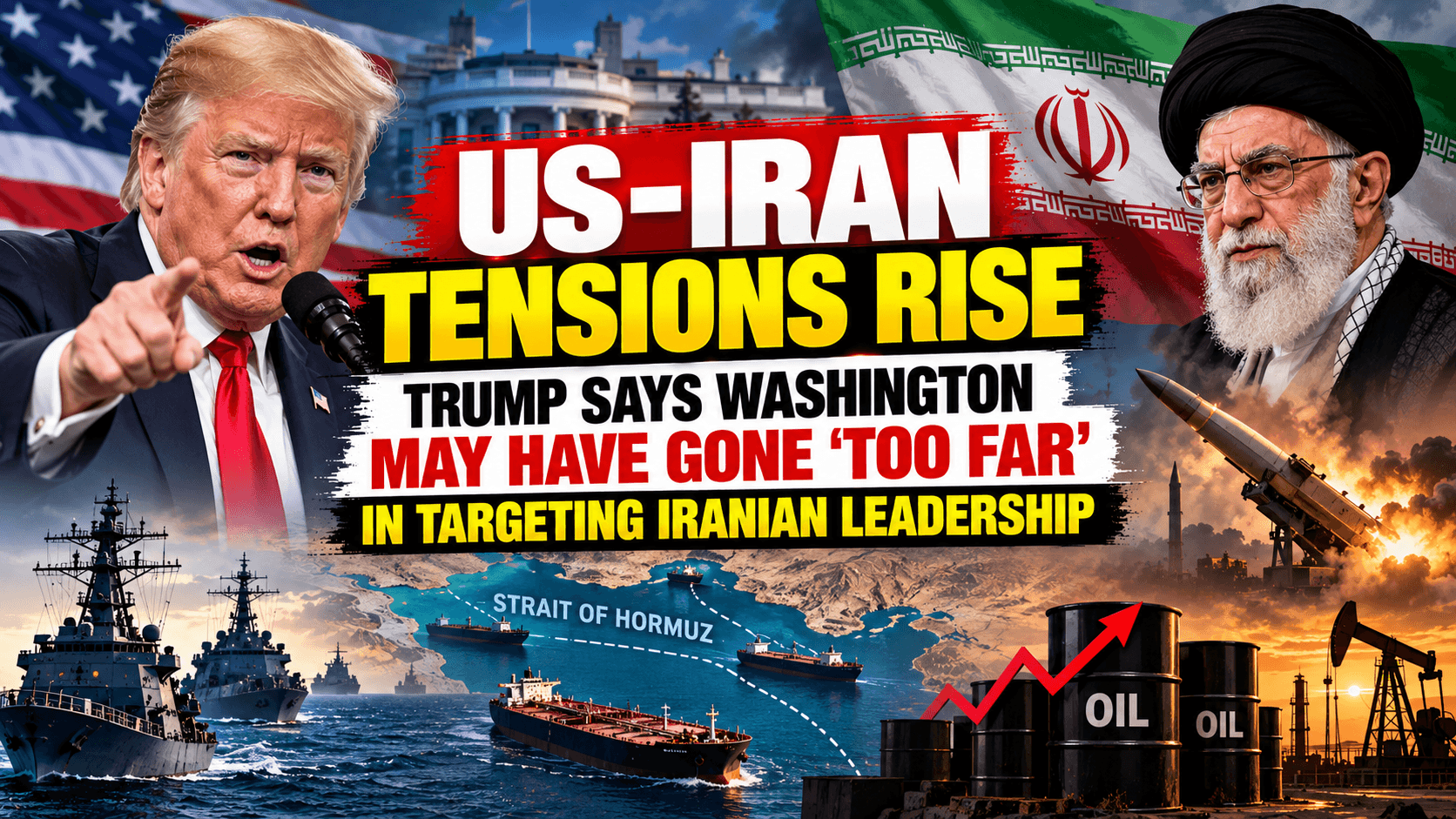
US-Iran Tensions Rise as Trump Says Washington May Have Gone ‘Too Far’ in Targeting Iranian Leadership
New Delhi, October 13, 2026: US President Donald Trump has suggested that Washington may have gone too far in targeting Iran’s leadership, acknowledging difficulties in identifying Iranian officials with whom the United States could negotiate. His remarks come amid renewed regional tensions, concerns over commercial shipping in the Gulf, uncertainty surrounding diplomatic efforts and continued pressure on global energy supplies.
According to reports published on October 13, Trump made the comments during a campaign rally in Youngstown, Ohio, on October 12. He indicated that the extensive targeting of Iranian leaders had complicated the process of identifying counterparts for potential negotiations.
The remarks have drawn attention to the relationship between military operations and diplomatic engagement as the conflict continues to affect regional security and international trade.
Trump Raises Questions About Iran’s Leadership and Negotiations
Trump’s comments reflected uncertainty within Washington over whom to engage in future discussions with Tehran. He suggested that targeting Iran’s leadership had made it more difficult for the United States to determine which officials could participate in negotiations.
The statement is significant because diplomatic agreements generally require identifiable representatives who can communicate positions, negotiate terms and help implement commitments.
However, Trump’s remarks do not, by themselves, establish a change in US policy or confirm that Washington is preparing to end its military campaign. Further official statements and developments would be needed to determine whether the comments signal a broader adjustment in the administration’s approach.
Iranian officials have also challenged aspects of Washington’s characterisation of the country’s leadership and political structure, highlighting the continuing disagreement between the two governments.
Regional Security Remains a Major Concern
The latest statements come against a backdrop of continuing security incidents across the Middle East. Commercial shipping in and around the Persian Gulf has faced increased risks, raising concerns among shipping companies, energy suppliers and governments.
The Strait of Hormuz is particularly important because it connects the Persian Gulf with the Gulf of Oman and the wider international maritime network. A substantial share of global oil shipments normally passes through this strategic waterway.
Disruptions to shipping can affect delivery schedules, insurance premiums and transportation costs. Prolonged uncertainty may also encourage shipping companies to reconsider routes and delay cargo movements, adding further pressure to international supply chains.
.png&w=3840&q=75)
Oil Supply Concerns and Global Economic Implications
The US-Iran conflict has become an important factor in global energy-market developments. Oil prices can respond to changes in supply expectations, shipping security, regional hostilities and the prospects for diplomatic agreements.
Reuters reported on October 13 that Brent crude futures had declined during the trading session as markets assessed the possibility of additional diesel supplies from Russia alongside continuing risks in the Gulf region. The report also highlighted concerns about shipping disruptions and the broader energy-supply outlook.
For countries that rely heavily on imported energy, sustained volatility can increase uncertainty around fuel costs, transportation expenses and inflation. Businesses may also face higher operating costs if energy prices and shipping charges remain elevated.
The actual impact depends on how long disruptions continue, whether alternative supplies become available and how quickly commercial shipping conditions improve.
Diplomatic Outreach and the Possibility of Further Talks
Diplomatic engagement remains an important factor in assessing the direction of the crisis. Communication through intermediaries and discussions involving national security officials can provide channels for exchanging proposals, clarifying demands and exploring possible arrangements.
Nevertheless, diplomatic outreach does not necessarily mean that an agreement is imminent. Differences over security, military activity, maritime access and Iran’s broader strategic position may continue to complicate negotiations.
Trump’s comments have brought renewed attention to the practical challenges of finding negotiating counterparts during an ongoing conflict. Whether this leads to renewed talks, changes in military policy or additional diplomatic initiatives remains uncertain.
Any assessment of progress will depend on verifiable announcements from the parties involved and evidence of concrete steps toward reducing hostilities.
What the Developments Mean for the Middle East
The latest developments illustrate how military decisions, political leadership and diplomacy are closely connected during a regional conflict. Uncertainty over negotiations can influence security calculations, while risks to maritime routes can affect energy markets and international commerce.
For regional governments, shipping operators and energy-importing countries, the immediate priorities include monitoring security conditions, assessing supply risks and evaluating the prospects for de-escalation.
The situation also demonstrates why public statements should be considered alongside confirmed policy decisions and independently reported developments. Statements made at political rallies may indicate an administration’s position or concerns, but they do not necessarily translate into immediate changes on the ground.
Conclusion
Donald Trump’s suggestion that the United States may have gone too far in targeting Iran’s leadership has added a new dimension to discussions about the conflict and the prospects for negotiations. At the same time, regional security incidents, maritime risks and energy-market uncertainty continue to shape the broader situation.
The next phase will depend on developments in diplomatic communication, the security environment across the Gulf and any verifiable decisions by Washington and Tehran. Until clearer evidence emerges, the direction and timing of a potential diplomatic resolution remain uncertain.
**Disclaimer:** This article is intended for informational and educational purposes only. It is not political advocacy, investment advice or a prediction of future events. Readers should consult multiple reliable news sources and official statements for further updates.
Get More News on Swaggbuzz
Author
About the author
Siddhaanth Raghav
Topics