
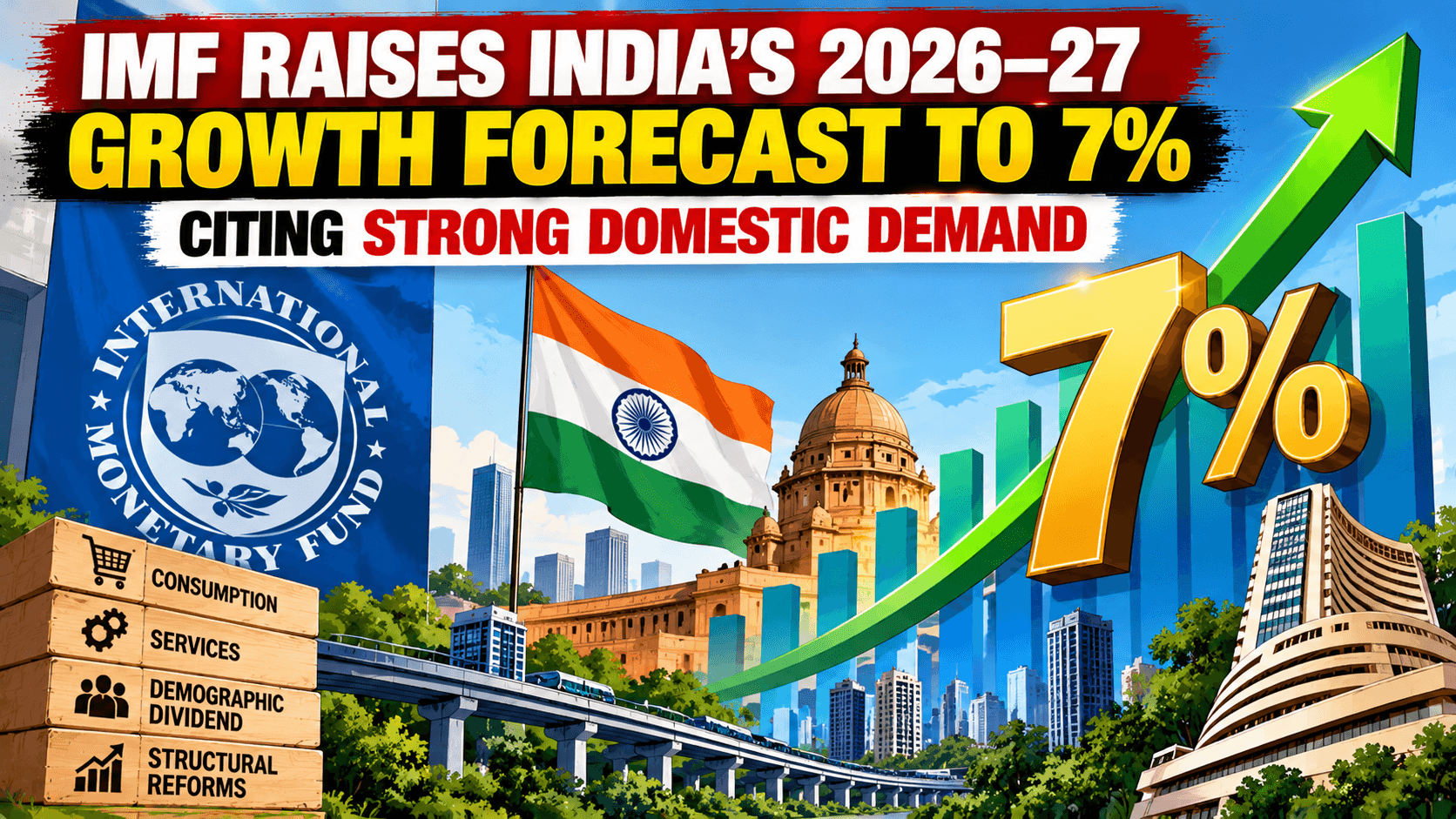
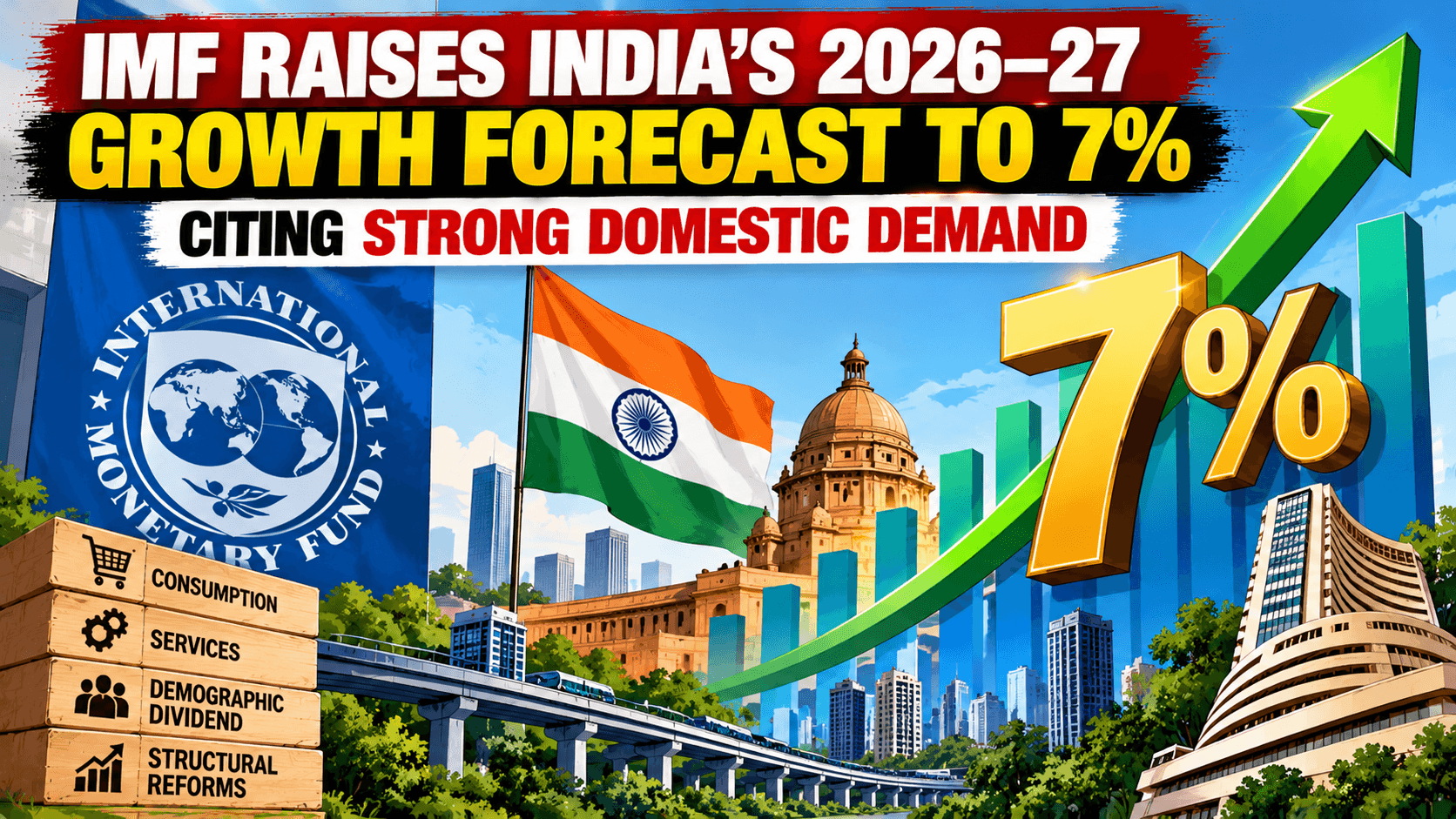
IMF Raises India’s 2026–27 Growth Forecast to 7%, Citing Strong Domestic Demand
New Delhi, October 13, 2026: The International Monetary Fund (IMF) has raised India’s economic growth forecast for the 2026–27 financial year to 7%, up from its earlier estimate of 6.4%, citing stronger-than-expected economic momentum, resilient domestic demand and robust activity in the services sector.
The revised projection, published in the IMF’s latest World Economic Outlook update, signals confidence in India’s economic performance despite persistent global uncertainties, geopolitical tensions and elevated energy prices. The IMF also raised its growth forecast for India for the 2027–28 financial year to 7%, compared with its previous estimate of 6.7%.
Why Has the IMF Raised India’s Growth Forecast?
The IMF’s upward revision reflects stronger economic activity than previously anticipated. Domestic consumption and the services sector have supported growth, while India’s large consumer market and favourable demographic trends continue to underpin its economic outlook.
The IMF noted that India stands out among economies receiving upward growth revisions, pointing to sustained momentum, an expanding domestic market and continued structural reforms.
Domestic demand is particularly important because household consumption and business spending contribute significantly to economic activity. When consumers continue spending and businesses maintain investment, economic growth can remain resilient even when international conditions become less favourable.
India’s Growth Outlook Compared With Global Economic Conditions
India’s improved outlook contrasts with the challenges facing the global economy. According to the IMF’s latest projections, worldwide economic growth is expected to reach 3.1% in 2026, slightly above its previous estimate of 3%. For 2027, global growth is projected at 3.4%.
Geopolitical tensions, higher energy costs and uncertainty surrounding international trade remain important risks. The IMF’s oil-price assumptions indicate that average crude oil prices could reach $95.74 per barrel in 2026, approximately 41% higher than in 2025.
For India, which imports a substantial share of its crude oil requirements, prolonged increases in oil prices could raise import costs, put pressure on inflation and affect the country’s external balance. These risks could complicate the outlook even as domestic economic activity remains strong.
RBI and World Bank Also Upgrade India’s Forecast
The IMF’s decision follows upward revisions by other major economic institutions.
The Reserve Bank of India (RBI) has raised its GDP growth projection for the 2026–27 financial year to 7.1%, compared with its earlier estimate of 6.7%.
The World Bank has also increased its forecast for India’s growth in the same financial year to 7.1%, up from 6.6%. These projections suggest that several major institutions have become more optimistic about India’s near-term economic prospects, supported by domestic demand and stronger-than-expected activity.
However, the forecasts remain estimates rather than guaranteed outcomes. Actual growth will depend on domestic economic conditions, inflation, investment trends and developments in the global economy.
What Is Driving India’s Economic Growth?
Several factors are supporting India’s economic outlook:
- Strong domestic consumption: Household spending helps sustain demand for goods and services, supporting businesses and employment.
- Resilient services sector: Services activity remains a major contributor to India’s economic output, including areas such as financial services, information technology and business services.
- Demographic advantages: India’s large population and working-age demographic base provide opportunities for consumption, productivity gains and workforce expansion.
- Expanding domestic market: A growing consumer market can encourage businesses to expand operations, invest in capacity and develop new products and services.
- Structural reforms: Policy and economic reforms can support investment, improve efficiency and strengthen the foundations for longer-term growth.
The extent to which these factors translate into sustained economic expansion will depend on productivity, job creation, investment and the ability of businesses to navigate external risks.
Challenges That Could Affect India’s Growth
Despite the more favourable forecast, India is not insulated from global economic pressures. Higher crude oil prices could increase transportation and production costs, while geopolitical conflicts may disrupt supply chains and international trade.
Persistent inflation could also affect household purchasing power and influence monetary policy decisions. Meanwhile, weaker demand in major export markets could create challenges for Indian businesses that depend on overseas customers.
Sustaining high growth will therefore require continued investment, productivity improvements, employment opportunities and effective management of inflationary pressures.
Conclusion
The IMF’s decision to raise India’s 2026–27 growth forecast to 7% highlights the country’s stronger-than-expected economic momentum and the importance of domestic demand and services activity. The upward revisions by the IMF, RBI and World Bank also point to a broadly improved outlook among major institutions.
Nevertheless, elevated energy prices and global uncertainty remain significant risks. India’s ability to maintain its growth momentum will depend on how effectively it manages these challenges while supporting investment, consumption and long-term productivity.
Get More News on Swaggbuzz
Author
About the author
Siddhaanth Raghav
Topics