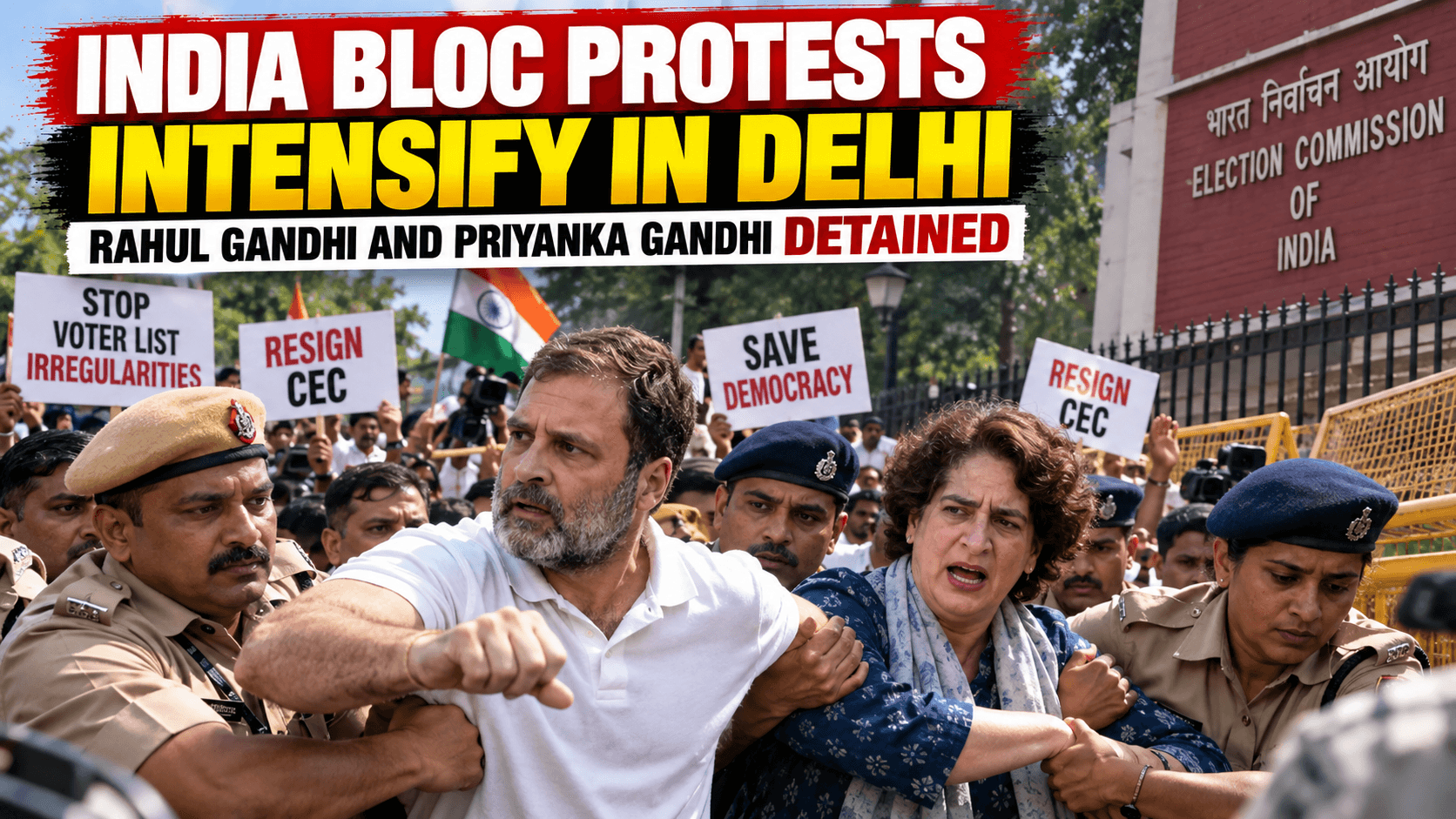
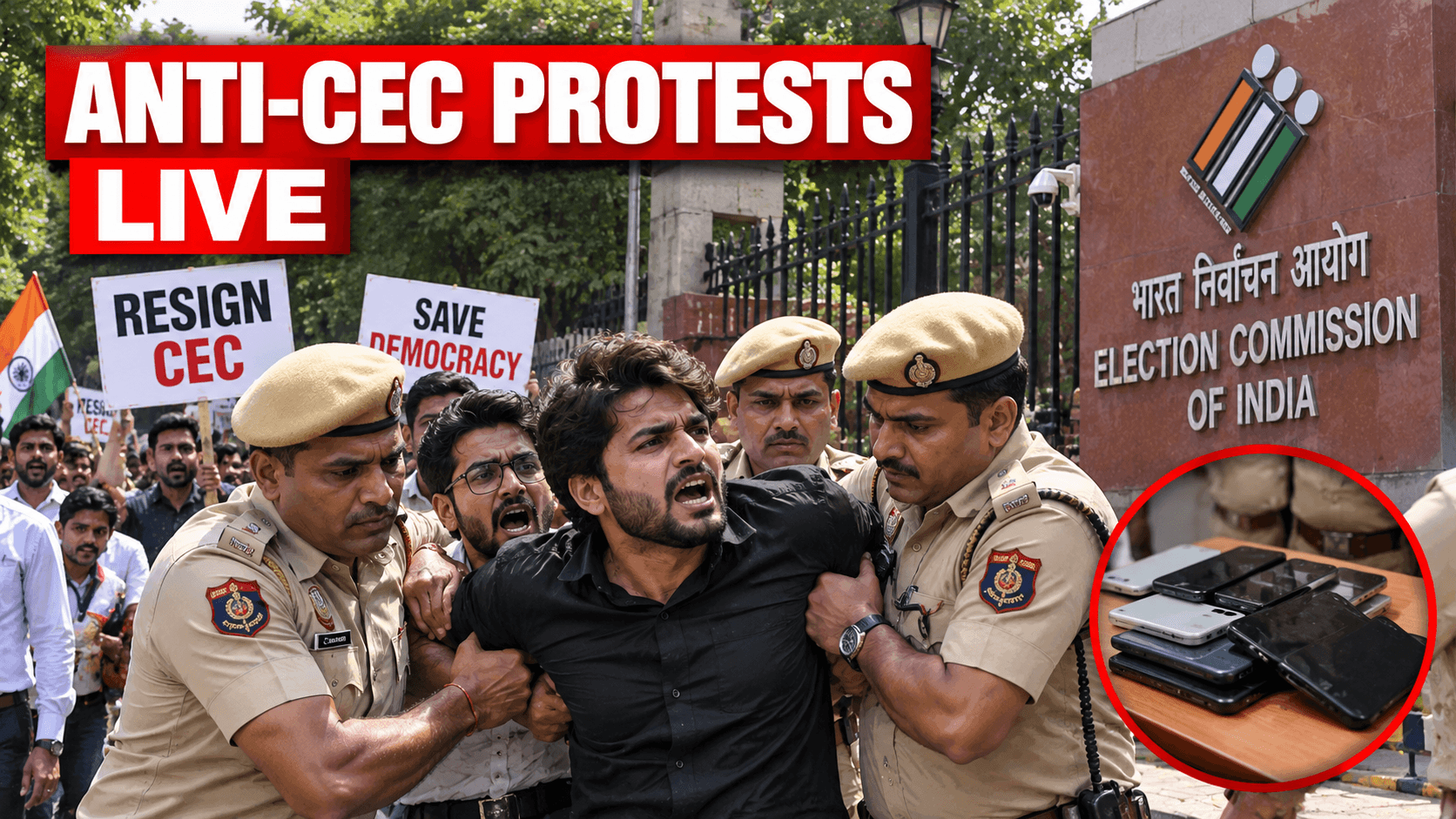
Anti-CEC Protests LIVE: CJP Alleges Detained Leaders Denied Access to Lawyers, Phones Confiscated
New Delhi, October 13, 2026: The ongoing protests demanding the resignation of Chief Election Commissioner (CEC) Gyanesh Kumar intensified on Tuesday after the Cockroach Janta Party (CJP) alleged that its detained leaders had been denied access to legal representatives and had their mobile phones confiscated by Delhi Police.
CJP leaders Saurav Das, Ashutosh Ranka and Ajinkya Shinde were detained on Tuesday morning after entering Jantar Mantar, a day after Delhi Police withdrew the site's designated status as a venue for public protests. The latest incident has renewed concerns about the handling of demonstrations, access to legal assistance and restrictions on public assembly in the national capital.
CJP Alleges Detained Leaders Cannot Meet Lawyers
CJP's legal head, Ratna Singh, alleged that the detained leaders were not being permitted to meet their lawyers at Jaffarpur Kalan police station. She also claimed that their mobile phones had been taken away while they were in custody.
The party's legal representative, Pushp Sharma, told the Press Trust of India (PTI) that he had repeatedly requested permission to meet Das, Ranka and other detained members but had not been allowed access.
According to Sharma, he had previously communicated with Das through phone calls and WhatsApp messages. He said Das's last communication indicated that the phones were being taken away, after which he was unable to contact the detained leaders.
Sharma said police had told him the detainees were being kept safe and that he could call if he needed to discuss anything with them. The allegations regarding access to lawyers and the handling of mobile phones had not been independently established in the available reporting at the time of publication.
Why Were CJP Leaders Detained at Jantar Mantar?
The latest detentions followed a confrontation at Jantar Mantar, where CJP leaders attempted to enter the protest venue despite its recent removal from the list of designated demonstration sites.
Video footage shared by the party showed leaders climbing over locked gates before police personnel intervened. A senior police officer cited in media reports said the group arrived with additional participants and intended to protest against CEC Gyanesh Kumar.
Delhi Police had announced on Monday that Jantar Mantar would no longer serve as a designated protest site. The authorities listed Ramlila Maidan, Burari Ground and CBD Ground as alternative locations for demonstrations.
CJP members have challenged the change, arguing that the withdrawal of the site's designated status should not prevent people from raising political demands. Party representatives have indicated that their campaign will continue.
Why Are Protesters Demanding the CEC's Resignation?
The demonstrations centre on allegations of irregularities in the revision of India's electoral rolls, including the Special Intensive Revision (SIR) process.
Protesters and opposition groups have raised concerns about the deletion of voters' names and questioned whether the process could affect electoral fairness. They are demanding accountability from the Election Commission and calling for Gyanesh Kumar's resignation.
The Election Commission has denied allegations of political bias. It has maintained that its procedures are part of electoral-roll verification and that eligible voters whose names were wrongly deleted can seek re-enrolment.
The dispute has widened beyond the original electoral-roll questions, with demonstrations and legal challenges now also focusing on police detentions, restrictions on protests and the treatment of journalists and activists.
Supreme Court Hearing and Legal Developments
The protests have prompted legal proceedings concerning alleged unlawful detentions and restrictions on movement and public assembly.
On October 13, the Supreme Court adjourned the related matters for further hearing on October 15. The proceedings concern petitions arising from the demonstrations, including allegations about police conduct and restrictions imposed during the protests.
The court also issued notice on a separate challenge to Section 16 of the Chief Election Commissioners and Other Election Commissioners Act, 2023. The provision provides immunity from civil or criminal proceedings for acts performed in the discharge of official duties or functions.
Earlier proceedings had included directions concerning illegal detentions and the normal operation of public transportation. The continuing legal process is expected to examine the issues raised in the petitions and responses submitted by the authorities.
Delhi Police Prepares for Further Demonstrations
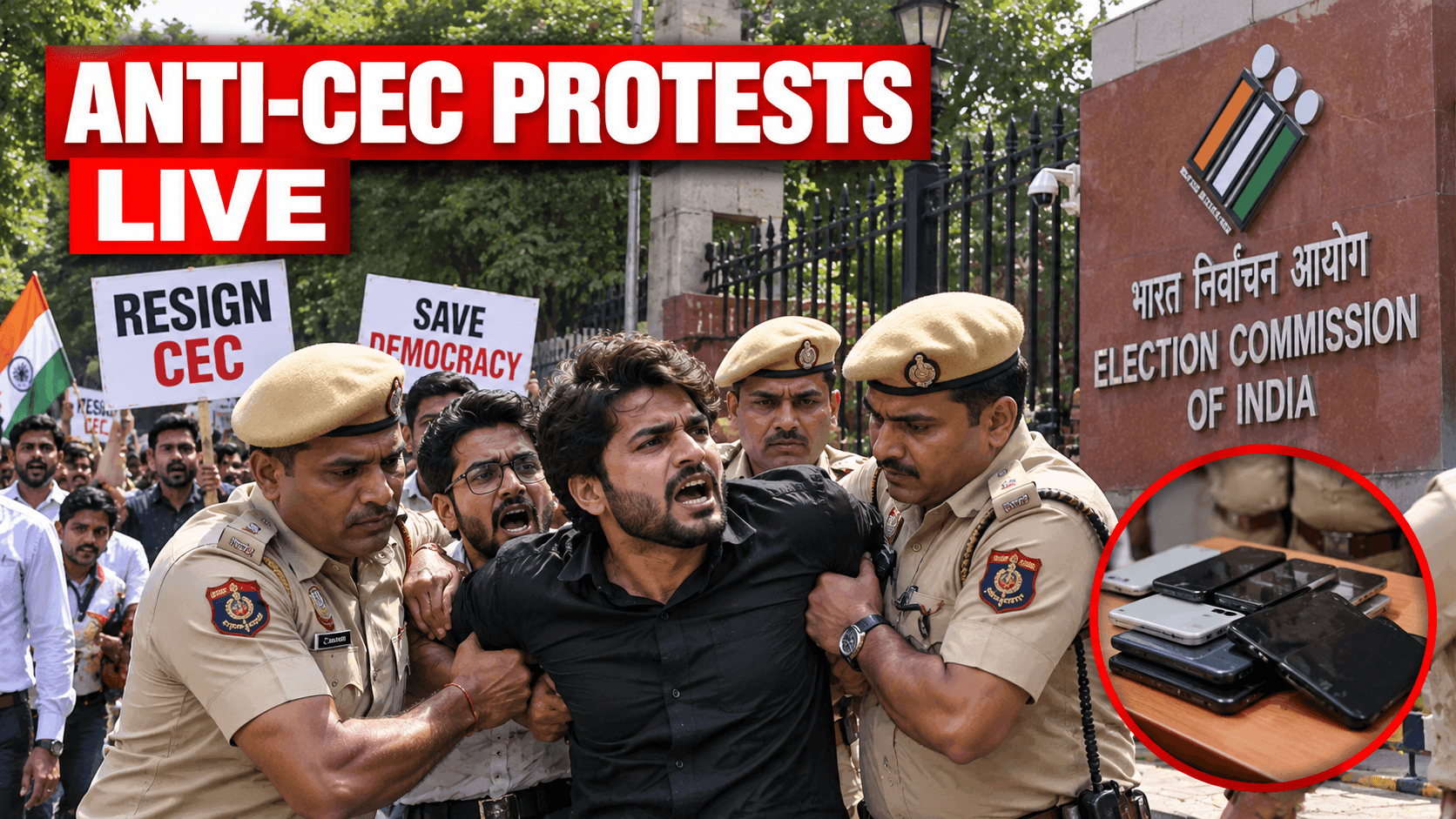
Delhi Police has also sought an extension of the deployment of central security forces in the capital, citing intelligence inputs about the possibility of further demonstrations involving CJP and allied organisations.
According to reporting by The Indian Express, police requested that 273 companies of Central Armed Police Forces remain deployed in Delhi until October 20. The request cited concerns about possible protests near Jantar Mantar, the Election Commission's office and other sensitive locations.
The request reflects the authorities' preparations for continued demonstrations. It does not, by itself, establish that further confrontations will occur.
What Happens Next?
The next developments are likely to centre on whether the detained protesters receive access to their legal representatives, the authorities' response to the allegations concerning confiscated phones, and the next hearing in the Supreme Court.
The dispute over Jantar Mantar's status as a designated protest venue is also likely to remain a major issue as campaigners seek to continue their demonstrations.
At the same time, the underlying disagreement over electoral-roll revisions remains unresolved. The Election Commission's response, any additional documentary evidence and the outcome of legal proceedings will be important in determining how the dispute develops.
Conclusion
The latest anti-CEC protests in New Delhi have brought renewed attention to electoral transparency, the right to peaceful assembly and the safeguards available to people detained during demonstrations. CJP's allegations that detained leaders were denied access to lawyers and had their phones confiscated have added another legal dimension to the dispute.
As the matter returns to court, the focus will remain on the facts surrounding the detentions, the response from Delhi Police and the broader questions concerning electoral administration and the management of public protests.
Disclaimer: This article is intended for informational and educational purposes only. Allegations are attributed to the parties making them and should not be treated as proven findings. Readers should consult official court updates and reliable news outlets for further developments.
Get More News on Swaggbuzz
Author
About the author
Siddhaanth Raghav
Topics