
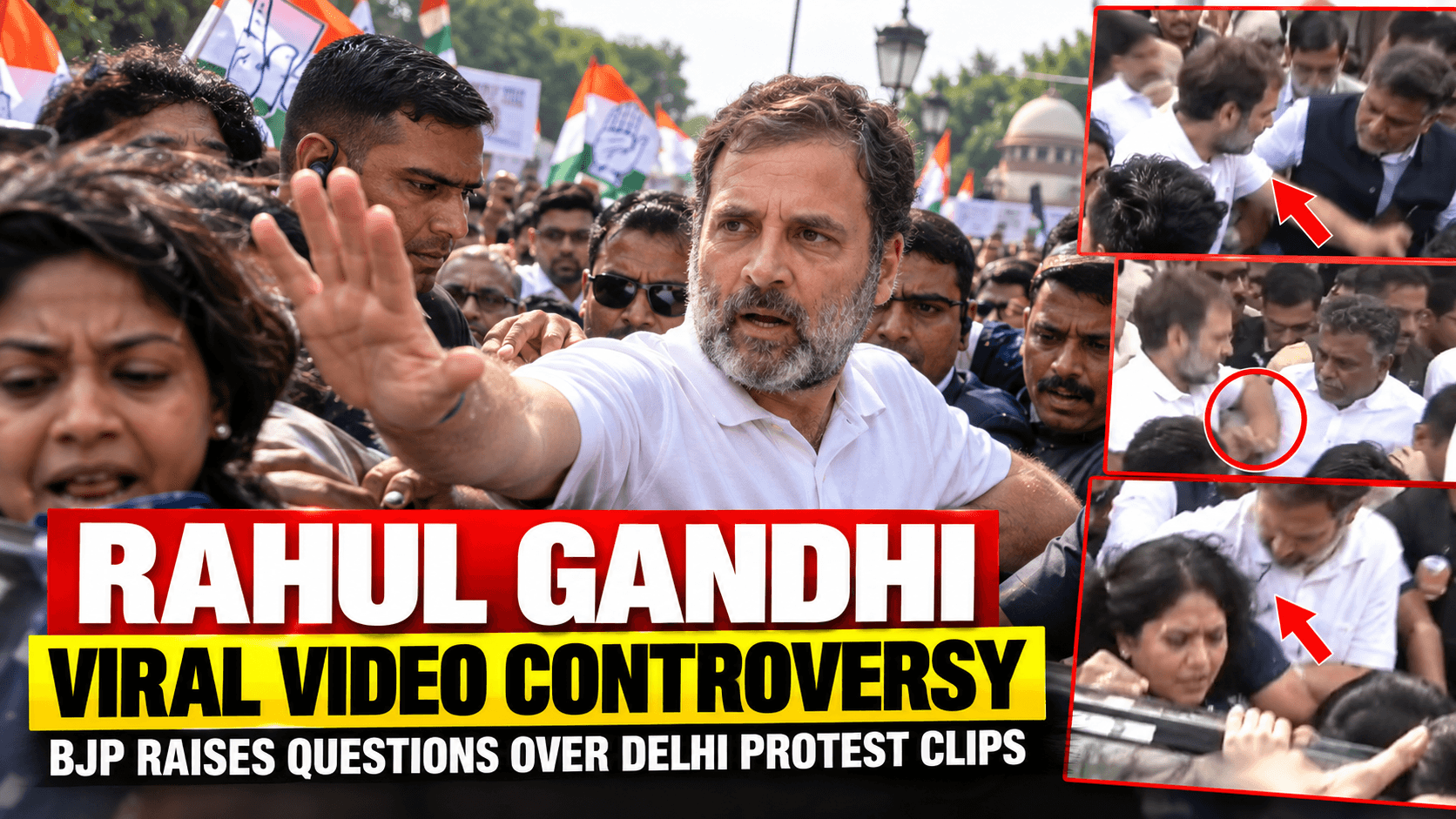
Rahul Gandhi Viral Video Controversy: BJP Raises Questions Over Delhi Protest Clips
New Delhi, October 14, 2026: Congress leader Rahul Gandhi has come under political scrutiny after several videos from opposition protests in Delhi circulated on social media, prompting allegations of pushing, shoving and inappropriate conduct. The Bharatiya Janata Party (BJP) has criticised Gandhi over the footage, while Congress leaders and some of the people featured in the videos have disputed the opposition party's interpretation of the incidents.
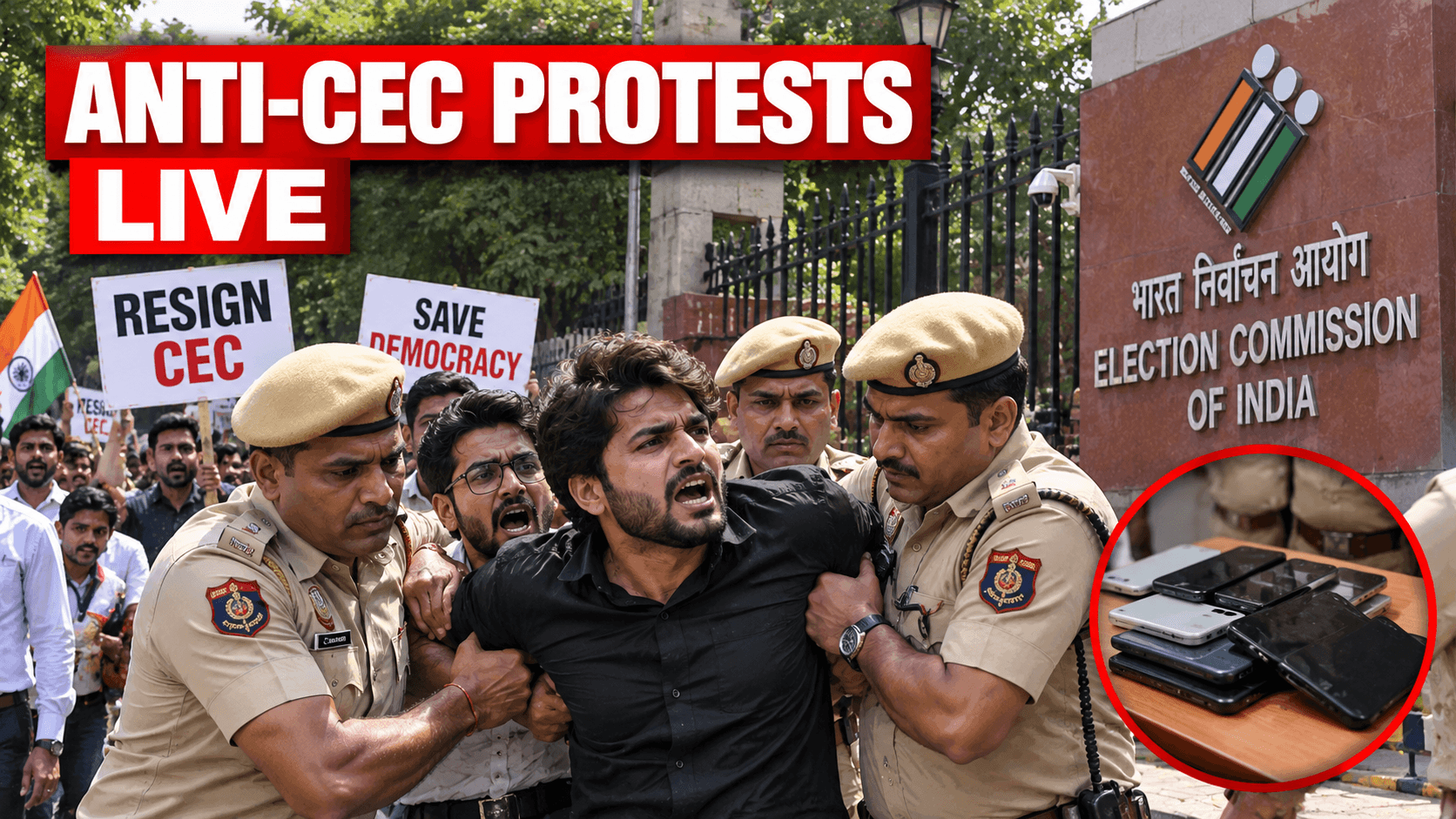
The controversy follows the INDIA bloc's October 12 march towards the Supreme Court, organised to challenge revisions to India's electoral rolls and demand the resignation of Chief Election Commissioner Gyanesh Kumar. The march brought together several opposition leaders and supporters in central Delhi.
The videos have triggered a fresh exchange between the BJP and Congress, raising questions about how physical interactions during crowded political demonstrations are being represented online.
How the Rahul Gandhi Viral Video Controversy Began
The controversy developed after clips from the Delhi demonstrations began circulating on social media. BJP leaders used the footage to question Gandhi's conduct during the protest, alleging that he had pushed or manhandled people around him.
However, the videos relate to different incidents, and the people involved have offered differing accounts. It is therefore important to distinguish the allegations made by political parties from statements by those who were present.
The controversy has attracted attention because it involves prominent political figures and has emerged during an already heated dispute over electoral administration and the rights of opposition groups to protest.
Viral Video Featuring Deepender Hooda
One of the clips involved Rahul Gandhi and Congress MP Deepender Singh Hooda during a protest march in New Delhi. BJP and Indian National Lok Dal (INLD) leaders alleged that Gandhi had treated Hooda inappropriately and questioned why he appeared to be asked to get down from a vehicle.
Hooda rejected the suggestion that the incident was intended to humiliate him. He explained that Gandhi had asked him to help manage the crowd and coordinate arrangements as the march approached another barricade.
Hooda also said he had been involved in organising the demonstration and that the incident was being presented out of context.
The competing accounts have fuelled political debate about the episode. However, Hooda's own explanation does not support the claim that Gandhi intended to insult him.
D. K. Shivakumar Denies Rahul Gandhi Pushed Him
Another video featured Karnataka Chief Minister D. K. Shivakumar walking near Gandhi during the October 12 march. The BJP shared the footage and alleged that Gandhi pushed Shivakumar aside as he attempted to walk alongside the Congress leader.
Shivakumar subsequently rejected the allegation. According to reports published by The Times of India and Hindustan Times on October 13, he said Gandhi had not pushed him and was concerned about his safety because of the large crowd.
His response challenged the interpretation promoted by the BJP and added another dimension to the debate over the circulating clips.
The incident illustrates why short social media videos can be open to competing interpretations, particularly when they show only a portion of a crowded event.
Journalist Richa Parashar Makes Allegations
A separate controversy arose after journalist Richa Parashar alleged that Gandhi had grabbed her hand and pushed her aside while she was trying to cover the October 12 demonstration near the Supreme Court.
According to her account, she fell during the confrontation and subsequently sought medical attention. BJP leaders publicised her allegations and criticised Gandhi over his conduct.
Congress leaders rejected the accusations. Congress leader Alka Lamba questioned aspects of the reported sequence of events and described the allegations as politically motivated.
The claims have not been established as a proven finding of misconduct in the reporting cited here. The journalist's account, the Congress response and any available footage need to be considered separately rather than treating the allegations as a confirmed conclusion.
This episode is distinct from the videos involving Deepender Hooda and D. K. Shivakumar, even though all three controversies emerged around the same protest march.
Why Was the INDIA Bloc Protesting in Delhi?
The demonstrations were organised amid opposition concerns about the Special Intensive Revision (SIR) of electoral rolls. Opposition parties have questioned the process and alleged that changes to voter lists could unfairly affect eligible voters.
The Election Commission has defended its electoral-roll procedures, maintaining that the revisions are intended to improve the accuracy of voter lists. The controversy has nevertheless developed into a wider political dispute over electoral transparency and institutional accountability.
During the October 12 march, opposition leaders sought to bring their concerns before the Supreme Court. The demonstration was part of a broader campaign demanding changes to the electoral-roll process and accountability from the country's election authorities.
The disputes surrounding the viral videos have since added a separate political dimension to the wider protest movement.
BJP and Congress Trade Allegations
The BJP has used the footage to question Gandhi's conduct, while Congress leaders have challenged the interpretation of the clips and rejected allegations of deliberate mistreatment.
The disagreement demonstrates how viral videos can become part of political messaging, especially during periods of heightened tension between rival parties.
For readers trying to understand the incidents, several distinctions matter: what a video visibly establishes, what a person involved says happened, what political representatives allege, and what has been independently verified.
A brief clip may show physical contact without establishing the intention behind it. Equally, a denial from someone involved is an important part of the record but does not, on its own, settle every disputed question.
Independent verification, fuller footage and corroborated accounts are therefore important when assessing allegations arising from political demonstrations.
Conclusion
The Rahul Gandhi viral video controversy has generated political debate following the INDIA bloc's October 12 protest march in Delhi. Videos involving Deepender Hooda and D. K. Shivakumar have prompted allegations from opposition parties, but both Congress figures have disputed suggestions that Gandhi deliberately mistreated them. A separate journalist's allegation has also been denied by Congress leaders.
As the dispute continues, the key issue is the distinction between allegations, political interpretations and established facts. Readers should review credible reporting from multiple sources before drawing conclusions about what occurred during the demonstrations.
Disclaimer: This article is intended for informational and educational purposes only. Allegations and responses are attributed to the individuals or organisations making them. It does not present disputed claims as proven facts.
Get More News on Swaggbuzz
Author
About the author
Siddhaanth Raghav
Topics