
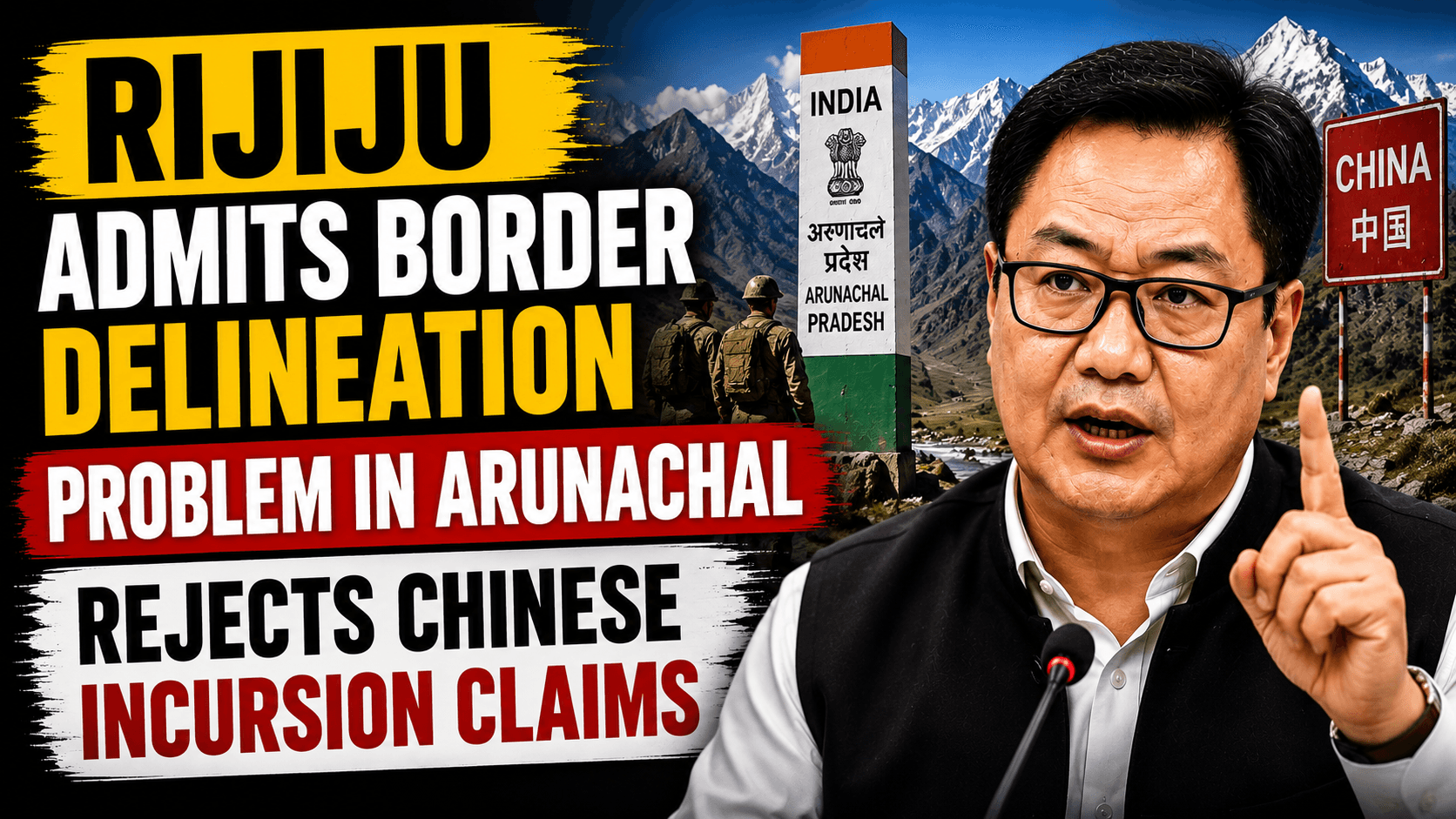
Rijiju Admits Border Delineation Problem in Arunachal, Rejects Claims of Chinese Incursion
New Delhi, August 19, 2026 Union Minister Kiren Rijiju has acknowledged that there is a continuing problem with the lack of clear physical delineation along parts of the India-China border in Arunachal Pradesh, while firmly rejecting claims that Chinese forces have recently entered deep into Indian territory.
Rijiju's comments come amid growing public discussion over allegations of Chinese activity in the Taksing sector of Upper Subansiri district, where local organisations have raised concerns about border infrastructure, access to traditional areas and the absence of clearly marked boundaries.
The minister said the concerns of people living in India's frontier areas should be taken seriously, but cautioned against treating unverified claims circulating on social media as evidence of a major Chinese military incursion.
Rijiju Rejects 60-Km Incursion Claim
One of the major claims circulating recently alleged that Chinese troops had moved approximately **60 kilometres inside Indian territory** in Arunachal Pradesh.
Rijiju rejected that claim, describing reports of such a large-scale incursion as inaccurate. His comments followed the circulation of videos and social-media posts suggesting that Chinese forces had significantly advanced into Indian territory.
The government has maintained that there has been no fresh Chinese occupation or major incursion into Arunachal Pradesh. Earlier, Arunachal Pradesh Home Minister Mama Natung had similarly dismissed reports of Chinese encroachment in the Taksing area as rumours and said Indian security forces continue to protect the border.
What Is the Border Delineation Problem?
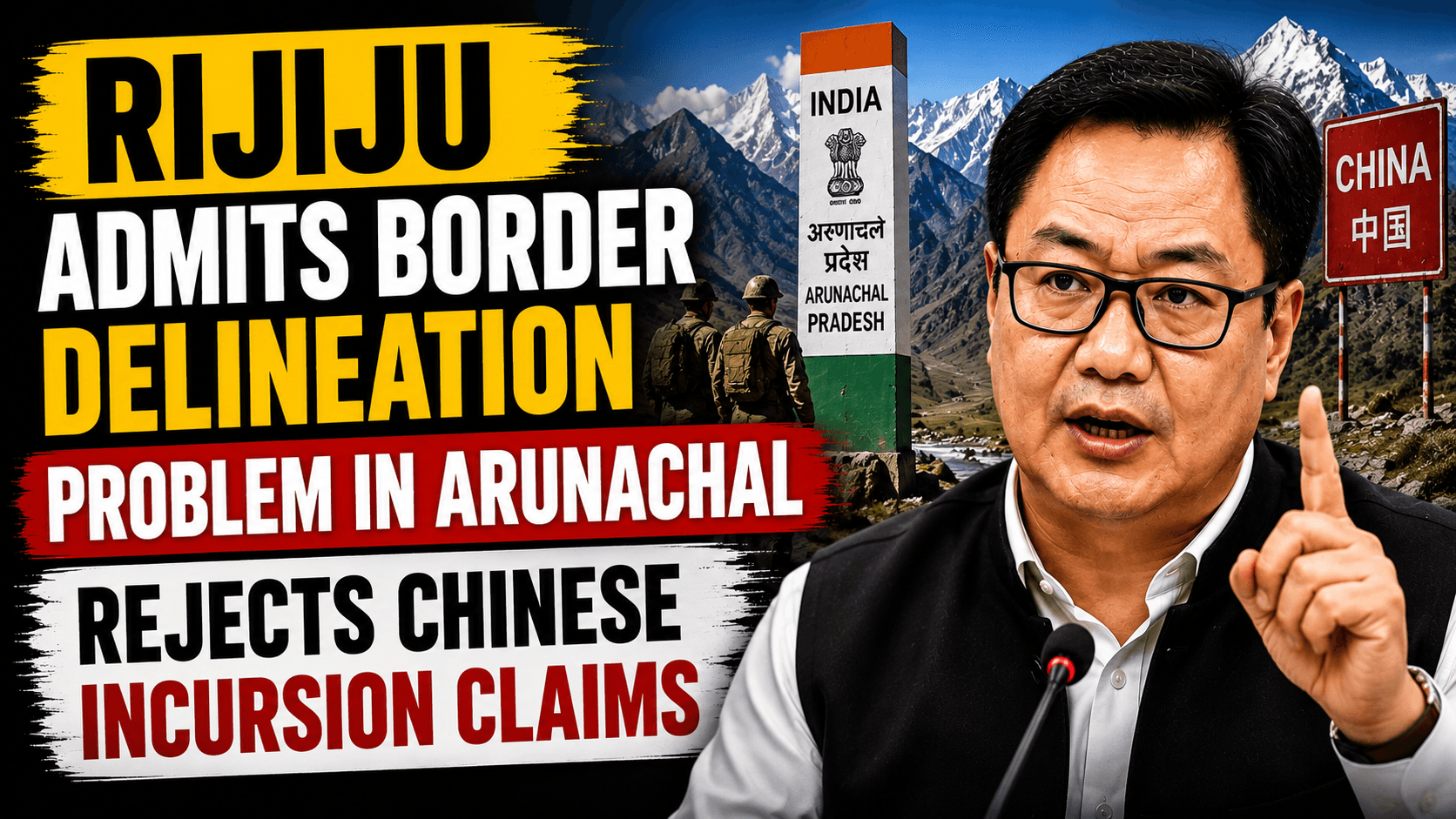
While rejecting claims of a major incursion, Rijiju has acknowledged a genuine difficulty along parts of the frontier: **the border is not physically demarcated in many areas**.
The India-China boundary in Arunachal Pradesh remains disputed. India regards Arunachal Pradesh as an integral part of the country, while China claims large parts of the state and refers to it as "Zangnan."
The absence of clear physical markers in some remote areas can create difficulties for people living near the frontier. Local residents have previously said that traditional grazing, hunting and other activities can become complicated when the precise location of the Line of Actual Control is unclear.
Local Concerns Continue Despite Government Reassurance
The controversy began gaining attention after the **Nah Welfare Society**, a local organisation, submitted concerns regarding alleged Chinese activity around several areas near Taksing.
The organisation has claimed that Chinese infrastructure and military activity have expanded in areas that local communities consider part of their traditional lands. It has also called for stronger border infrastructure and greater government attention to the concerns of people living in remote frontier villages.
have not been independently established as evidence of a new large-scale Chinese military occupation. The Arunachal Pradesh government has indicated that claims about alleged encroachment need to be verified through an assessment of the ground situation before firm conclusions are reached.
Why the Issue Is Politically Sensitive
The issue is particularly sensitive because Arunachal Pradesh shares a long and strategically important frontier with China.
Any allegation of Chinese military movement into Indian territory can quickly become a major national-security issue. At the same time, government officials have warned that unverified information can create unnecessary fear and confusion among residents and the wider public.
Rijiju's comments therefore attempt to distinguish between two separate issues: the **real difficulty created by an incompletely demarcated frontier** and claims of a **large-scale Chinese incursion**, which he has rejected.
Infrastructure Remains a Major Concern
Border infrastructure has also become an important part of the debate.
Local groups have called for better roads, bridges, communication facilities and connectivity in remote areas of Upper Subansiri. They argue that stronger infrastructure is essential not only for residents but also for improving access to frontier regions.
Rijiju has previously argued that border infrastructure in Arunachal Pradesh has received greater attention from the central government in recent years.
The debate reflects a broader challenge for India: strengthening civilian development and security infrastructure in extremely remote border areas while managing an unresolved boundary dispute with China.
India-China Border Tensions Remain Under Watch
The latest controversy comes against the backdrop of continuing tensions along the India-China frontier.
Although the two countries have made efforts to stabilize relations and maintain dialogue, the boundary dispute remains unresolved. Both sides have maintained substantial military and infrastructure capabilities along sensitive sections of the frontier.
China has repeatedly asserted its claims over Arunachal Pradesh, while India has consistently rejected those claims and maintained that the state is an integral part of the country.
For now, Indian officials are emphasizing that reports of a 60-kilometre Chinese incursion should not be treated as established fact. At the same time, the government's acknowledgment of problems associated with border delineation highlights why concerns among frontier communities continue to attract attention.
What Happens Next?
The immediate focus is likely to remain on establishing the facts on the ground and addressing concerns raised by residents of the Taksing region.
A clearer assessment of the situation could help distinguish between legitimate local concerns over border access and infrastructure and claims of an actual military incursion.
For India, the episode underscores the importance of maintaining strong border infrastructure, supporting frontier communities and carefully communicating verified information about developments along the disputed boundary.
Get More News on Swaggbuzz
Author
About the author
Siddhaanth Raghav
Topics