Italy’s Meloni Toughens Protest Laws: Teen Detentions, Parental Liability and Five-Year Jail Term
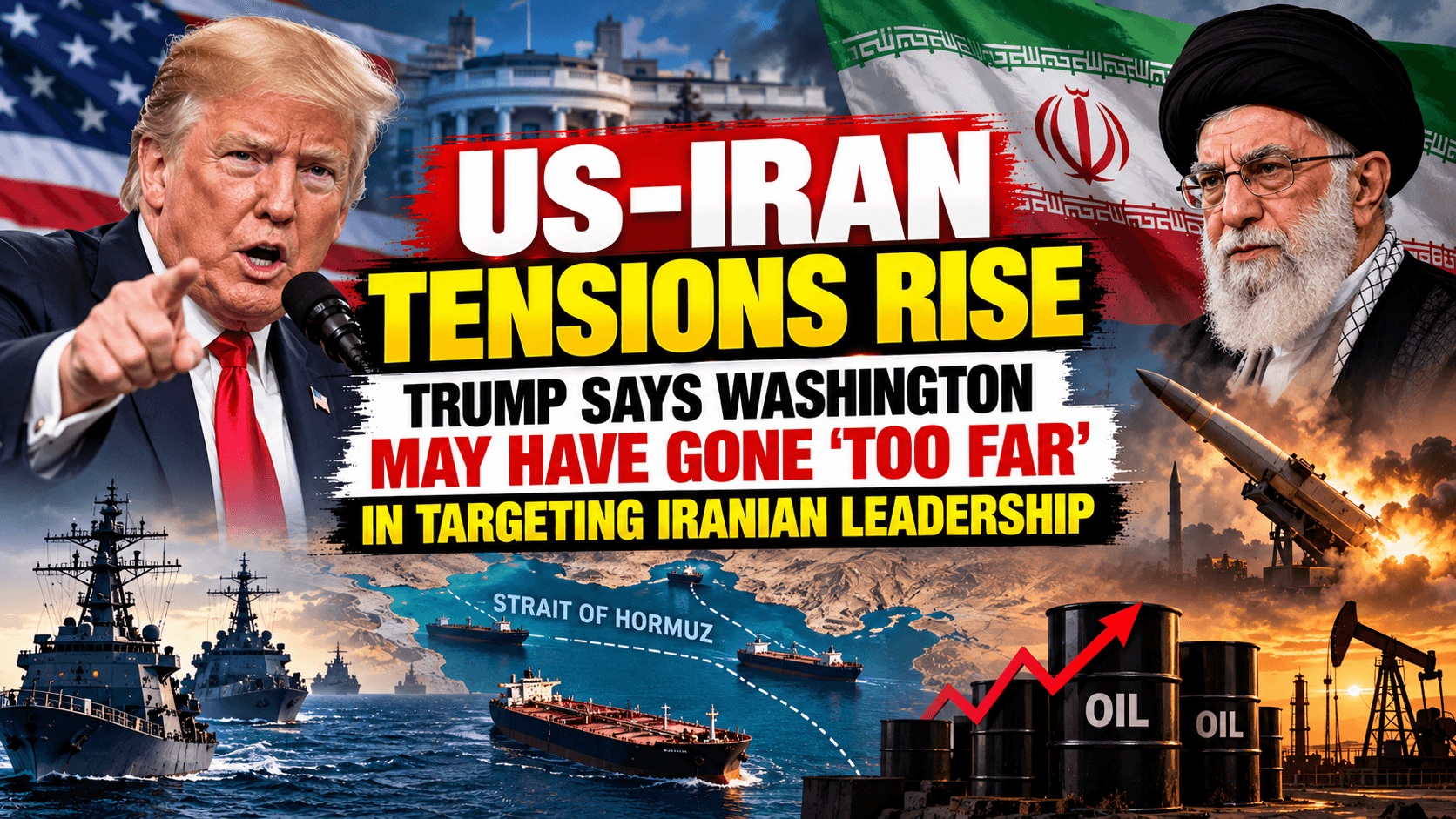
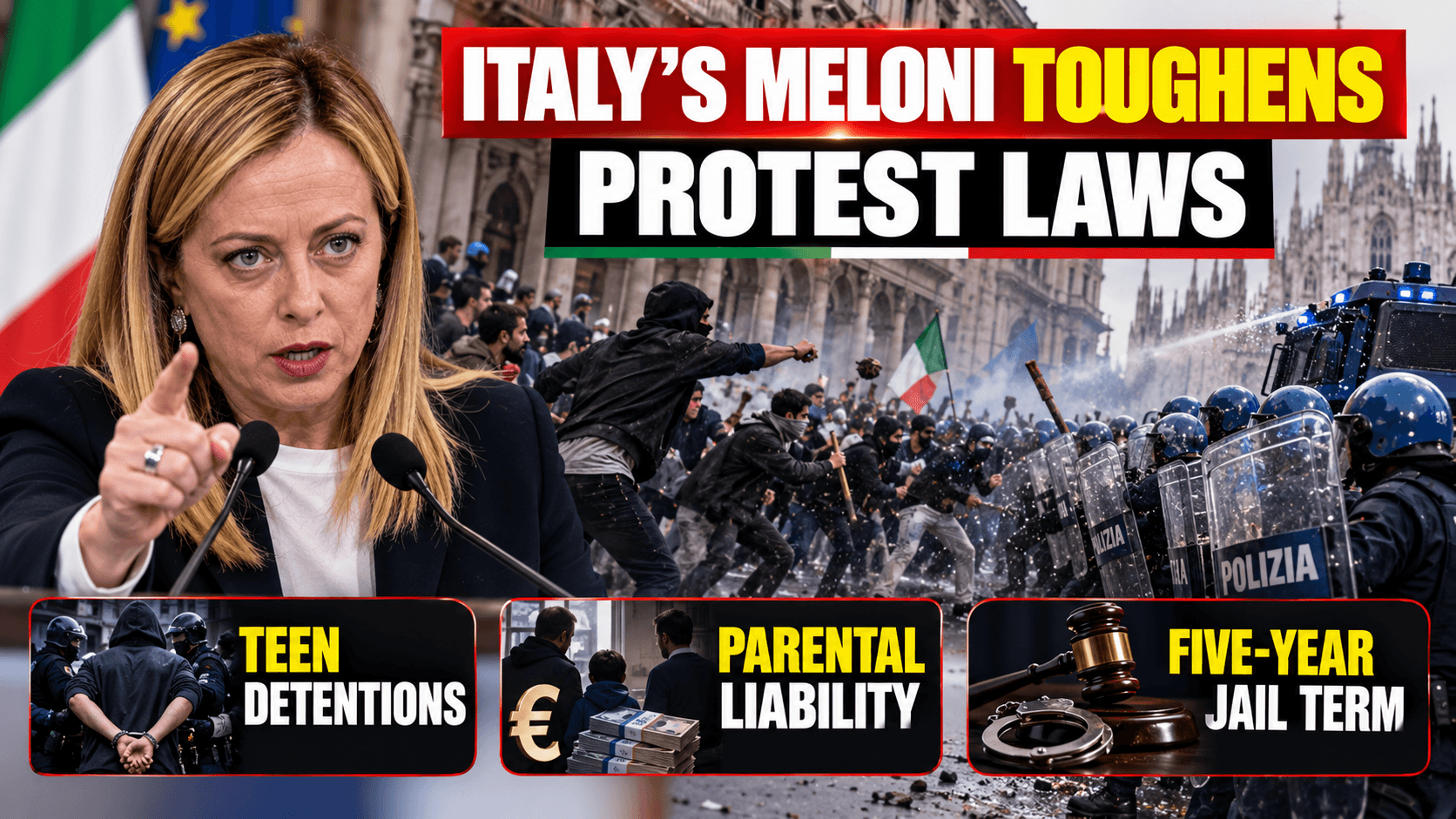
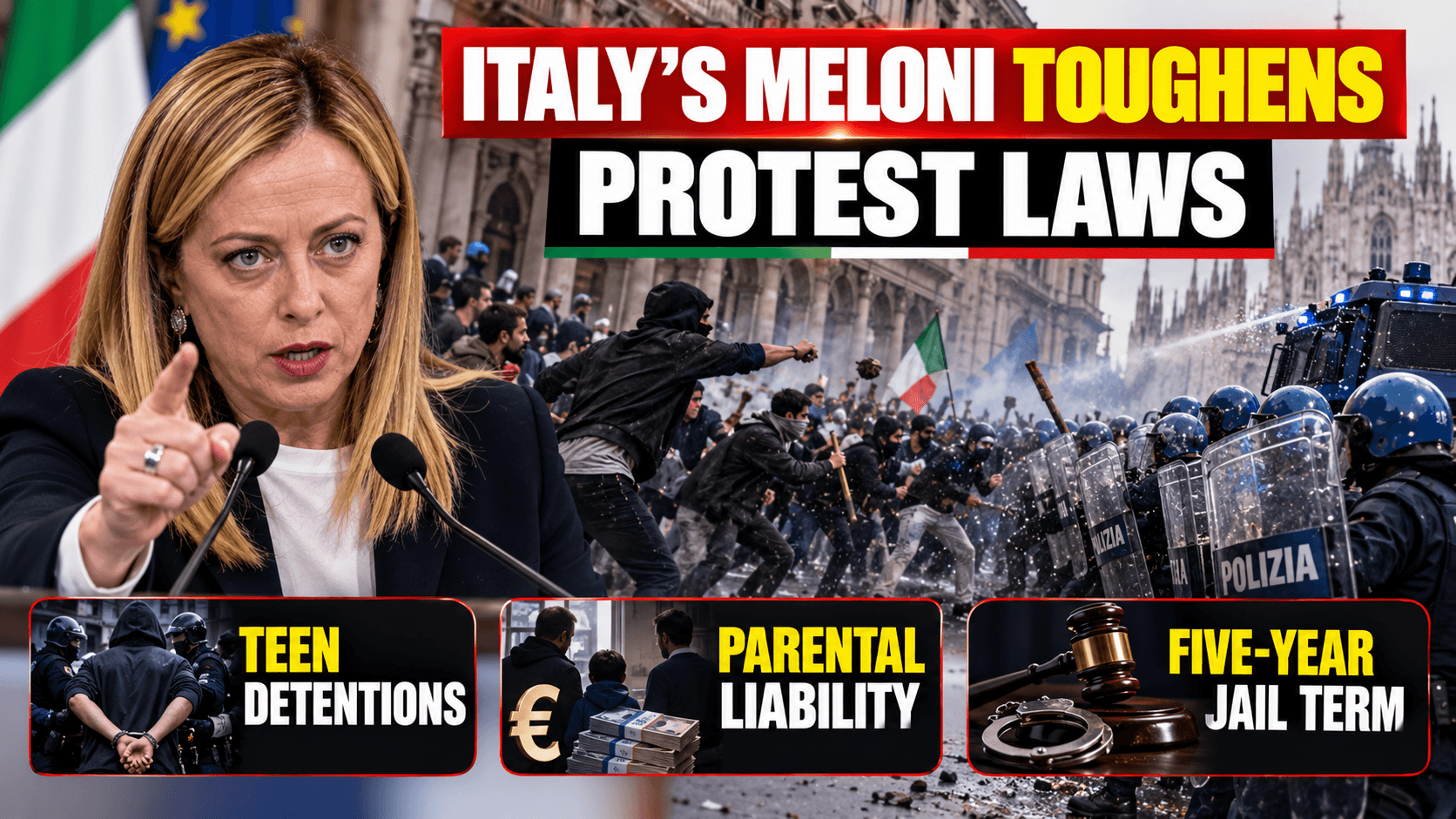
ROME, October 21, 2026: Italian Prime Minister Giorgia Meloni’s government has approved a new set of security measures aimed at curbing violence during public demonstrations. The measures introduce tougher penalties for violent participation in protests, financial liability for parents whose minor children damage property, and expanded police powers to detain certain young people considered a security risk.
The decision follows violent unrest in Milan and other parts of northern Italy, where demonstrations over issues including war and the rising cost of living escalated into clashes with police, looting and property damage. The new decree also provides for fines of up to €20,000 and prison sentences of up to five years for specified protest-related offences.
What Do Italy’s New Protest Laws Include?
The security decree introduces a new criminal offence involving violent participation in a demonstration. Under the measure, people participating in a group of at least five individuals who engage in conduct that endangers public safety during a protest could face up to five years in prison and a fine of up to €20,000.
Penalties can increase in certain circumstances, including when participants conceal their faces or injure other people. The measures are intended to distinguish peaceful demonstrations from conduct that involves violence, destruction or threats to public safety.
The decree took effect immediately following government approval, although it must be converted into law by the Italian Parliament within 60 days.
Parents Could Face Financial Liability for Damage Caused by Minors
One of the most notable provisions concerns parents and guardians of minors involved in vandalism or looting.
Under the new measures, parents may be held financially responsible for damage caused by their children. The process differs depending on whether the damage affects public or private property, and the decree provides mechanisms for seeking compensation.
Public property can include infrastructure such as traffic lights, bus shelters and police vehicles, while private property can include shop windows, businesses and cars.
The government has presented the measure as a way to ensure that those responsible for damage bear its financial consequences. The provision also raises questions about how financial responsibility will be applied in individual cases and how families can challenge compensation demands.
Police Powers to Detain Teenagers Expanded
The decree also expands the circumstances in which police can detain certain young people ahead of potentially problematic demonstrations.
According to Italy’s ANSA news agency, preventive detention powers previously applied to adults but are now being extended to minors under specified conditions. Other provisions address the assessment of criminal responsibility for people over the age of 14.
The changes are intended to allow authorities to intervene when there is evidence that an individual poses a risk of violence or serious disorder. They do not mean that every teenager attending a protest can automatically be detained.
The precise conditions and age thresholds depend on the particular provision being applied.
Why Has Meloni’s Government Introduced the Measures?
The decision follows violent incidents in Milan on October 17, when a demonstration initially organised around opposition to wars and rising living costs escalated into disorder.
According to the Associated Press, some demonstrators threw objects at riot police, looted shops and set fires. Police responded with water cannons and tear gas. Reports said at least two police officers were injured and around 50 demonstrators were detained, including many minors.
Meloni defended the government’s response by arguing that violence and property destruction should not be treated as legitimate forms of protest.
The government has also faced pressure over the broader cost-of-living situation. In southern Italy, truck drivers have protested against rising diesel prices and economic pressures, with roadblocks disrupting supply chains. The simultaneous unrest presents a challenge for authorities seeking to maintain public order while addressing economic grievances.
Additional Security Measures Planned for Milan
Alongside the new legal provisions, the government has announced the deployment of an additional 500 army personnel in Milan through the end of 2026.
The troops are expected to support police, strengthen security at important sites and increase surveillance of sensitive locations. The deployment forms part of the government's wider response to the recent unrest.
Authorities are also preparing for further demonstrations, making public safety and the management of large gatherings central concerns in the coming weeks.
Concerns Over Civil Liberties and the Right to Protest
The new measures bring renewed attention to the balance between public safety and the right to peaceful assembly.
Supporters of tougher enforcement argue that violence, looting and attacks on police require a firm response. They contend that clearer penalties and financial accountability may discourage destructive behaviour during demonstrations
Critics of previous security measures introduced by Meloni’s government have questioned whether increasingly punitive policies adequately address the underlying causes of disorder, including economic hardship and social frustration. Reuters has also reported concerns about Italy’s rising prison population and the broader direction of the government’s law-and-order policies. <Cite refs={["turn428934news8","turn428934search7"]}/>
The practical impact of the latest decree will depend on how authorities enforce the provisions, how courts interpret them and whether Parliament converts the decree into permanent legislation within the required period.
What Happens Next?
The decree is now in effect, but parliamentary consideration remains an important next step. Lawmakers will have to convert it into law within 60 days, and the process could clarify or change aspects of the measures.
In the meantime, police and local authorities are expected to continue security preparations for demonstrations and monitor possible further unrest. The government’s response will be closely watched as Italy faces both public-order concerns and continuing protests linked to the cost of living.
Conclusion
Italy’s new security decree marks a further tightening of the government’s approach to violent demonstrations. With prison sentences of up to five years for specified offences, fines reaching €20,000, parental financial liability for damage caused by minors and expanded preventive detention powers, the measures could significantly affect how authorities respond to disorder at public gatherings.
The central issue remains how Italy enforces these provisions while protecting peaceful protest, ensuring due process and addressing the economic pressures that have contributed to public discontent.
Get More News on Swaggbuzz
Author
About the author
Siddhaanth Raghav
Topics