
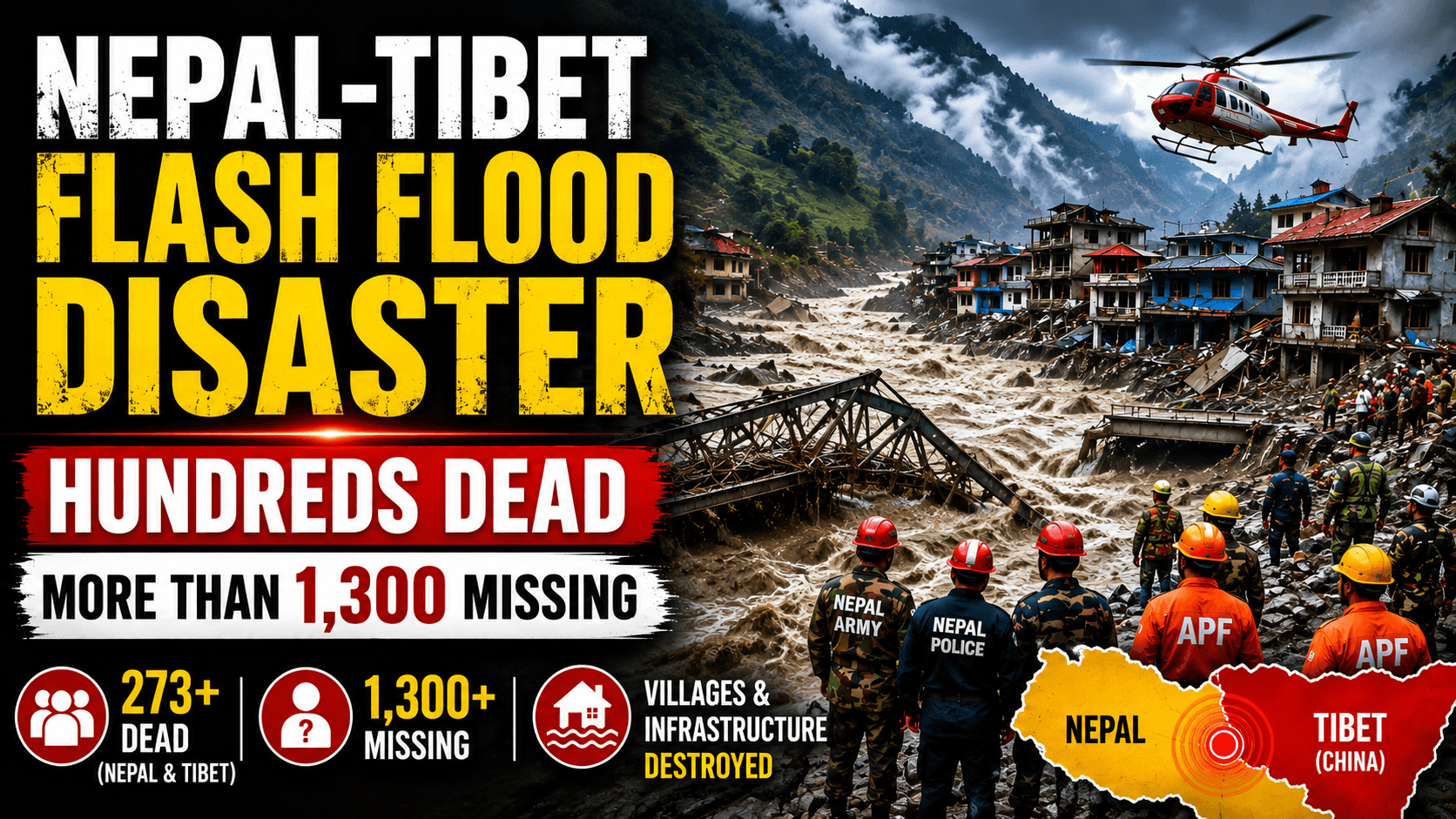
Nepal-Tibet Flash Flood Disaster Leaves Hundreds Dead and More Than 1,300 Missing
Kathmandu, August 27, 2026: Nepal is facing a major humanitarian disaster after a catastrophic flash flood struck the Himalayan region near the Nepal-Tibet border, sweeping through communities, destroying infrastructure and leaving hundreds of people dead or missing.
The disaster began on August 26 after a large glacial collapse sent ice, rock, mud and water into the Lhende Khola/Bhote Koshi river system, triggering an extremely powerful flood that travelled downstream into Nepal and also affected Tibet's Gyirong area. The U.S. Geological Survey later determined that the seismic signal initially reported as an earthquake was actually generated by the collapse of glacial ice and rock.
Death Toll and Missing People
The casualty figures are still changing as rescue teams reach previously inaccessible areas.
The latest reports indicate at least 273 people have died across Nepal and Tibet, while more than 1,300 people remain missing. Nepal has reported 270 deaths and hundreds of missing people, while Chinese authorities have reported additional deaths and missing people in Tibet.
A significant number of those missing are foreign nationals. Many were travelling through the region for trekking or religious pilgrimage, including people heading toward Mount Kailash in Tibet. Indian nationals are among those reported missing.
Because communications have been disrupted and some affected areas remain difficult to reach, authorities have warned that the casualty figures could change as search operations continue.
What Caused the Flood?
Initial reports suggested that an earthquake may have triggered the disaster. However, subsequent analysis by the **U.S. Geological Survey** found that the seismic event was caused by a major glacier collapse rather than a conventional earthquake.
The collapse sent a huge mixture of ice, rock and debris into the river system. The resulting surge travelled rapidly through Himalayan valleys, producing destructive flooding along the Bhote Koshi and Trishuli rivers.
Experts have also warned that the Himalayan region is becoming increasingly vulnerable to glacier-related disasters as temperatures rise and glaciers lose mass. Researchers have reported accelerating ice loss across the Hindu Kush Himalaya region.
Villages and Infrastructure Destroyed
The flooding caused widespread destruction across northern Nepal.
Homes, bridges, roads and power infrastructure were damaged or swept away. Reports indicate that nearly **40 kilometres of roads and dozens of bridges** were damaged, making it extremely difficult for rescue teams to reach isolated communities.
The Gyirong border area on the Tibetan side was also severely affected. Roads and communications infrastructure were damaged, while mud reportedly accumulated several metres deep in some locations.
The disaster has also disrupted important transport and trade routes connecting Nepal with Tibet.
Rescue Operations Underway
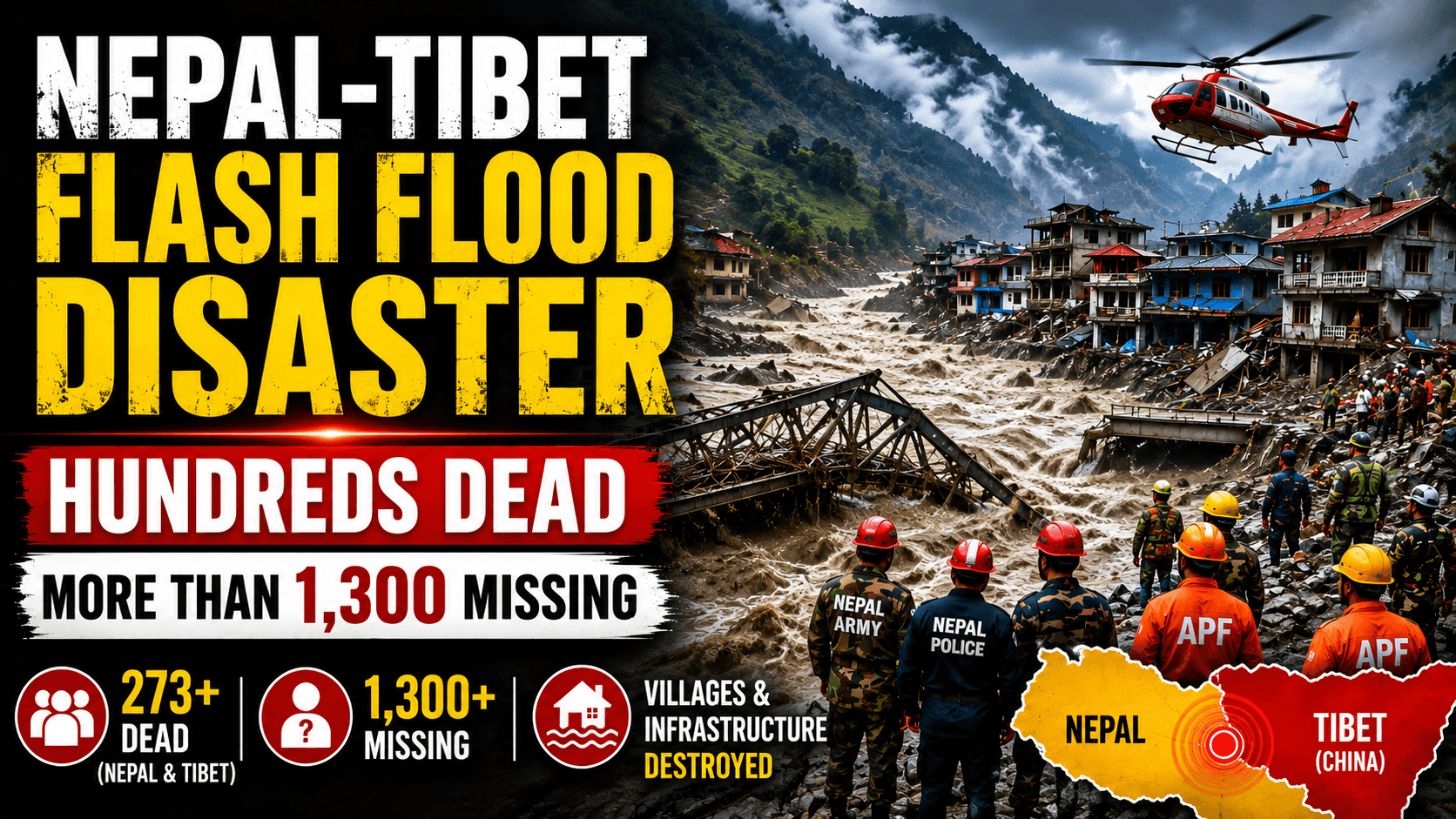
Nepal has deployed the Nepali Army, Nepal Police and Armed Police Force to conduct search, rescue and relief operations.
Helicopters are being used to evacuate people from isolated areas and transport emergency supplies. More than 100 people had been rescued by helicopter operations by Thursday morning, according to Nepalese officials.
However, rescue efforts remain difficult because roads and bridges have been destroyed, communications have been disrupted and large amounts of mud and debris continue to block access to affected communities.
Authorities are also monitoring the possibility of additional landslides and flooding as rainfall continues in the region.
India and International Community Respond
The disaster has also raised concerns in neighbouring India because rivers flowing from Nepal continue downstream into northern Indian states.
Indian authorities issued flood warnings and carried out evacuations in parts of **Bihar**, where thousands of people were moved from vulnerable areas following concerns about rising river levels.
India has also been coordinating with Nepal on rescue and relief efforts. The United Nations and several other countries have expressed support and offered assistance as Nepal deals with the expanding humanitarian crisis.
A Developing Himalayan Disaster
The full scale of the Nepal-Tibet disaster is still emerging. Rescue teams continue searching for missing people while authorities work to restore roads, communications and essential services.
The event has also renewed concerns about the growing risks faced by Himalayan communities from **glacial instability, landslides and extreme flooding**.
With more than 1,300 people still reported missing and large areas difficult to access, the rescue and recovery operation is expected to continue for days as authorities work to locate survivors and determine the final scale of the tragedy.
Get More News on Swaggbuzz
Author
About the author
Siddhaanth Raghav
Topics