
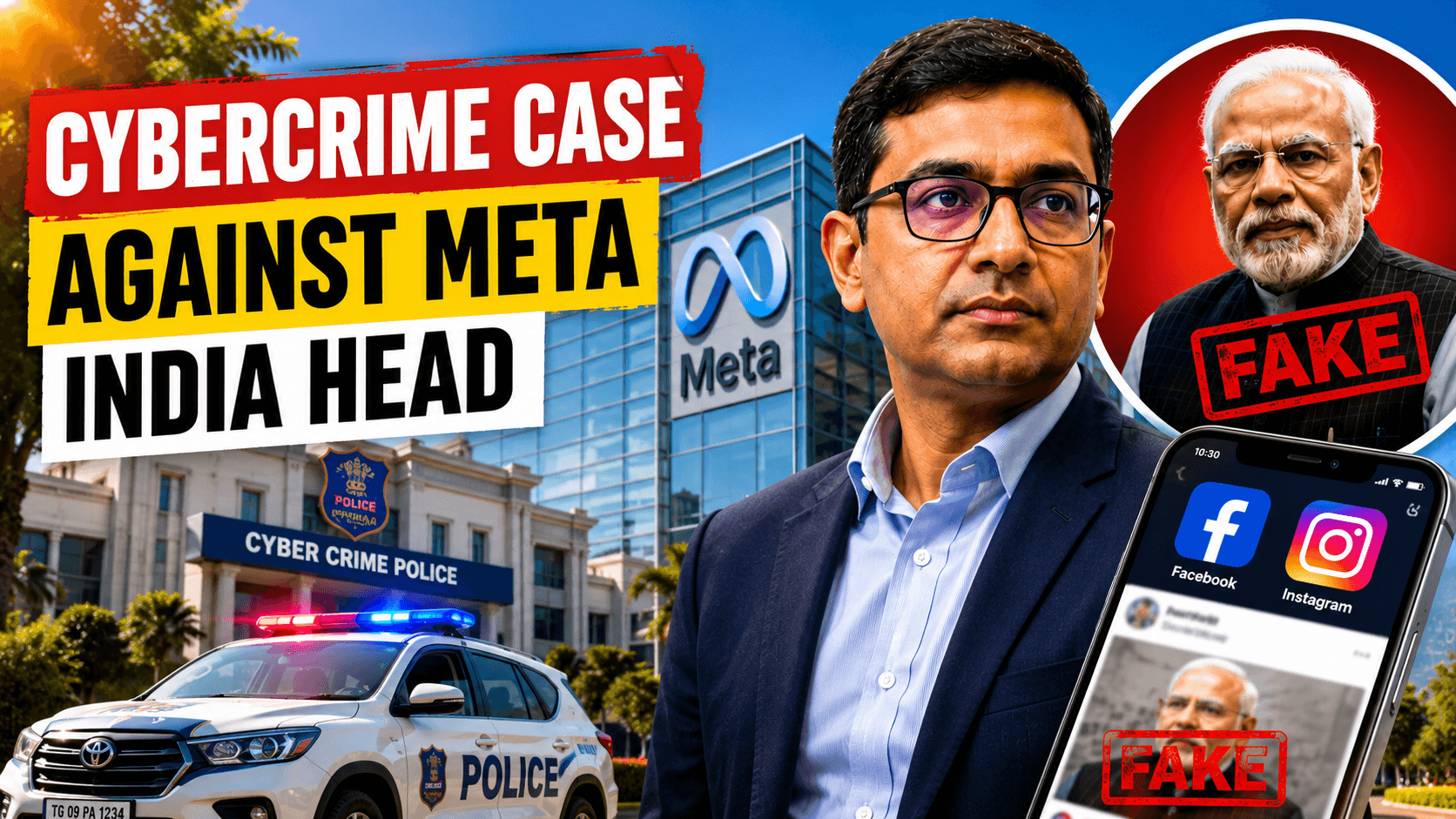
FIR Registered Against Meta India Head Arun Srinivas
The Hyderabad Cyber Crime Police have registered two cases against Meta India head Arun Srinivas and the operators of several Facebook and Instagram accounts over social media posts allegedly containing morphed and AI-generated content targeting Prime Minister Narendra Modi.
Siddhaanth Raghav
Cybercrime Case Against Meta India Head: Hyderabad Police Book Meta India Chief Over Social Media Posts Allegedly Targeting PM Narendra Modi
FIR Registered Against Meta India Head Arun Srinivas and Multiple Social Media Account Operators as Cybercrime Police Launch Investigation
The Hyderabad Cyber Crime Police have registered two cases against **Meta India head Arun Srinivas** and the operators of several Facebook and Instagram accounts over social media posts allegedly containing morphed and AI-generated content targeting **Prime Minister Narendra Modi**. The development has sparked widespread discussion about the accountability of social media platforms, content moderation, and the growing challenge of tackling misinformation in the digital age.
According to police officials, the cases were filed following complaints alleging that manipulated videos and images of the Prime Minister were circulated on Meta-owned platforms during recent protests linked to the national examination paper leak controversy. Authorities have begun investigating the origin of the content, the role of the account operators, and whether the platforms complied with applicable legal obligations.
What Is the Case About?
The complaints allege that several Facebook and Instagram accounts shared digitally altered, AI-generated, or morphed videos and images depicting Prime Minister Narendra Modi in an objectionable manner.
Police say the content was widely circulated online during recent protests, prompting concerns that it could spread misinformation or inflame public sentiment.
The Hyderabad Cyber Crime Police have registered FIRs under relevant provisions of the Bharatiya Nyaya Sanhita (BNS) and the Information Technology Act. Investigators are examining how the content was created, shared, and amplified across social media platforms.
Why Has Meta India Head Been Named?
One of the most notable aspects of the case is the inclusion of Arun Srinivas, the head of Meta India, among those named in the FIR.
Authorities have not publicly explained why the company's India head was named personally. Legal experts note that senior executives are not automatically held responsible for user-generated content, and investigators will need to determine whether there is evidence of direct responsibility or non-compliance with legal requirements.
Police are expected to issue notices to Meta as part of the investigation, while the company has not yet issued an official public response to the FIR.
Investigation Focuses on AI-Generated Content
Officials are investigating whether artificial intelligence tools were used to create or modify the videos and images.
Investigators are expected to examine:
- The origin of the allegedly manipulated content.
- The accounts responsible for uploading and sharing it.
- Whether platform moderation systems detected the material.
- Compliance with legal takedown obligations.
- The overall spread and impact of the posts.
The increasing availability of AI-generated media has made it more difficult for authorities and technology companies to identify manipulated content quickly.
Content Moderation Under Scrutiny
The case has renewed debate over the responsibilities of large social media companies operating in India.
Technology platforms are expected to remove unlawful content after receiving valid legal notices under India's digital regulations. Investigators may examine whether adequate moderation measures were in place and whether objectionable content remained accessible after it was reported.
The case comes amid broader discussions about balancing free expression, user safety, and legal compliance on digital platforms.
Previous Tensions Between Meta and the Government
The FIR follows recent interactions between the Indian government and Meta over content moderation involving high-profile public figures.
Earlier, government officials sought explanations after a Facebook post by Prime Minister Modi was temporarily restricted. Meta later informed authorities that posts from prominent public figures would receive enhanced internal review to reduce moderation errors.
The latest investigation adds another chapter to the ongoing relationship between Indian regulators and global technology companies over digital governance.
Legal and Regulatory Implications
Legal experts say the investigation could influence how social media platforms handle AI-generated and manipulated content in the future.
If authorities conclude that existing safeguards were inadequate, the case could encourage stricter enforcement of India's digital content regulations and additional oversight of platform moderation practices.
The investigation may also contribute to broader policy discussions on platform accountability, executive responsibility, and the rapid growth of generative AI technologies.
Meta Yet to Issue Detailed Public Response
As of the latest reports, Meta has not released a detailed public statement addressing the allegations or the naming of its India head in the FIR.
The company is expected to cooperate with investigators if formal notices are issued.
Officials have stated that the investigation remains ongoing and that no conclusions should be drawn until all evidence has been examined.
Why This Case Matters
The Hyderabad Cyber Crime investigation highlights several issues shaping India's digital landscape:
- The growing challenge posed by AI-generated misinformation.
- The responsibilities of social media platforms to moderate unlawful content.
- The legal accountability of technology companies operating in India.
- The balance between free speech and preventing the spread of manipulated media.
- The increasing role of cybercrime units in investigating online misinformation.
Experts believe similar cases may become more common as artificial intelligence tools become easier to access and digital misinformation becomes more sophisticated.
Conclusion
The registration of cybercrime cases against Meta India head Arun Srinivas and several social media account operators marks a significant development in India's evolving approach to regulating online content. While investigators continue examining the alleged circulation of AI-generated and morphed posts targeting Prime Minister Narendra Modi, the case also raises broader questions about platform accountability, executive responsibility, and the effectiveness of content moderation in the era of artificial intelligence.
As the investigation progresses, the outcome could influence future digital governance policies, social media regulation, and how technology companies respond to the challenges posed by manipulated online content.
Get More News on Swaggbuzz