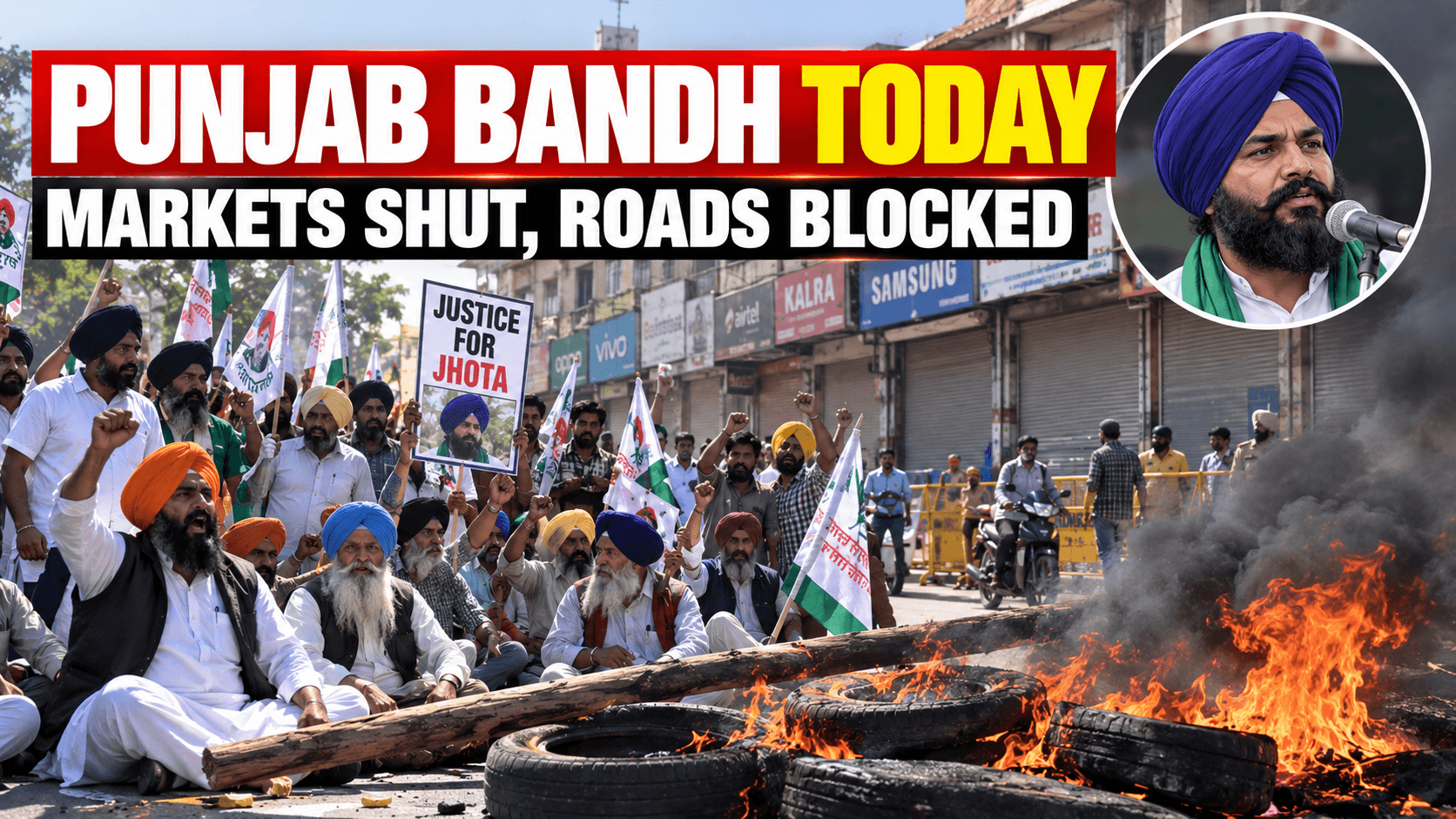
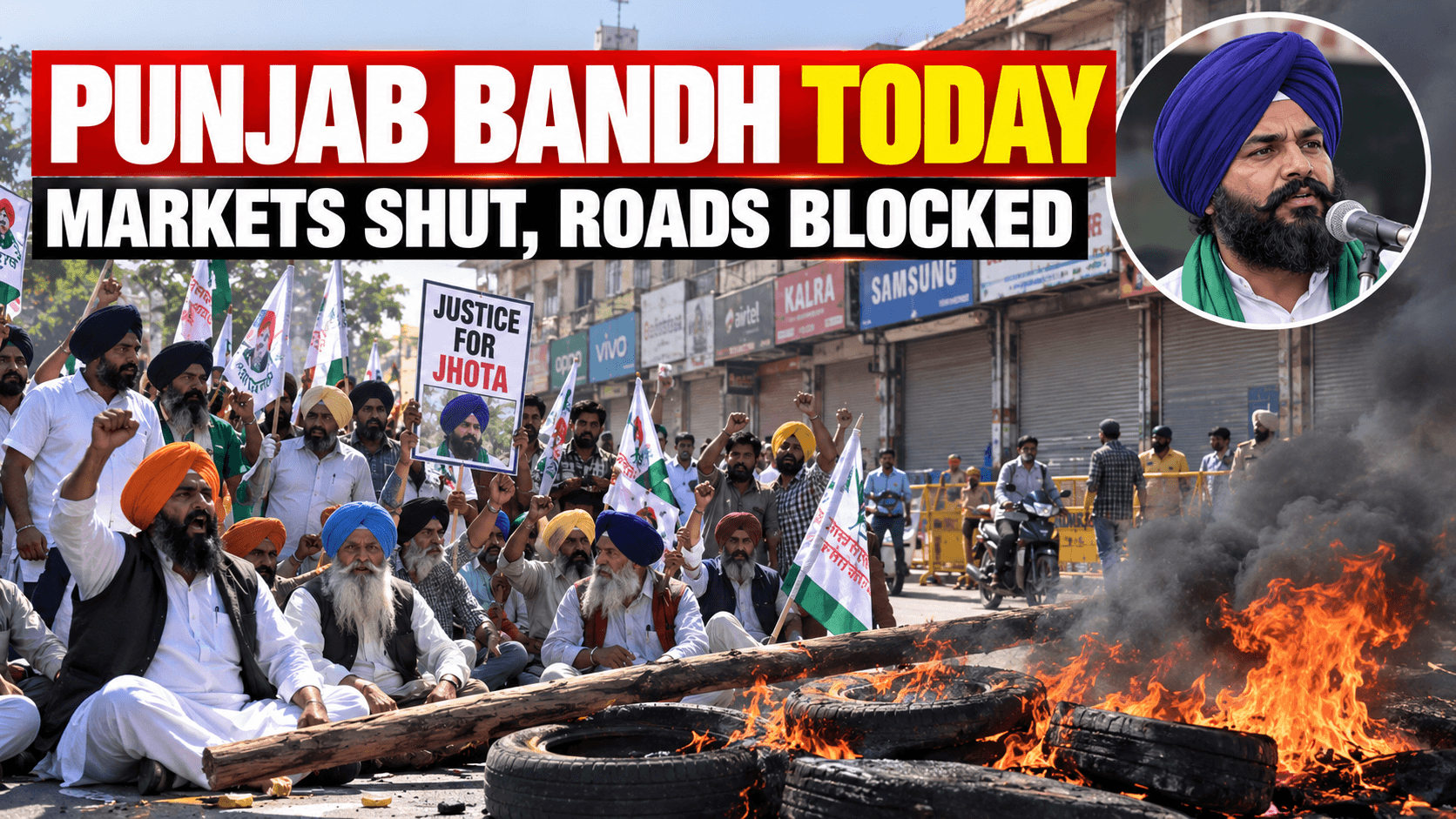
Punjab Bandh Today: Markets Shut, Roads Blocked as Protests Erupt Over Activist Parvinder Singh Jhota's Killing
Chandigarh, October 15, 2026: Normal life was disrupted across several parts of Punjab on Thursday as a statewide bandh was observed following the killing of anti-drug activist Parvinder Singh Jhota in Mansa. Markets and commercial establishments remained closed in multiple districts, traffic movement was affected by road blockades, and police increased security to maintain public order.
The shutdown was called by Jhota's family and received support from opposition political parties, farmer organisations, employee unions and social groups. Protesters demanded justice for the activist, a transparent investigation into his killing and stronger action against the drug menace in Punjab.
The bandh brought renewed attention to concerns about illegal drug sales, public safety and the state's response to drug-related problems.
Why Is Punjab Observing a Bandh?
The statewide shutdown follows the killing of Parvinder Singh Jhota, an activist known for raising concerns about drug abuse and the alleged illegal sale of addictive substances.
Jhota was shot in a busy marketplace in Mansa on October 13. According to media reports, the incident occurred during a confrontation involving a medical shop owner, Ashwani Kumar. Reports said Jhota had been challenging alleged illegal drug sales when the confrontation escalated.
Kumar was subsequently arrested in Rajasthan and brought back to Punjab for further investigation, according to news reports.
The incident triggered public outrage, with Jhota's family and supporters demanding strict action against those responsible. His family also called for an independent investigation and sought accountability from the state authorities.
The bandh was organised to press these demands and draw attention to the broader issue of drug-related activity in the state.
Markets Closed and Transport Disrupted Across Punjab
The shutdown affected commercial activity and transport in several districts, including Amritsar, Jalandhar, Ludhiana, Bathinda, Mansa, Hoshiarpur and Ferozepur.
Many shops and markets remained closed, while private schools in several areas declared holidays. Road blockades and demonstrations caused traffic congestion and disrupted journeys for commuters.
In Mohali, protesters blocked key roads and intersections, leaving some commuters stranded. Traffic movement between parts of Punjab and Chandigarh was also affected.
In Amritsar, several prominent commercial areas experienced significant disruption as traders and other groups supported the bandh. Farmer organisations and protest groups also held demonstrations at important locations.
The extent of the shutdown varied across districts, with reports indicating substantial closures in some areas and a more mixed response elsewhere.
Heavy Police Deployment and Security Arrangements
Authorities increased security in Mansa and other sensitive locations to prevent further unrest and maintain public order.
Police barricaded roads leading towards Mansa ahead of expected gatherings. Additional personnel were deployed, and some vehicles approaching the town were stopped for checks.
The security measures followed tensions that developed after Jhota's killing, including damage to the accused person's medical store and other property.
Police officials said arrangements were being made to maintain peace and ensure emergency services could continue operating. Reports also indicated that some protesters were detained when demonstrations or road blockades disrupted traffic.
Authorities urged people to maintain calm while the investigation continued.
What Are Protesters Demanding?
Jhota's family and supporters have called for a thorough investigation into the killing and accountability for any officials found to have failed in their duties.
Among their key demands are:
- A Central Bureau of Investigation (CBI) inquiry into the killing.
- Strict legal action against those responsible.
- Accountability for officials over concerns surrounding the incident.
- Stronger measures to address the alleged illegal sale of drugs.
- Greater protection for people raising concerns about drug-related activity.
The family has also sought a post-mortem examination by a panel of doctors at the Postgraduate Institute of Medical Education and Research (PGIMER) in Chandigarh.
These demands have become central to the protests, with supporters arguing that the investigation must establish the circumstances of the killing and address any wider failures identified by the authorities.
Political Parties and Farmer Organisations Support the Bandh
The bandh received support from several political parties, including the Congress, Bharatiya Janata Party (BJP), Shiromani Akali Dal and Akali Dal Waris Punjab De.
Farmer organisations, including the Samyukta Kisan Morcha and other unions, also backed the shutdown. Employee unions and social organisations joined the calls for action.
Opposition leaders criticised the state government's handling of law and order and demanded accountability from senior officials. Some protest groups also called for political resignations.
The state government and police have faced pressure to demonstrate that the case is being investigated thoroughly. However, allegations of administrative failure should be distinguished from findings established through an official inquiry.
Drug Abuse Remains a Major Public Concern
The protests have placed renewed focus on Punjab's continuing concerns about drug abuse and the illegal sale of controlled or addictive substances.
Drug-related problems can have far-reaching consequences for families and communities, affecting health, livelihoods, public safety and social stability.
The killing of an activist known for speaking about these issues has intensified calls for effective enforcement and stronger action against illegal activity.
Addressing the wider problem requires more than individual criminal investigations. Enforcement, prevention, access to treatment and community support can all form part of a broader response.
The present case has also raised questions about the safety of people who publicly challenge suspected illegal activity and the responsibility of authorities to investigate threats and violence.
What Happens Next?
The immediate focus remains on the criminal investigation into Jhota's killing, the demands made by his family and the authorities' response to concerns about public safety.
Police have arrested the main accused, according to reports, and further legal proceedings are expected as investigators examine the evidence and establish the sequence of events.
The demands for a CBI inquiry and an independent post-mortem examination remain important points in the dispute.
Meanwhile, the impact of the bandh has highlighted the extent of public concern over the killing. Further official statements and developments in the investigation will help clarify the next steps.
Conclusion
The Punjab bandh on October 15 has disrupted markets, transport and daily activities in several districts following the killing of anti-drug activist Parvinder Singh Jhota in Mansa.
The shutdown, supported by political parties, farmer unions and social organisations, reflects demands for justice, an impartial investigation and stronger action against drug-related activity.
As the investigation proceeds, attention will remain on the evidence gathered by police, the family's demands and any steps taken by the state government to address wider concerns about public safety and drug abuse.
Disclaimer: This article is for informational and educational purposes only. Allegations concerning the killing are attributed to reported accounts and remain subject to investigation and legal proceedings.
Get More News on Swaggbuzz
Author
About the author
Siddhaanth Raghav
Topics