
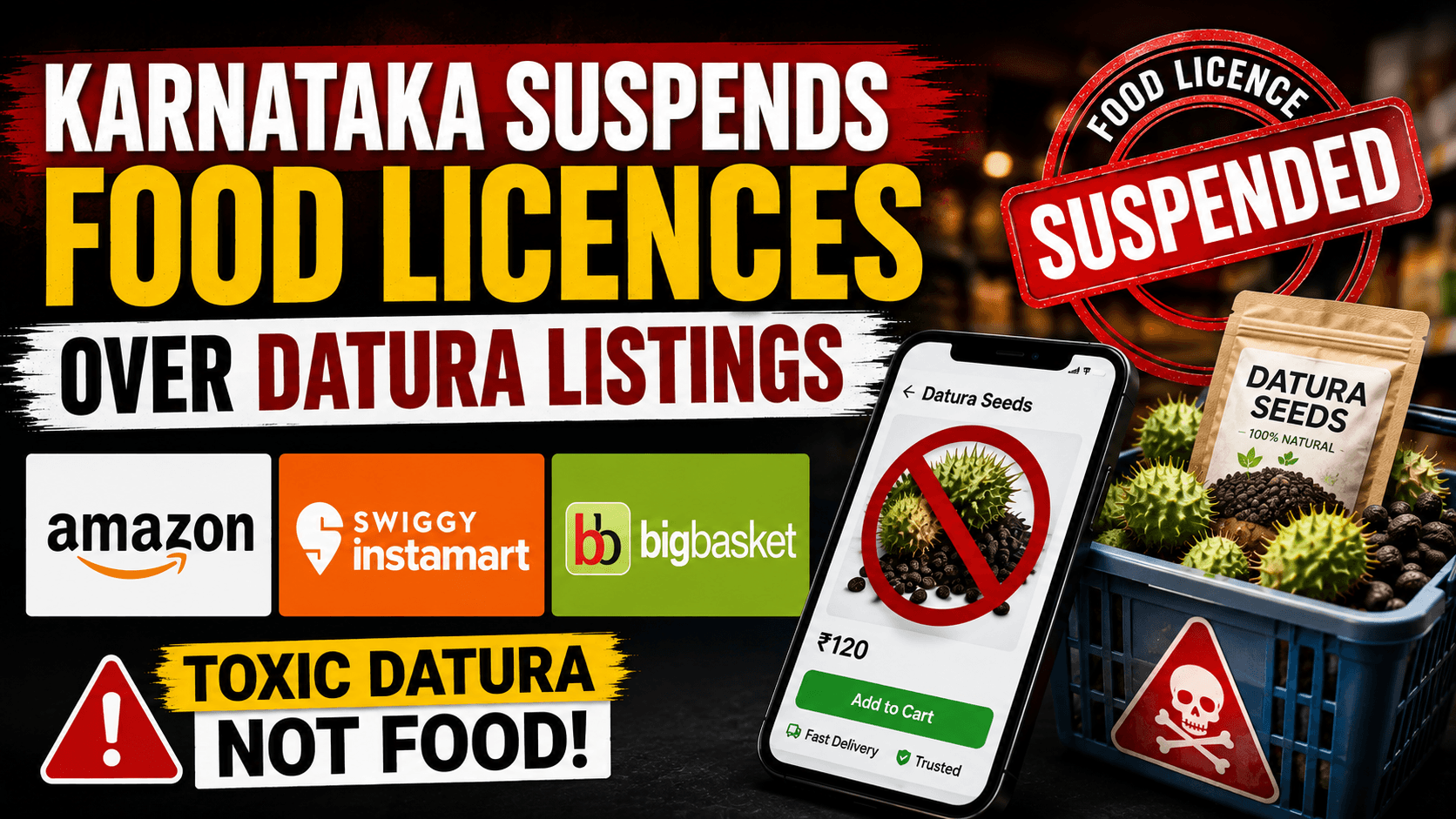
Karnataka Suspends Food Licences of Amazon, Swiggy Instamart and BigBasket Over Datura Listings
Bengaluru, August 25, 2026: Karnataka's Food Safety and Drugs Administration has ordered the suspension of food licences held by Amazon, Swiggy Instamart and BigBasket after officials found toxic datura fruits and seeds being offered on the platforms as food products.
The regulator has also directed the companies to immediately remove listings, advertisements and promotional material offering datura for human consumption and to stop its sale and distribution as a food item. The licences will remain suspended until further orders.
How the Action Began
The regulatory action followed complaints and an investigation into the online sale of datura products.
During inspections, Karnataka food-safety officials reportedly found datura fruits and seeds being displayed for sale through online platforms. Some of the products were reportedly packaged and carried food-registration details, raising concerns about how a poisonous plant had entered the food-supply chain.
The department concluded that storing, selling or distributing datura as food was not permissible because of the serious health risks associated with consuming the plant.
Platforms Ordered to Remove Listings
The Karnataka regulator has instructed Amazon, Swiggy Instamart and BigBasket to remove relevant listings and advertisements and stop distributing datura as a food product.
The companies have also been asked to provide compliance reports to the authorities regarding the action taken following the suspension orders.
The case has raised questions about the responsibility of large online marketplaces and quick-commerce services to monitor products uploaded by sellers, particularly when those products are presented as food.
Why Datura Raised Food-Safety Concerns
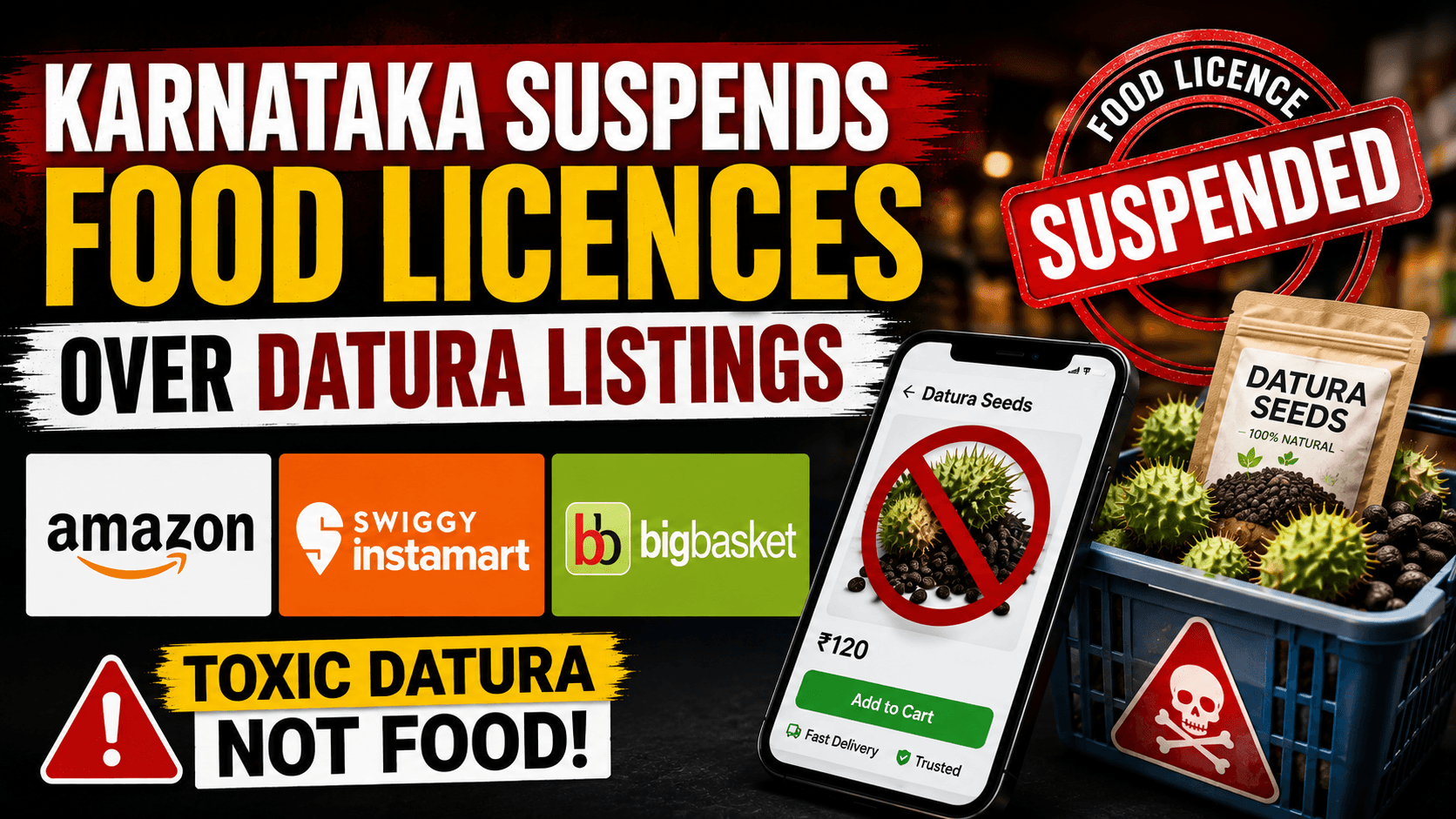
Datura is a poisonous plant belonging to the nightshade family. Its fruits and seeds contain naturally occurring toxic compounds, meaning products incorrectly presented as food can pose serious health risks.
Karnataka officials have emphasized that the issue is not simply about an incorrectly categorized online product. The concern is that a poisonous plant was allegedly being made available to consumers through platforms used to purchase everyday groceries.
The department has therefore treated the listings as a food-safety matter and initiated action under India's food-safety regulatory framework.
Bigger Questions for E-Commerce Platforms
The incident could lead to greater scrutiny of how e-commerce and quick-commerce companies verify products sold through third-party sellers.
Online marketplaces typically host large numbers of sellers and product listings, making regulatory compliance more complicated than in traditional retail. The Karnataka action demonstrates that food-safety authorities can hold platforms accountable when prohibited or unsafe products are presented as food.
The episode may encourage companies to strengthen their systems for identifying prohibited food listings and checking seller compliance.
Food Safety and Consumer Protection
The Karnataka government's action also highlights the growing importance of food-safety oversight in the digital marketplace.
As consumers increasingly purchase groceries and food products through online platforms, regulators face the challenge of ensuring that digital listings meet the same safety standards expected from physical retailers.
The suspension of the three companies' food licences is therefore significant beyond the individual datura listings. It raises broader questions about product verification, seller monitoring and regulatory responsibility across India's rapidly expanding online grocery sector.
What Happens Next?
The affected platforms will need to demonstrate compliance with the regulator's directions and remove the identified listings and promotional material.
Authorities are also likely to examine how the products were listed as food, how they entered the supply chain and whether additional sellers or platforms were involved.
For consumers, the episode serves as a reminder that products appearing on an online grocery platform are not automatically safe simply because they are listed alongside ordinary food items.
The Karnataka government's action places renewed attention on food-safety controls in India's e-commerce sector and could prompt platforms to tighten their monitoring of food-related listings.
Get More News on Swaggbuzz
Author
About the author
Siddhaanth Raghav
Topics