Kiren Rijiju Slams Naseeruddin Shah Over Jamia Student Protests, Calls Him 'Dangerous Dimagi Naxal'
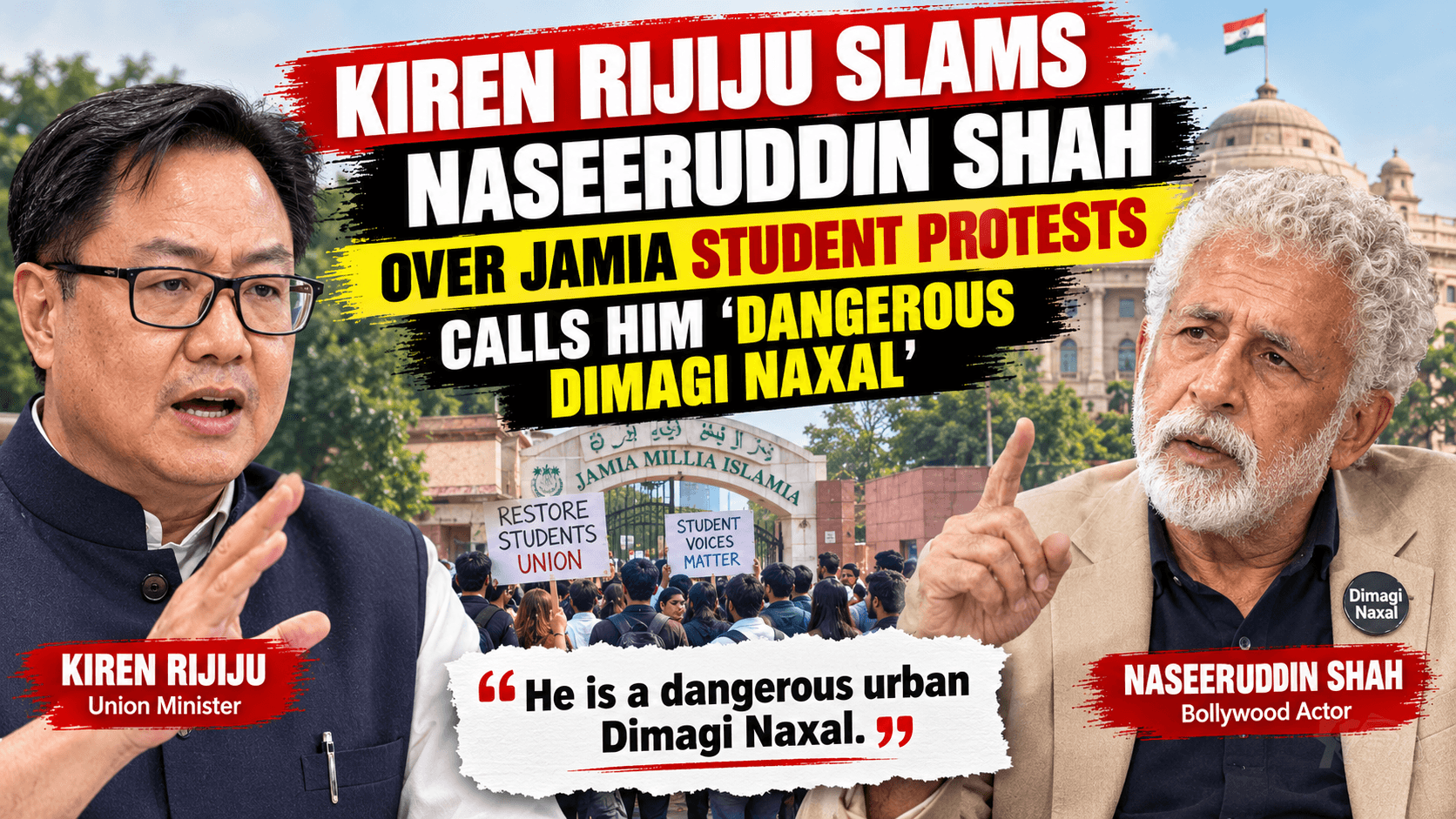
New Delhi, October 29, 2026: A fresh political controversy has erupted after Union Minister Kiren Rijiju strongly criticised veteran Bollywood actor Naseeruddin Shah for expressing support for protesting students at Jamia Millia Islamia in Delhi. Rijiju described the actor as a “dangerous urban Dimagi Naxal” and accused him of holding views that could harm Indian democracy.
The controversy began after Shah released a video on social media in which he supported students demanding the restoration of their university's elected students' union. The actor criticised the BJP-led central government over its handling of student demonstrations and expressed concerns about the country's education system and democratic institutions.
Rijiju responded to the video with a sharply worded post on X, saying he had previously respected the actor but had changed his opinion after hearing his views. The exchange has sparked a broader debate about political criticism, student activism and the role of public figures in speaking out on national issues.
What Did Kiren Rijiju Say About Naseeruddin Shah?
Union Minister Kiren Rijiju reacted strongly to Shah's video, questioning the actor's political position and describing his views as detrimental to India's democratic system.
In his post on X, Rijiju wrote that he had previously respected and liked Shah but had not realised what he described as the actor's “dangerous” political leanings. He also called Shah a “dangerous urban Dimagi Naxal” and said his views were extremely harmful to Indian democracy.
The minister's remarks quickly attracted attention because of Shah's longstanding reputation as one of Hindi cinema's most prominent actors and his willingness to speak publicly about political and social issues.
Rijiju's response has become a focal point of the controversy, with the exchange highlighting the sharp divisions between supporters and critics of the government's approach to student protests.
Why Did Naseeruddin Shah Support Jamia Students?
The controversy followed a video shared by veteran actor Naseeruddin Shah in support of students protesting at Jamia Millia Islamia.
The demonstrations centre on demands for the restoration of the Jamia Millia Islamia Students' Union (JMISU), whose elected activities have been suspended since 2006. Students have called for the university to restore the union and provide a clear timeline for conducting elections.
In his video, Shah criticised the government's handling of student demonstrations and questioned whether the authorities were attempting to weaken young people's willingness to challenge decisions they disagree with.
The actor also expressed concern about the condition of educational institutions and the future of democratic participation in India. His comments placed the Jamia protests within a wider discussion about the treatment of students and the space available for dissent on university campuses.
Shah's intervention attracted attention because it brought a prominent film personality into an already contentious dispute between students and university authorities.
Naseeruddin Shah Calls Himself a 'Dimagi Naxal'
One of the most widely discussed aspects of Shah's video was his decision to describe himself as a “Dimagi Naxal”.
The actor wore a badge bearing the phrase and used the label while responding to what he described as names commonly applied to people who criticise the government.
Shah also referred to labels such as “anti-national” and “tukde-tukde gang”, arguing that such descriptions are used to discredit people who express opposition to the government's policies.
His remarks were intended as a criticism of the political language used in debates over dissent and public disagreement. Rather than distancing himself from the label, Shah embraced it rhetorically to challenge the way critics of the government are portrayed.
The term has become part of political rhetoric in India, where debates over nationalism, dissent and alleged ideological affiliations frequently generate controversy.
Shah's use of the expression prompted Rijiju's response and turned the actor's support for student protests into a larger political confrontation.
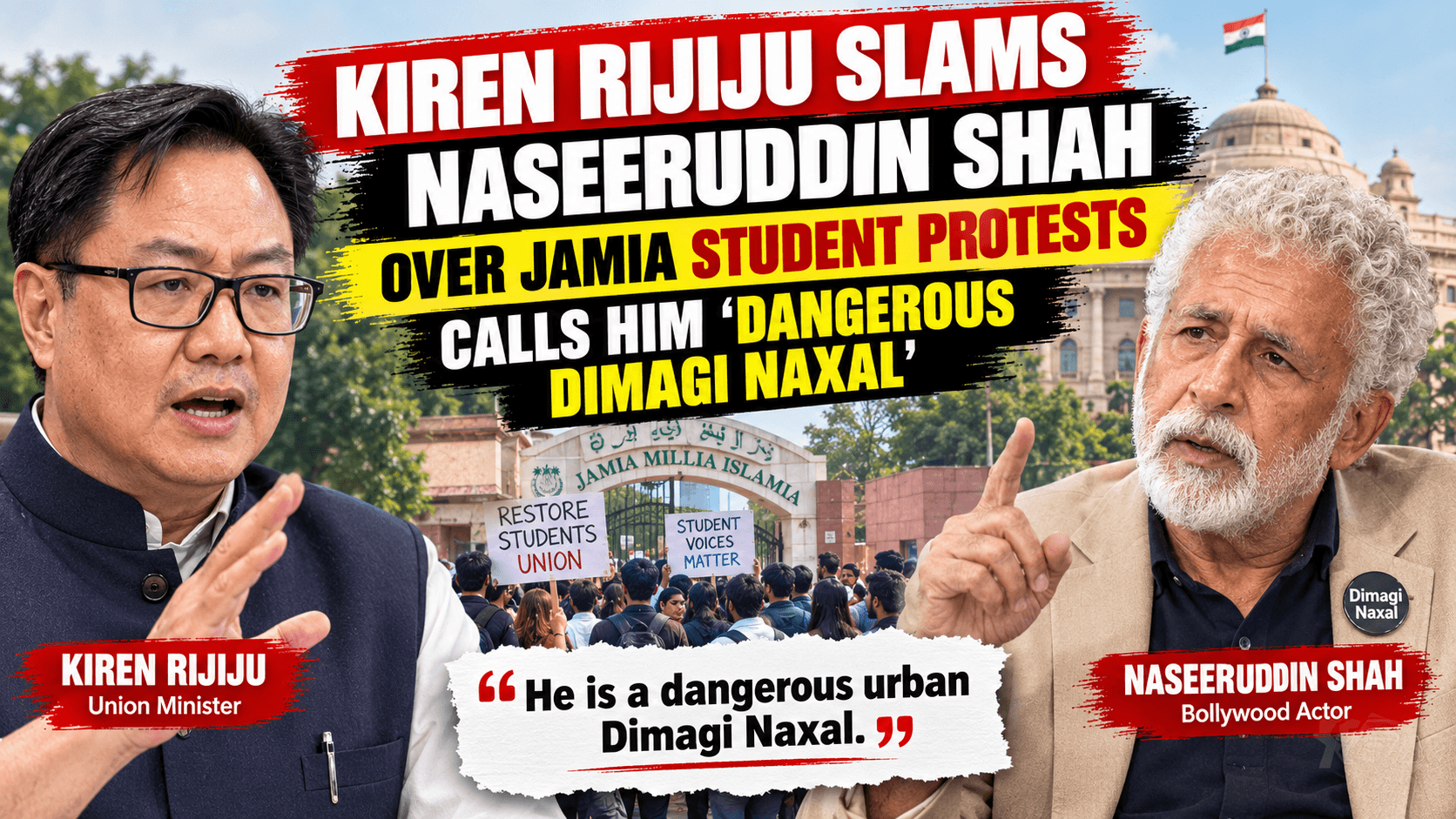
Jamia Millia Islamia Student Protests Explained
The protests at Jamia Millia Islamia began on October 12, 2026, with students demanding the restoration of their students' union and changes to the university's disciplinary arrangements.
The students' union has remained inactive since 2006, and demonstrators have argued that students should have an elected body to represent their interests and communicate their concerns to the administration.
The agitation has included demonstrations, hunger strikes and marches. The university's response, including disciplinary notices and discussions about holding elections, has become another source of disagreement.
Although the administration has indicated that elections could be held after approval of the union's constitution, students have raised concerns about the timeline and conditions attached to the process.
The dispute has attracted political attention because it involves questions about student representation, campus administration and the relationship between educational institutions and their students.
Shah's public support has given the protests additional visibility, while Rijiju's criticism has brought the disagreement into the national political debate.
Political Reactions Intensify the Controversy
Rijiju's criticism has added another dimension to the dispute, which initially centred on student demands and university administration.
The minister's remarks have focused attention on Shah's choice of language and his criticism of the central government. Shah's supporters, meanwhile, may view his intervention as an example of a public figure using his platform to raise concerns about student rights and democratic institutions.
The disagreement illustrates how political controversies can quickly expand when prominent figures intervene in disputes involving universities and government policy.
It also demonstrates the increasingly polarised nature of public debate, where statements about student activism can lead to broader arguments about nationalism, democracy and the limits of political criticism.
Neither the minister's characterisation of Shah nor the actor's accusations about government policy should be treated as an established factual conclusion simply because they were expressed publicly. Both are political statements that must be understood in the context of the ongoing dispute.
Freedom of Expression and the Role of Public Figures
The exchange has renewed discussion about freedom of expression and the responsibilities of public figures when commenting on political issues.
Actors, writers, academics and other prominent individuals sometimes use their public platforms to raise concerns about government decisions or support movements they believe deserve attention.
At the same time, political leaders frequently challenge such interventions, arguing that public figures should be held accountable for their statements and the positions they advocate.
The disagreement between Rijiju and Shah reflects these competing perspectives. Shah has used his public profile to question the government's approach to student protests, while Rijiju has criticised the actor's position and its implications for democratic debate.
The broader issue is how a democratic society accommodates strong disagreement while maintaining space for criticism, accountability and peaceful political participation.
What Happens Next?
The exchange between Rijiju and Shah is likely to remain part of the wider debate surrounding the Jamia Millia Islamia protests.
Attention will continue to focus on the university's response to students' demands, including the process for restoring the students' union and establishing a timeline for elections.
Further reactions from political leaders, students and members of the film industry could also influence public discussion of the controversy.
For now, the dispute highlights how a university protest can become a national political issue when prominent public figures and senior government representatives take opposing positions.
Conclusion
Kiren Rijiju's criticism of Naseeruddin Shah has triggered a fresh political controversy following the actor's support for protesting students at Jamia Millia Islamia.
While Shah has raised concerns about student activism, educational institutions and democratic freedoms, Rijiju has condemned his views and described him as a “dangerous urban Dimagi Naxal”.
The disagreement reflects wider divisions over political language, government accountability and the role of public figures in debates about national affairs.
Ultimately, the controversy extends beyond the exchange between a minister and an actor. It also draws attention to the unresolved demands of Jamia students and the broader questions surrounding student representation, freedom of expression and democratic debate in India.
Get More News on Swaggbuzz
Author
About the author
Siddhaanth Raghav
Topics