
Government Moves to Strengthen Public Examination Security
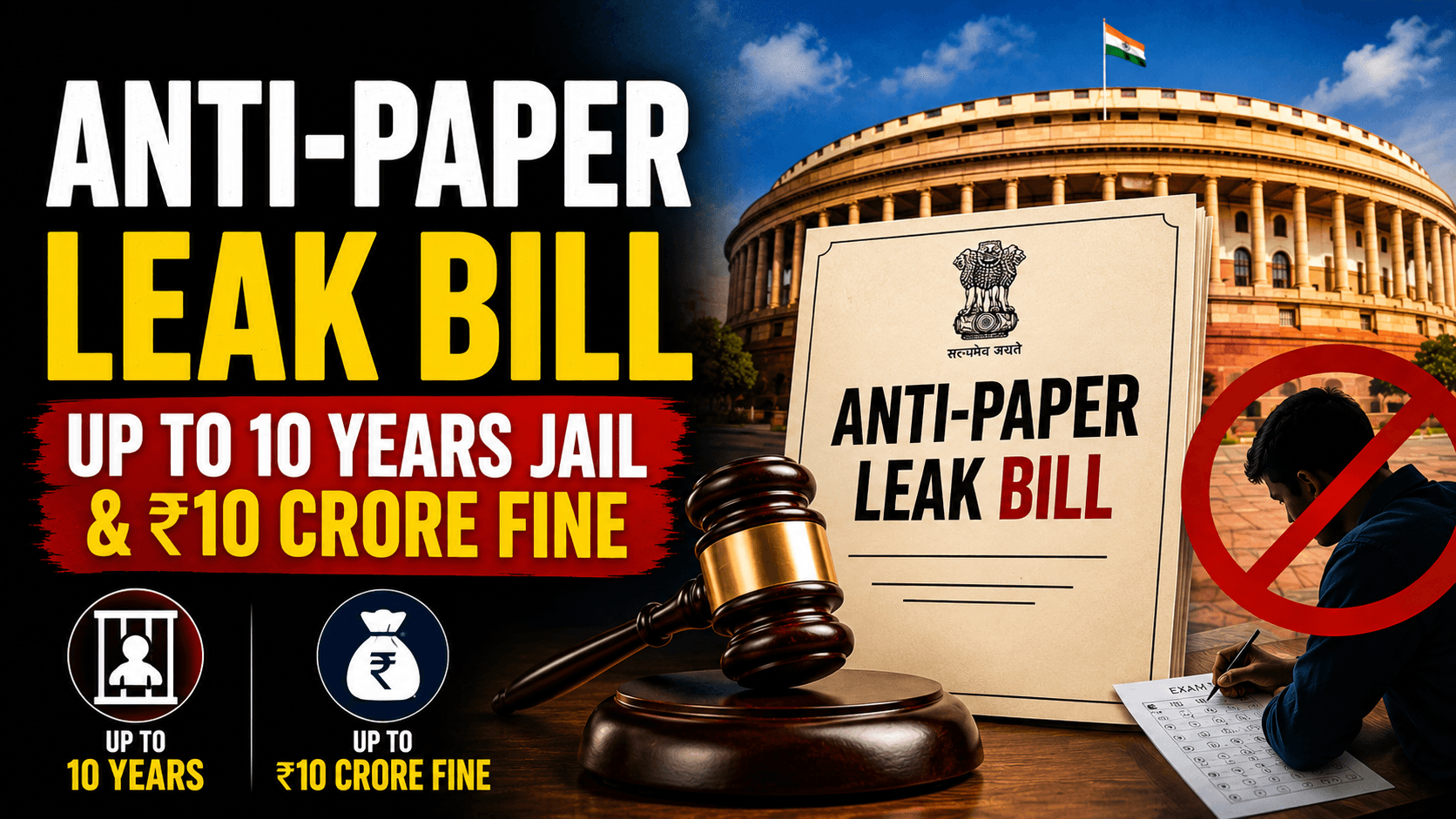
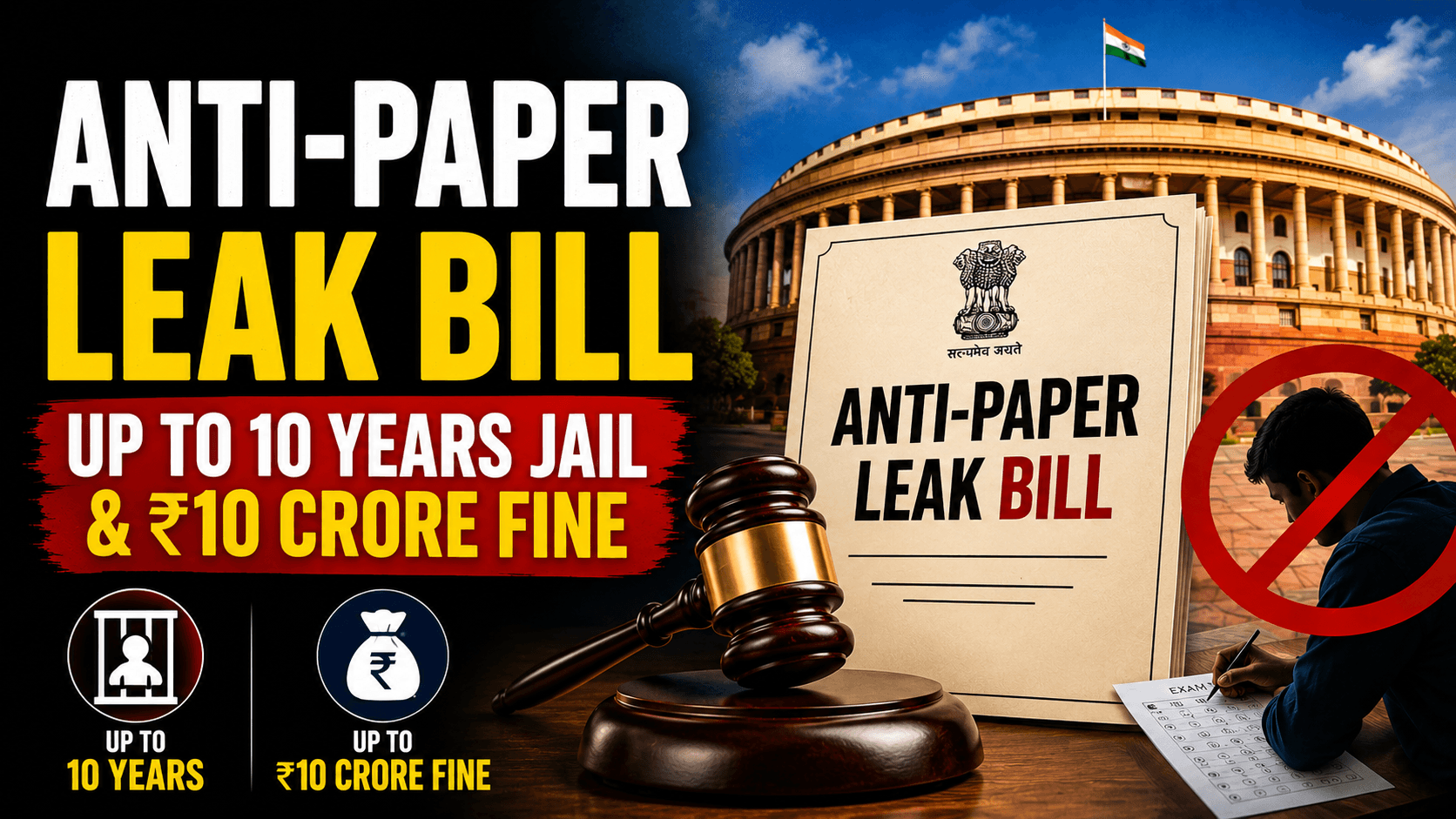
The Union Cabinet has approved a new anti-paper leak Bill proposing significantly tougher punishments for those involved in examination fraud, marking one of the government's strongest legislative responses to growing concerns over the integrity of public examinations in India.
Siddhaanth Raghav
Cabinet Approves Tougher Anti-Paper Leak Bill: Up to 10 Years in Jail and ₹10 Crore Fine Proposed
The Union Cabinet has approved a new anti-paper leak Bill proposing significantly tougher punishments for those involved in examination fraud, marking one of the government's strongest legislative responses to growing concerns over the integrity of public examinations in India.
The proposed law, cleared during the ongoing Monsoon Session of Parliament 2026, seeks to increase the maximum punishment for serious paper leak offences 10 years of imprisonment** while introducing a financial penalty of up to ₹10 crore. The government says the legislation is aimed at dismantling organized paper leak networks, strengthening accountability, and restoring public confidence in competitive examinations.
The decision comes amid nationwide student protests, political debate, and repeated disruptions in Parliament over allegations of examination irregularities.
Cabinet Clears Tougher Anti-Paper Leak Law
According to government officials, the proposed legislation introduces some of the strictest penalties ever considered for examination-related crimes in India.
The Bill is expected to cover organized paper leak rackets, unauthorized access to confidential examination material, digital manipulation of examination systems, and large-scale fraud affecting public recruitment and entrance examinations.
Officials said the tougher provisions are intended to act as a strong deterrent against individuals and organizations attempting to compromise the integrity of competitive examinations.
The government is expected to introduce the Bill in Parliament during the current session.
Key Provisions of the Proposed Bill
The legislation proposes several major changes to the existing legal framework governing public examinations.
Among the most significant provisions are:
- Maximum imprisonment of **up to 10 years** for serious examination fraud.
- Monetary penalties of **up to ₹10 crore** for individuals or organizations found guilty of organized paper leak operations.
- Faster investigation and prosecution of examination-related offences.
- Enhanced accountability for agencies responsible for conducting public examinations.
- Stronger legal provisions targeting organized criminal networks involved in paper leak conspiracies.
Officials believe these measures will significantly strengthen the country's examination security framework.
Why the Government Introduced the Bill
The proposed legislation follows a series of controversies involving alleged paper leaks and examination irregularities that have affected recruitment examinations and competitive entrance tests across different states.
Repeated incidents have triggered widespread concern among students, parents, educators, and policymakers.
Millions of candidates invest years preparing for competitive examinations, making examination integrity a matter of national importance.
Government officials say stronger legal provisions have become necessary because existing penalties may not adequately deter organized criminal groups operating sophisticated paper leak networks.
Parliament Debate Intensifies
The issue has become one of the most debated topics during the ongoing Monsoon Session.
Opposition parties have repeatedly accused the government of failing to prevent recurring examination irregularities and have demanded greater accountability from the Education Ministry.
Several opposition leaders have called for comprehensive reforms beyond stricter punishment, including improvements in examination management, digital security, and independent oversight.
The government has defended its record, arguing that the proposed Bill demonstrates its commitment to protecting students and strengthening the examination system.
Student Protests Continue
The Cabinet's decision comes as student organizations continue demonstrations demanding greater transparency and fairness in public examinations.
Many protesters have welcomed tougher punishment for those responsible for paper leaks but also stress that preventive reforms are equally important.
Students have called for stronger cybersecurity systems, encrypted question paper distribution, biometric verification, improved recruitment procedures, and quicker investigations whenever irregularities are suspected.
Many education experts agree that legal reforms should be accompanied by technological improvements to reduce opportunities for examination fraud.
Fast-Track Courts Proposed
One of the significant features expected in the new legislation is the establishment of mechanisms for faster disposal of paper leak cases.
Delays in criminal trials often prolong uncertainty for students whose examinations are cancelled or delayed because of fraud.
By accelerating investigations and judicial proceedings, the government hopes to ensure that offenders are punished more quickly while minimizing disruption to examination schedules.
Faster resolution of such cases could also help restore confidence among candidates waiting for recruitment and admission processes to resume.
Experts Welcome Stronger Deterrence
Education policy experts have largely welcomed the proposal to strengthen penalties, describing it as a positive step toward protecting examination integrity.
However, many emphasize that punishment alone cannot eliminate examination fraud.
Experts recommend combining stricter laws with secure digital infrastructure, encrypted online systems, artificial intelligence-based monitoring, regular cybersecurity audits, stronger institutional governance, and transparent recruitment processes.
Several specialists have also suggested creating an independent national authority dedicated to examination security and integrity.
Impact on Students and Recruitment
If enacted, the proposed law could significantly reshape the legal framework governing competitive examinations across India.
Students preparing for government recruitment examinations, university entrance tests, and professional qualification exams may benefit from stronger safeguards against organized malpractice.
Recruitment agencies and examination authorities may also face stricter compliance requirements to maintain higher security standards.
The government believes these reforms will improve credibility while ensuring deserving candidates are not disadvantaged by fraudulent practices.
What Happens Next?
Following Cabinet approval, the Bill is expected to be introduced in Parliament for discussion and legislative consideration.
Members of both Houses will debate its provisions before any final approval.
If passed, the legislation would become one of India's toughest laws against examination-related crimes, providing investigators and prosecutors with stronger legal tools to combat organized paper leak networks.
Implementation guidelines and operational rules would likely follow after parliamentary approval.
Conclusion
The Cabinet's approval of a tougher anti-paper leak Bill marks a significant step in the government's efforts to strengthen the credibility of India's public examination system. By proposing prison terms of up to 10 years and fines reaching ₹10 crore, the legislation aims to send a strong message against organized examination fraud while addressing concerns raised by students, educators, and policymakers.
As Parliament prepares to debate the Bill, attention will focus not only on the severity of the proposed penalties but also on whether the broader reforms succeed in restoring public trust in competitive examinations. For millions of students whose careers depend on fair and transparent testing, the outcome of this legislation could have lasting implications for the future of India's education and recruitment system.
Get More News on Swaggbuzz