
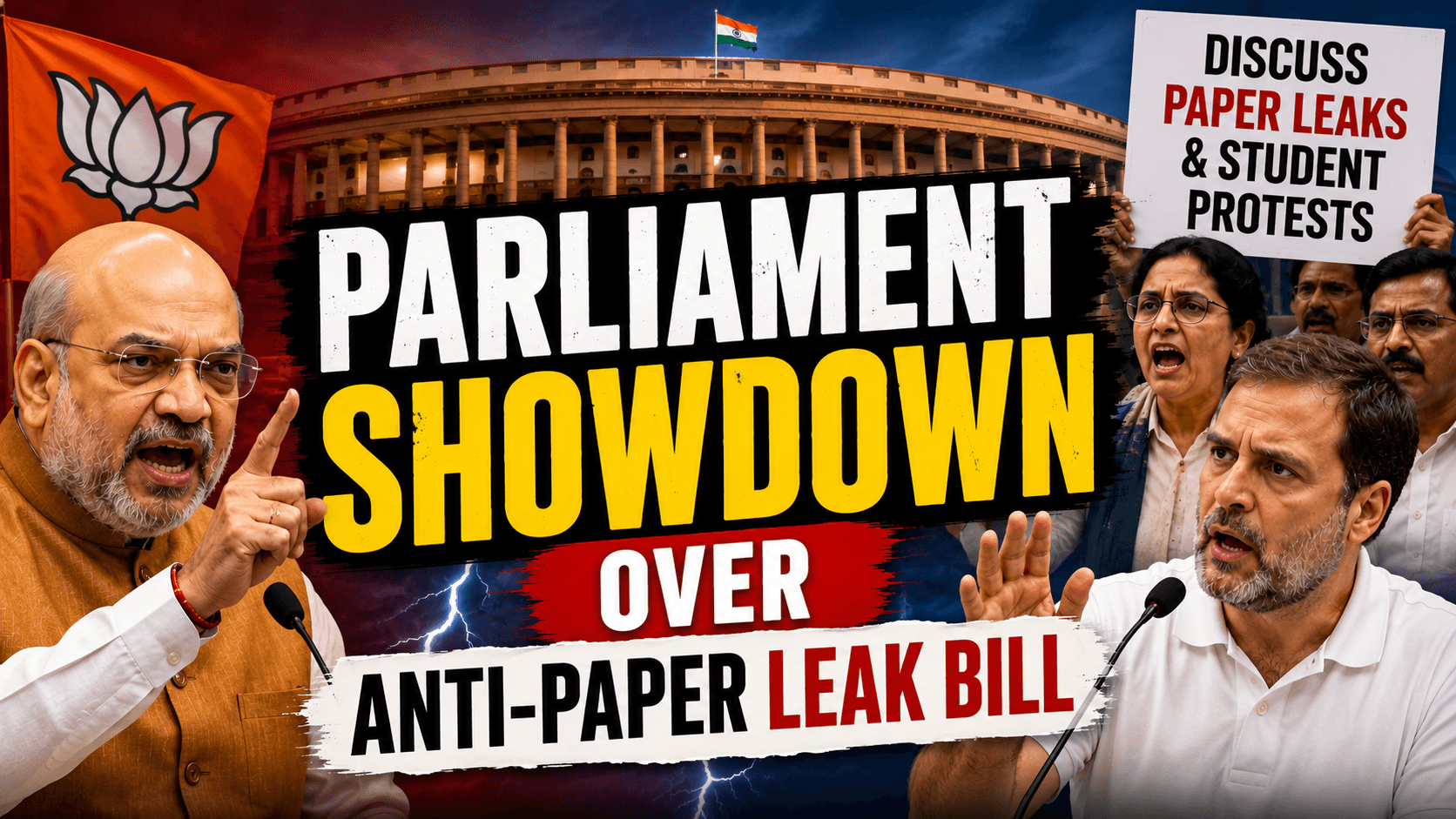
BJP Pushes for Passage as Opposition Demands Wider Debate
A heated political confrontation unfolded in Parliament during the Monsoon Session as the BJP-led NDA government moved to pass the Public Examinations (Prevention of Unfair Means) Amendment Bill, 2026.
Siddhaanth Raghav
Parliament Showdown Over Anti-Paper Leak Bill: BJP Pushes for Passage as Opposition Demands Wider Debate
Government Seeks Approval for Tougher Exam Security Law While Congress-Led INDIA Bloc Calls for Discussion on Student Protests and Accountability
A heated political confrontation unfolded in Parliament during the Monsoon Session as the BJP-led NDA government moved to pass the Public Examinations (Prevention of Unfair Means) Amendment Bill, 2026, while the Congress-led INDIA alliance demanded a broader discussion on examination paper leaks, student protests, and accountability before the legislation is approved.
The proposed Bill aims to strengthen India's legal framework against examination fraud by introducing stricter punishments, faster investigations, and special courts to handle paper leak cases. However, repeated protests by Opposition members disrupted proceedings, delaying debate on the legislation and intensifying the political standoff.
Government Pushes for Tougher Anti-Paper Leak Law
The Centre has described the proposed legislation as one of the strongest legal measures against examination malpractice.
Among its key provisions are:
- Up 10 years of imprisonment for serious paper leak offences.
- Financial penalties of up to ₹10 crore for organized examination fraud.
- Establishment of Special Fast Track Courts for quicker disposal of cases.
- Creation of Special Task Force to investigate paper leak networks.
- Time-bound investigations into examination-related offences.
The government says these reforms are intended to protect the integrity of public examinations and restore confidence among millions of students appearing for competitive recruitment and entrance exams.
Why Parliament Witnessed a Deadlock
Although the government scheduled the Bill for debate in the Lok Sabha, Parliament witnessed repeated disruptions.
The Congress-led INDIA bloc argued that the House should first discuss the recent paper leak controversy, alleged police action against protesting students, and broader concerns regarding examination governance before proceeding with the Bill.
Opposition MPs raised slogans, staged protests, and demanded a detailed statement from the government, leading to multiple adjournments in both Houses of Parliament.
Government Urges Opposition to Participate
Union Parliamentary Affairs Minister Kiren Rijiju urged Opposition parties to participate in the scheduled debate instead of disrupting proceedings.
According to the government, nearly eight hours allocated for discussion on the proposed legislation.
Rijiju stated that if the Opposition continued to boycott or disrupt the debate, the government was prepared to proceed with the Bill in accordance with parliamentary rules, emphasizing that legislation affecting millions of students should not be indefinitely delayed by political disagreements.
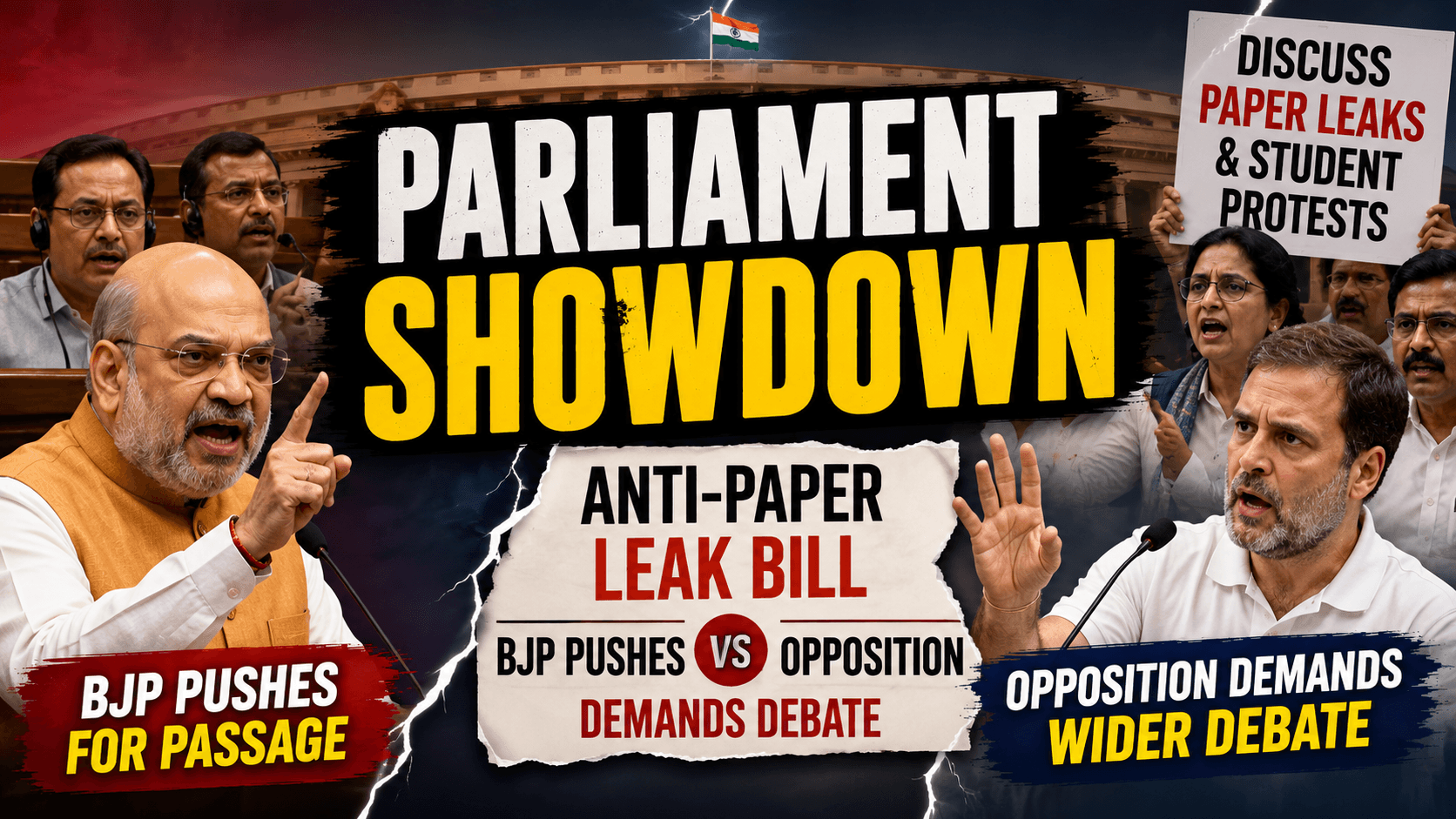
Opposition Says Debate Should Include Accountability
Opposition leaders have maintained that they support stronger measures against paper leaks but believe legislation alone will not resolve the underlying problems.
They have demanded:
- A detailed discussion on recent examination irregularities.
- Accountability for agencies responsible for conducting examinations.
- Clarification regarding police action against student protesters.
- Wider reforms to improve transparency in recruitment and entrance examinations.
According to Opposition leaders, restoring public confidence requires both stronger laws and institutional reforms.
Student Concerns Remain at the Centre
The parliamentary debate follows weeks of nationwide student demonstrations over alleged examination irregularities.
Student organizations have argued that repeated paper leak incidents undermine merit-based recruitment and create uncertainty for candidates preparing for government jobs and higher education entrance examinations.
The government has responded by proposing tougher criminal penalties and structural reforms, while many students continue to call for improvements in examination management, digital security, and transparency.
What the Bill Seeks to Achieve
The amendment proposes significant changes to the existing law governing unfair practices in public examinations.
If enacted, the legislation would:
- Strengthen criminal penalties for organized paper leak networks.
- Speed up investigations and judicial proceedings.
- Improve coordination among investigating agencies.
- Enhance legal accountability for institutions and individuals involved in examination malpractice.
- Strengthen public confidence in competitive examinations.
Government officials say the law is designed to deter organized criminal groups that profit from examination fraud.
Political Significance
The Bill has become one of the most closely watched pieces of legislation during the Monsoon Session.
For the ruling NDA government, its passage would demonstrate a commitment to addressing student concerns and protecting examination integrity.
For the Opposition, the debate has become an opportunity to demand broader accountability and question the government's handling of recent controversies surrounding public examinations.
The disagreement has therefore expanded beyond the Bill itself to include larger questions about governance, education policy, and parliamentary procedure.
What Happens Next?
The government has indicated that it intends to move ahead with the legislation during the current session of Parliament.
If debate proceeds, members from both the ruling alliance and the Opposition are expected to present their views before the Bill is put to a vote.
Should Parliament approve the amendment, India would adopt one of its toughest legal frameworks against examination paper leaks, introducing stricter punishments and faster judicial processes for offenders.
Conclusion
The ongoing confrontation over the Anti-Paper Leak Bill reflects both broad agreement on the need to combat examination fraud and significant political disagreement over how Parliament should address the issue. While the BJP-led government is pressing ahead with legislation introducing harsher penalties, the Congress-led INDIA alliance has sought wider discussion on examination irregularities, student protests, and institutional accountability.
As Parliament continues its deliberations, the outcome of the debate will shape not only the future of India's examination security framework but also the broader political conversation surrounding education reforms and public trust in competitive examinations.
Get More News on Swaggbuzz