
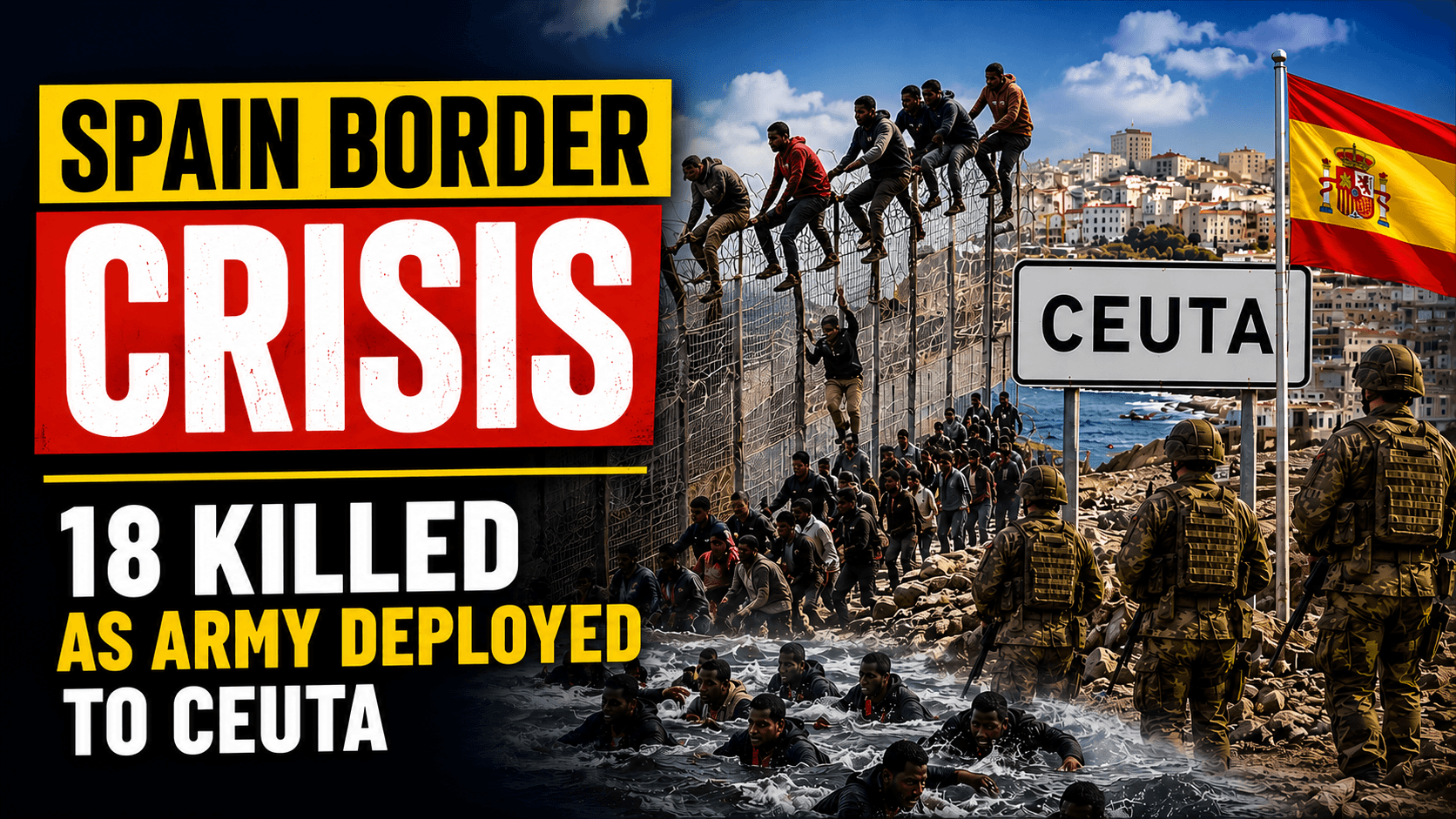
18 Killed During Morocco Border Breach as Army Deployed to Ceuta
A major migration crisis has unfolded at the Spain–Morocco border, where at least 18 people were killed during attempts to enter the Spanish territory of Ceuta, prompting the Spanish government to deploy additional security forces, including military personnel, to reinforce border operations.
Siddhaanth Raghav
Spain Border Crisis Explained: 18 Killed During Morocco Border Breach as Army Deployed to Ceuta Amid Mass Migration Surge
Deadly Border Crossing Attempts Trigger Humanitarian Emergency and Heightened Security Along the Spain–Morocco Frontier
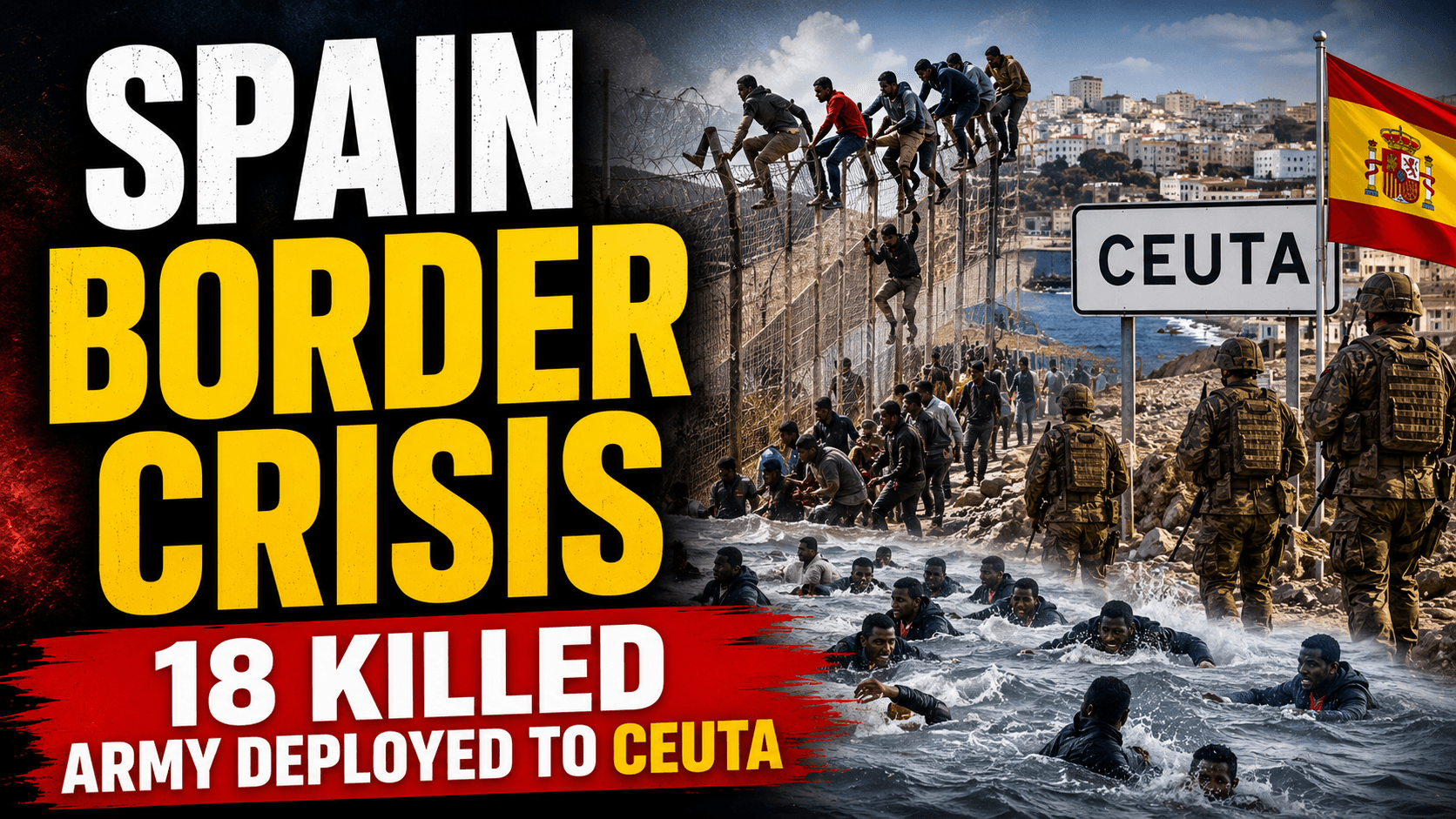
A major migration crisis has unfolded at the Spain–Morocco border, where at least 18 people were killed during attempts to enter the Spanish territory of Ceuta, prompting the Spanish government to deploy additional security forces, including military personnel, to reinforce border operations.
The sudden influx of migrants has placed enormous pressure on local authorities, emergency services, and humanitarian organizations. Reception centers have reached capacity, rescue teams have been responding to multiple emergencies, and political leaders across Europe are closely monitoring the situation.
The crisis has reignited debates over border security, migration policy, and humanitarian responsibilities, making it one of the most significant developments affecting Europe in recent months.
What Happened at the Spain–Morocco Border?
The latest crisis began when a large number of migrants attempted to reach Ceuta, a Spanish autonomous city located on the northern coast of Africa and sharing a land border with Morocco.
Some migrants attempted to cross the border fence, while others tried to reach the territory by swimming or using makeshift boats.
Authorities reported that the situation quickly escalated into a large-scale emergency as thousands of people attempted the crossing within a short period.
Emergency responders were deployed to conduct rescue operations while security forces worked to control the border.
At Least 18 People Killed
Officials confirmed that at least **18 people lost their lives** during the attempted crossings.
Many fatalities occurred in difficult conditions at sea, while others were linked to the dangerous circumstances surrounding the mass movement of people toward the border.
Emergency medical teams treated numerous injured migrants, and search operations continued in nearby coastal areas to ensure no additional victims remained missing.
Humanitarian organizations expressed concern over the growing number of casualties associated with dangerous migration routes into Europe.
Why Spain Deployed the Army
In response to the rapidly developing situation, Spain reinforced security around Ceuta by deploying additional military personnel alongside the National Police and Civil Guard.
The objective of the deployment is to:
- Strengthen border security.
- Support local law enforcement.
- Assist emergency response operations.
- Protect critical infrastructure.
- Help manage the large influx of migrants.
Government officials emphasized that military personnel are supporting civil authorities rather than replacing them in border management duties.
Humanitarian Challenges Grow
The sudden arrival of thousands of migrants created immediate humanitarian challenges.
Reception centers designed to house newly arrived migrants quickly exceeded their capacity, forcing authorities to establish temporary accommodation and emergency assistance facilities.
Relief agencies have been providing:
- Food and drinking water.
- Emergency medical treatment.
- Temporary shelter.
- Psychological support.
- Assistance for vulnerable individuals, including children and families.
International humanitarian organizations have called for continued efforts to protect lives while ensuring orderly border management.
Why Ceuta Is a Key Migration Route
Ceuta is one of two Spanish territories located on the African continent, the other being Melilla.
Because Ceuta forms part of Spain and, by extension, the European Union, it has long been a focal point for migrants seeking entry into Europe.
Economic hardship, conflict, political instability, and limited opportunities in parts of Africa continue to drive migration toward European borders.
As a result, Ceuta frequently experiences periods of heightened migration pressure.
Political Debate Intensifies
The border crisis has sparked renewed political debate within Spain and across the European Union.
Supporters of stronger border controls argue that governments must improve security and prevent dangerous irregular crossings.
Others emphasize the importance of balancing border protection with humanitarian obligations under international law.
European leaders are expected to discuss the situation as part of broader conversations on migration policy, asylum procedures, and cooperation with neighboring countries.
Spain–Morocco Relations Under Scrutiny
The latest developments have also drawn attention to diplomatic relations between Spain and Morocco.
The two countries cooperate closely on border management, migration control, counterterrorism, and trade.
Analysts suggest that continued coordination between Madrid and Rabat will be essential to addressing the immediate crisis while reducing the likelihood of similar incidents in the future.
Diplomatic discussions are expected to continue as both governments assess the situation.
European Union Response
European Union institutions are monitoring the developments closely.
EU officials have reiterated support for Spain in managing its external border while also stressing the need to respect international humanitarian standards.
Migration remains one of the most complex policy challenges facing the European Union, requiring cooperation among member states and neighboring countries.
The latest events are likely to influence future discussions on border security and migration management across Europe.
What Happens Next?
Authorities are continuing rescue operations, medical assistance, and border security measures while investigating the circumstances surrounding the fatalities.
Possible next steps include:
- Expanded humanitarian assistance.
- Increased border security operations.
- Enhanced cooperation between Spain and Morocco.
- Additional European Union support.
- Continued diplomatic dialogue on migration policy.
Officials have urged people not to attempt dangerous crossings and emphasized the risks associated with irregular migration routes.
Conclusion
The deadly events at the Spain–Morocco border have highlighted the complex humanitarian and security challenges surrounding migration into Europe. With at least 18 people reported dead, thousands attempting to reach Ceuta, and Spain deploying additional military personnel to support border operations, the crisis has drawn international attention.
As rescue efforts continue and political leaders seek solutions, the tragedy underscores the importance of addressing both immediate humanitarian needs and the broader factors driving migration. The coming weeks are expected to be crucial in shaping Spain's response, European Union policy discussions, and future cooperation with Morocco on border management.
Get More News on Swaggbuzz