
Delhi Overtakes Lahore as World's Most Polluted City as AQI Reaches Severe Levels
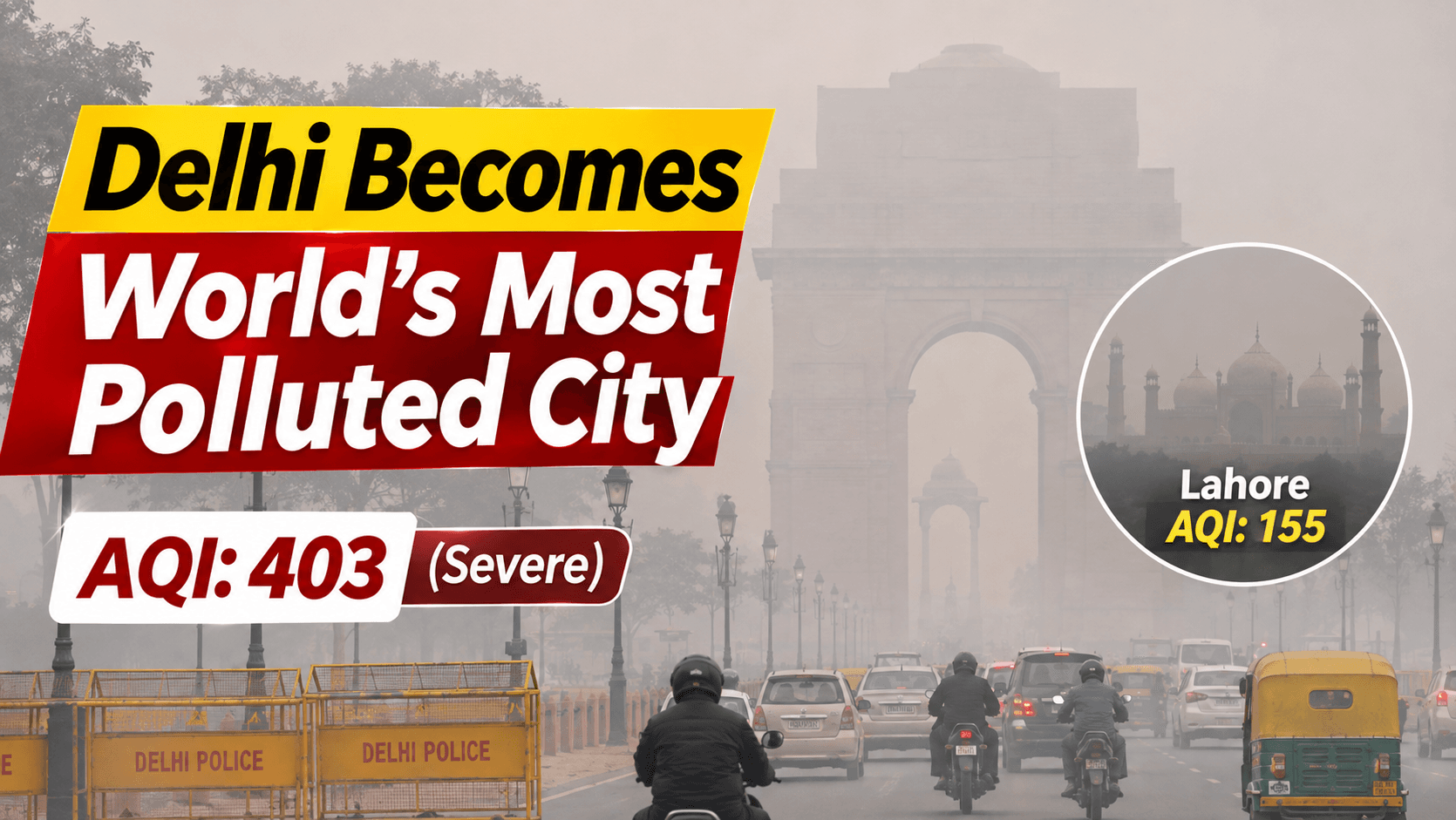
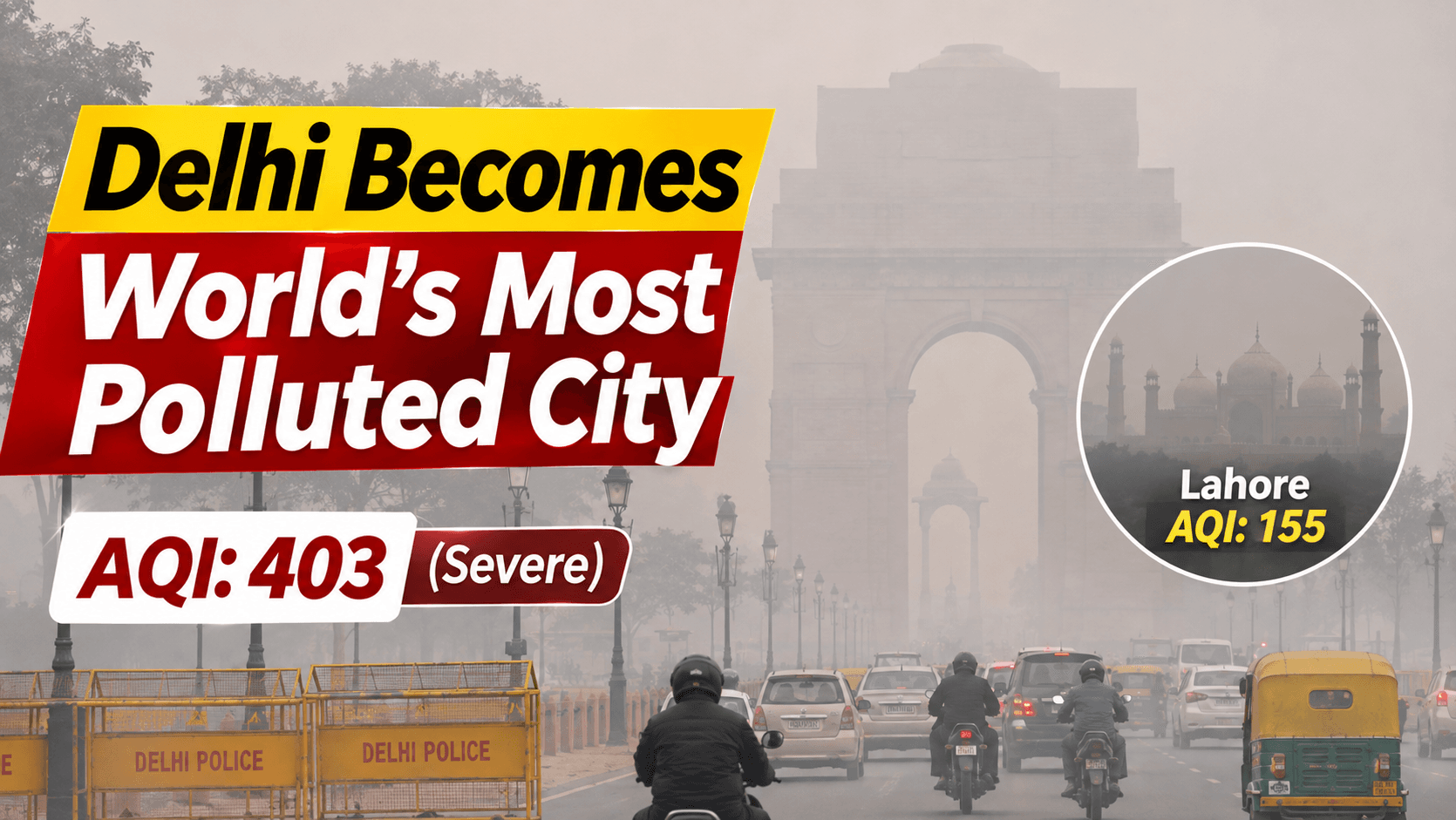
Delhi's air pollution crisis has intensified, pushing India's national capital ahead of Lahore to become the world's most polluted major city. On Friday, November 13, 2026, thick smog covered large parts of Delhi, reducing visibility and raising serious concerns about public health.
According to Swiss air quality monitoring organisation IQAir, Delhi recorded an Air Quality Index (AQI) of 334, placing it at the top of its global ranking of major cities. Meanwhile, India's Central Pollution Control Board (CPCB) recorded an even higher AQI of 403, categorising the city's air quality as severe.
The deteriorating conditions have renewed concerns about respiratory health, particularly among children, older people and individuals with existing breathing difficulties.
Delhi's AQI Enters the Severe Category
Delhi's pollution levels have increased steadily over the past several days. CPCB data showed that the city's average AQI rose from 299 on Tuesday to 313 on Wednesday and 350 on Thursday afternoon, before reaching 403 on Friday morning.
Out of 58 monitoring stations reporting on Friday morning, 33 recorded severe pollution levels, while 24 were categorised as very poor. Only one station reported moderate air quality.
Some locations recorded particularly high pollution readings:
- IIT Delhi: AQI 488
- Chandni Chowk: AQI 479
- Delhi University North Campus: AQI 478
- Burari Crossing: AQI 456
- ITO: AQI 451
- Jawaharlal Nehru University: AQI 451
These readings indicate that pollution is affecting several parts of the capital rather than being limited to a single neighbourhood.
Delhi Surpasses Lahore in Global Pollution Rankings
For several days, Lahore had remained among the world's most polluted major cities. However, deteriorating air quality pushed Delhi to the top of IQAir's ranking on Friday.
IQAir recorded Delhi's AQI at 334, compared with Lahore's reading of 155 at the time of the reported comparison.
It is important to note that IQAir and CPCB use different AQI scales and calculation methods. This explains why their readings for Delhi differ.
The comparison highlights the wider air pollution challenge affecting major cities across northern India and Pakistan, particularly during the winter season.
Why Is Delhi's Air Pollution Getting Worse?
Several factors are contributing to the deterioration of Delhi's air quality.
1. Vehicle emissions
Cars, motorcycles, buses and commercial vehicles release pollutants that contribute to poor urban air quality. Traffic-related emissions remain an important source of pollution in the capital.
2. Construction dust
Construction activities, road dust and infrastructure projects release fine particles into the atmosphere. These particles can remain suspended in the air and contribute to worsening pollution.
3. Crop-residue burning
Agricultural residue burning in neighbouring states, including Punjab and Haryana, can contribute to pollution across the Delhi-NCR region. Smoke may travel towards the capital, adding to emissions from local sources.
4. Diwali firecrackers
Firecracker emissions following Diwali celebrations have added to the existing pollution burden. Even approved green firecrackers can release particulate matter and other pollutants.
5. Weather conditions
Lower temperatures, weak winds and stagnant atmospheric conditions make it difficult for pollutants to disperse. As a result, emissions from different sources can accumulate near ground level and create dense smog.
Hospitals Face Growing Concerns Over Respiratory Health
The worsening air quality has raised concerns among healthcare professionals about its impact on respiratory health.
Exposure to high concentrations of fine particulate matter, particularly PM2.5, can irritate the respiratory system and aggravate conditions such as asthma and other breathing disorders.
Children, older adults and people with existing heart or lung conditions are particularly vulnerable during severe pollution episodes.
Previous government data has also highlighted the pressure on Delhi's healthcare system. Six major government hospitals recorded more than 200,000 emergency visits for acute respiratory illnesses between 2022 and 2024, according to figures reported by Business Standard.
Authorities Face Pressure to Control Pollution
The latest deterioration has renewed attention on pollution-control measures across Delhi-NCR.
Authorities have previously introduced restrictions on construction activities, diesel generators and other pollution-producing activities during periods of poor air quality. Measures targeting vehicle emissions and road dust are also part of the broader response.
However, recurring winter pollution highlights the need for coordinated action across Delhi and neighbouring states. Environmental experts have repeatedly emphasised that long-term improvements require reducing emissions from transport, industries, construction and agricultural activities.
Conclusion
Delhi overtaking Lahore as the world's most polluted major city is another warning about the capital's worsening air quality. With IQAir recording an AQI of 334 and CPCB reporting a severe reading of 403, the pollution crisis has become a major public health and environmental concern.
As winter conditions continue to trap pollutants over northern India, effective pollution-control measures and coordinated action will be essential to improve air quality and reduce the risks faced by millions of residents.
Get More News on Swaggbuzz
Author
About the author
Siddhaanth Raghav
Topics