
Why We Lie: The Surprising Science Behind Human Deception
Have you ever told someone, "I'm fine," even when you weren't? Or complimented a friend's outfit despite not liking it?
Siddhaanth Raghav
Why We Lie: The Surprising Science Behind Human Deception
Have you ever told someone, "I'm fine," even when you weren't? Or complimented a friend's outfit despite not liking it? These everyday "white lies" may seem harmless, but they raise an interesting Question: Why do humans lie at all?
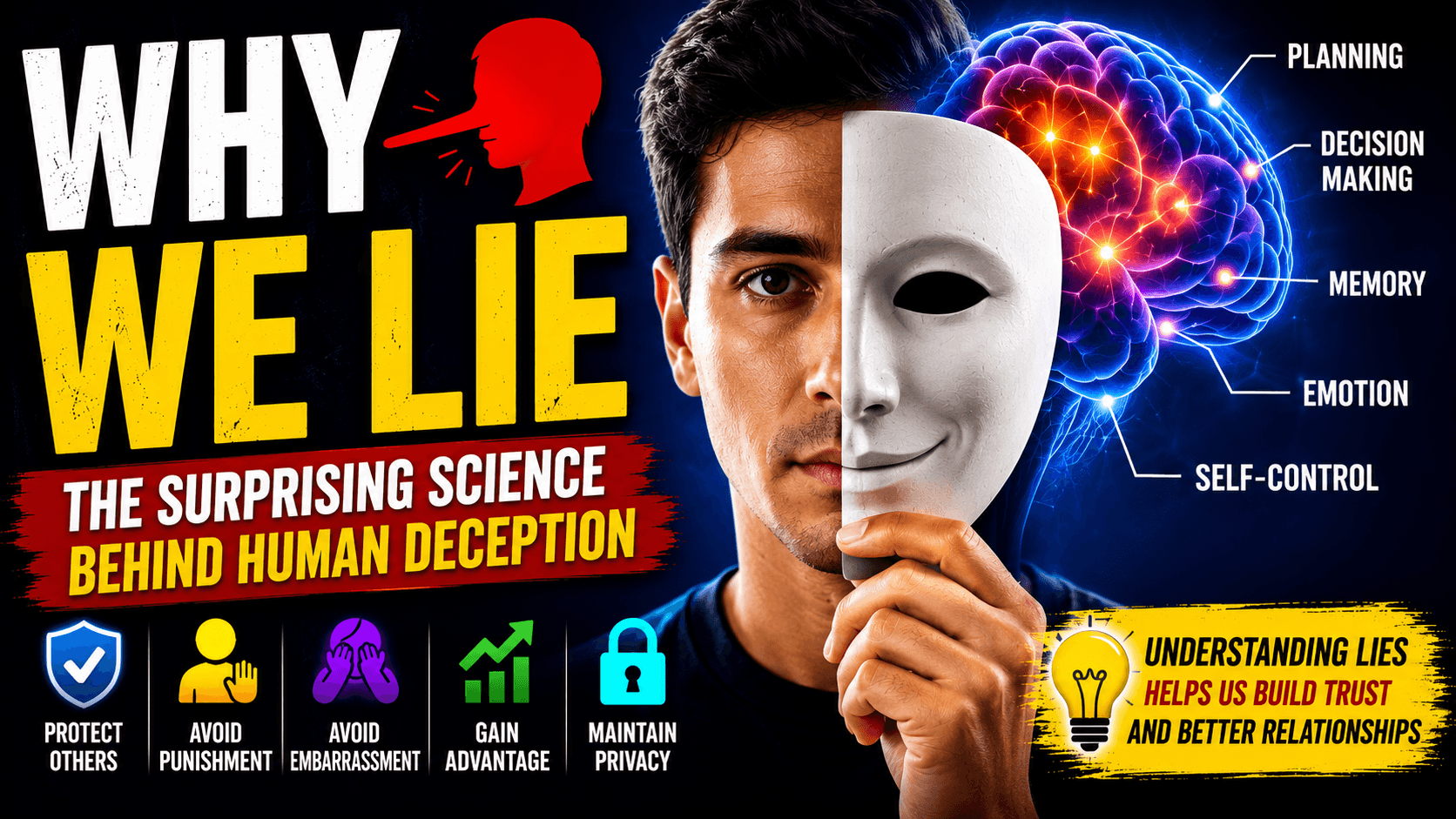
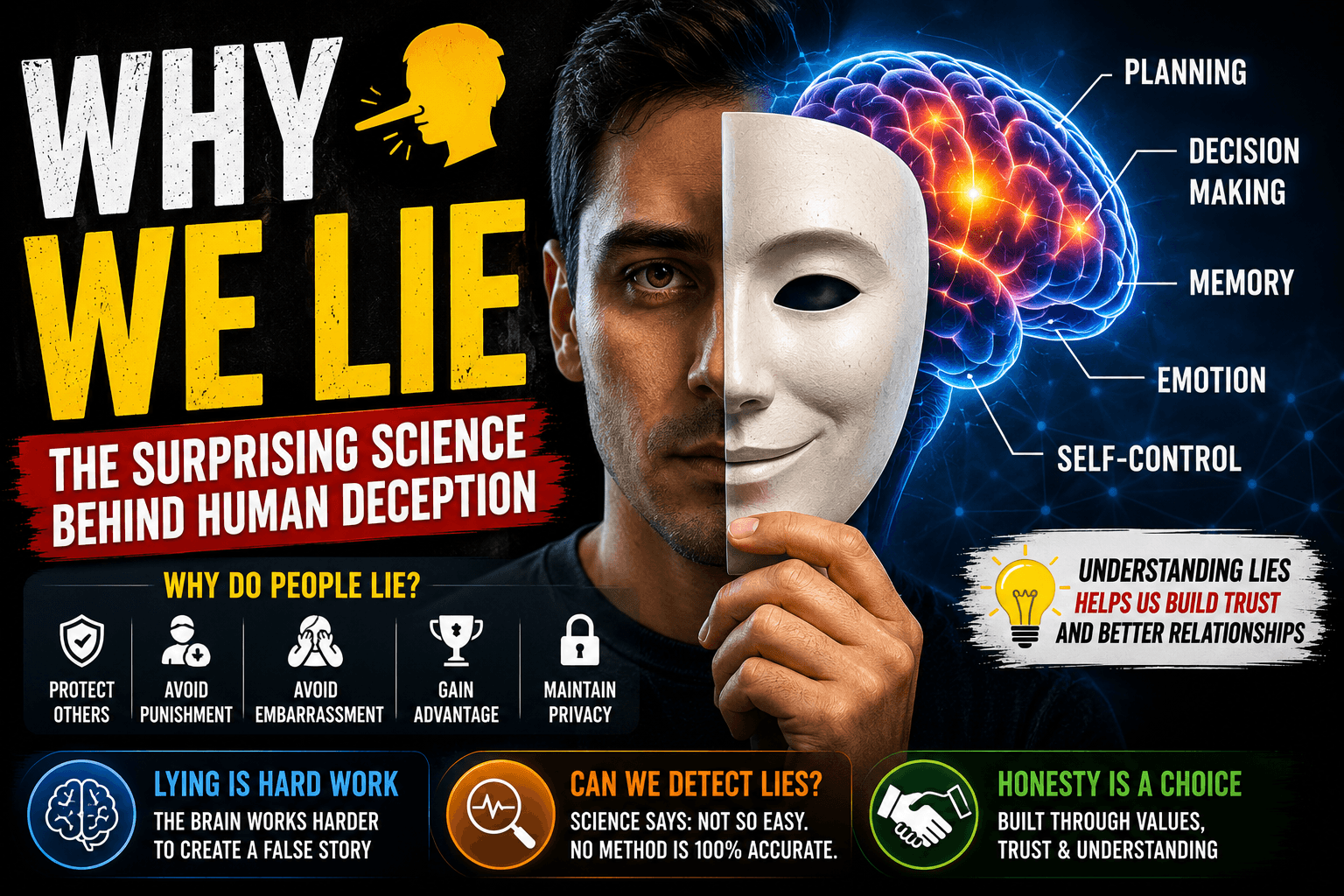
Contrary to popular belief, lying is not simply a sign of dishonesty. According to psychologists and neuroscientists, deception is a complex mental process that involves memory, decision-making, emotions, and self-control. Rather than being controlled by a single part of the brain, lying activates multiple brain regions that work together to create and maintain a false narrative.
What Happens Inside the Brain When We Lie?
Telling the truth is usually straightforward because the brain simply recalls information that already exists. Lying, however, is much more demanding.
When a person lies, the brain has to:
* Remember the actual truth.
* Suppress the truthful response.
* Create a believable alternative.
* Keep the false story consistent.
* Predict how the other person might react.
Because of these additional mental tasks, researchers have found that lying generally requires more cognitive effort than telling the truth.
The prefrontal cortex, responsible for planning, reasoning, and self-control, plays a central role during deception. Other brain regions associated with memory and emotions also become active, helping a person manage the complex process of fabricating information while maintaining confidence.
Why Do People Lie?
Not every lie is told with bad intentions. Human beings lie for a variety of reasons, many of which are influenced by emotions and social situations.
Common reasons include:
* Avoiding punishment or criticism.
* Protecting someone's feelings.
* Escaping embarrassment.
* Maintaining privacy.
* Making a better first impression.
* Avoiding conflict.
* Gaining a personal or professional advantage.
Psychologists often refer to harmless lies as "white lies." These are usually told to preserve relationships or prevent unnecessary emotional pain rather than to manipulate or deceive for personal gain.
Can Lying Become a Habit?
Research suggests that repeated dishonesty may gradually reduce the emotional discomfort people feel when they lie.
The first few lies often trigger feelings of guilt, anxiety, or stress. However, if someone continues to lie repeatedly, the brain may become less emotionally reactive to dishonest behavior, making future lies easier to tell.
This doesn't mean everyone who lies develops a habit of deception. Personality, upbringing, values, and life experiences all influence whether someone continues to choose honesty or dishonesty.
Is Lying Linked to Intelligence?
Interestingly, the ability to lie is connected to cognitive development.
Children generall begin telling lies only after developing important mental abilities such as memory, language, planning, and understanding that other people have different thoughts and beliefs.
Because lying requires imagination and strategic thinking, it reflects advanced brain development. However, experts caution that this should not be confused with intelligence. A person's honesty and intelligence are separate characteristics.
Can Scientists Detect Lies?
Many people believe that machines can accurately identify liars, but science tells a different story.
Brain imaging techniques such as functional MRI (fMRI) have shown that lying activates specific brain networks. However, these scans cannot reliably determine whether someone is telling the truth in real-world situations.
Similarly, polygraph tests measure physical responses such as heart rate, breathing, and perspiration—not deception itself. Since nervousness and stress can occur even when a person is telling the truth, polygraphs are not considered foolproof indicators of lying.
Can We Become More Honest?
Psychologists believe honesty is a behavior that can be strengthened over time.
Open communication, trust, accountability, and supportive relationships often encourage people to tell the truth more consistently. In children, positive guidance and understanding usually produce better long-term honesty than fear-based punishment.
Honesty is not simply the absence of lies—it is a habit built through personal values, emotional maturity, and social responsibility.
The Bigger Picture
Deception has been part of human behavior throughout history. While the brain provides the mental ability to create a lie, it does not force anyone to deceive. Every decision to tell the truth or lie is shaped by emotions, circumstances, ethics, and personal choices.
Scientists continue to study deception because understanding why people lie also helps explain how trust is formed, how relationships develop, and how society functions.
Conclusion
Lying is far more than simply saying something untrue. It is one of the brain's most complex mental tasks, requiring memory, planning, emotional regulation, and social awareness to work together.
While science has uncovered many fascinating insights into why humans lie, one fact remains clear: honesty is ultimately a choice. Understanding the psychology behind deception doesn't excuse lying, but it helps us better understand ourselves, our relationships, and the remarkable capabilities of the human brain.
Get Some More Information on Swaggbuzz