
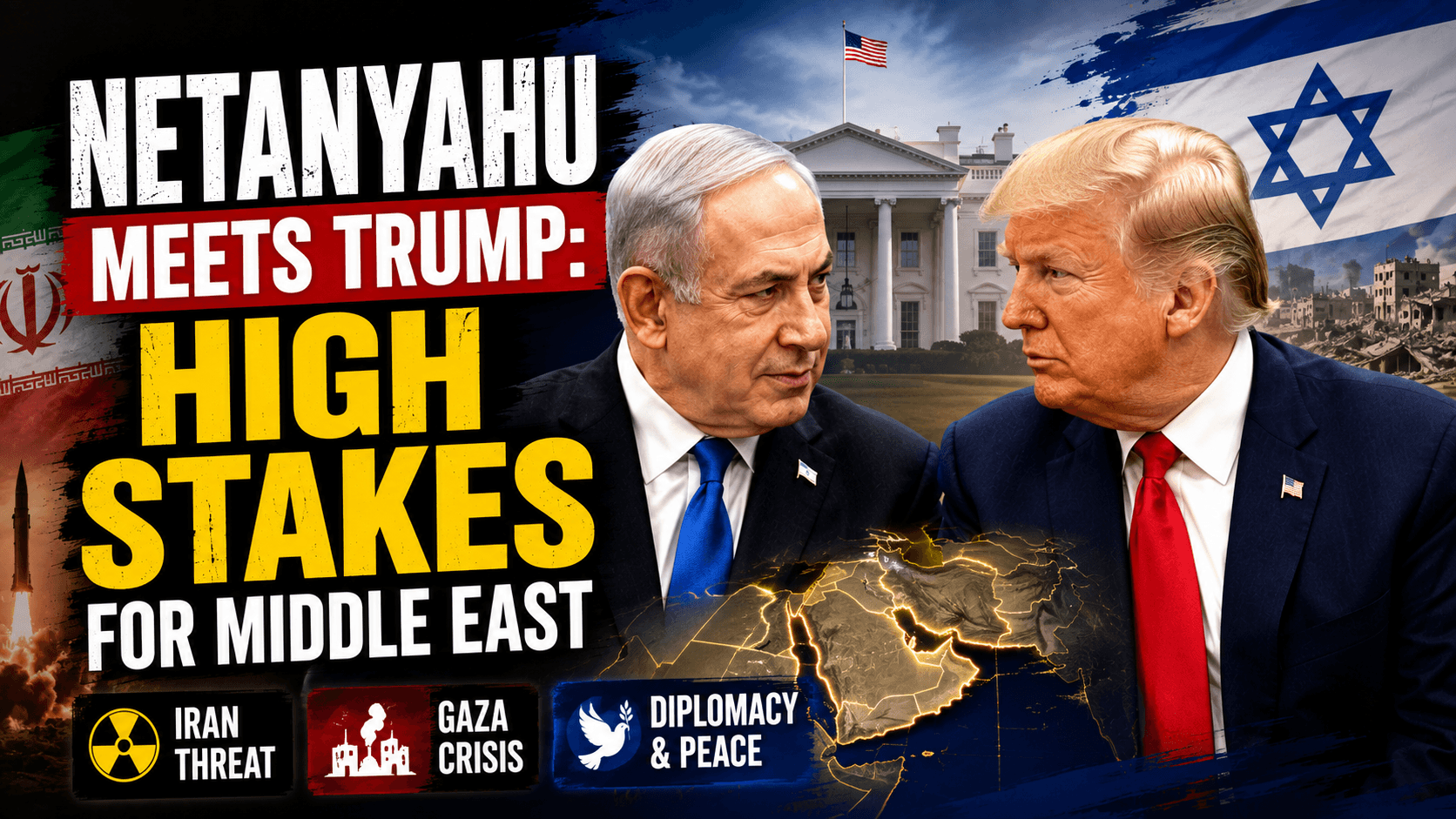
Why Netanyahu's High-Stakes White House Meeting With Trump Matters
Israeli Prime Minister Benjamin Netanyahu is set to hold a high-stakes meeting with U.S. President Donald Trump at the White House, with the talks expected to shape the future of U.S.-Israel relations and influence the broader geopolitical landscape of the Middle East.
Siddhaanth Raghav
Why Netanyahu's High-Stakes White House Meeting With Trump Matters: Iran, Gaza, and the Future of the Middle East
Israeli Prime Minister Meets U.S. President Amid Rising Regional Tensions and Critical Diplomatic Challenges
Israeli Prime Minister **Benjamin Netanyahu** is set to hold a high-stakes meeting with U.S. President **Donald Trump** at the White House, with the talks expected to shape the future of U.S.-Israel relations and influence the broader geopolitical landscape of the Middle East.
The meeting comes at a time of heightened regional tensions involving Iran, the ongoing conflict in Gaza, humanitarian concerns, and efforts to expand diplomatic ties between Israel and Arab nations. Analysts view the discussions as one of the most significant diplomatic engagements of the year, as both leaders seek to align their strategies on security, diplomacy, and regional stability.
With multiple crises unfolding simultaneously, the outcome of the meeting could have far-reaching consequences for the Middle East and beyond.
Why the Meeting Is Considered High-Stakes
The White House meeting is taking place against a backdrop of ongoing security challenges and evolving geopolitical alliances.
For both Washington and Jerusalem, the discussions are expected to focus on immediate security concerns while also addressing long-term regional objectives.
The leaders are likely to discuss military cooperation, intelligence sharing, diplomatic initiatives, and strategies for reducing instability across the region.
Given the influence of both countries on Middle Eastern affairs, decisions emerging from the meeting could affect regional diplomacy for years to come.
Iran Expected to Dominate the Agenda
Iran is expected to be one of the central topics during the talks.
Israel has consistently expressed concerns about Iran's nuclear activities, missile development, and support for armed groups operating across the region.
Prime Minister Netanyahu is expected to emphasize the need for continued international pressure on Tehran and close coordination with the United States on security matters.
The Trump administration is also expected to review options for balancing diplomatic engagement with measures intended to deter regional escalation.
Both governments have repeatedly described preventing further instability involving Iran as a strategic priority.
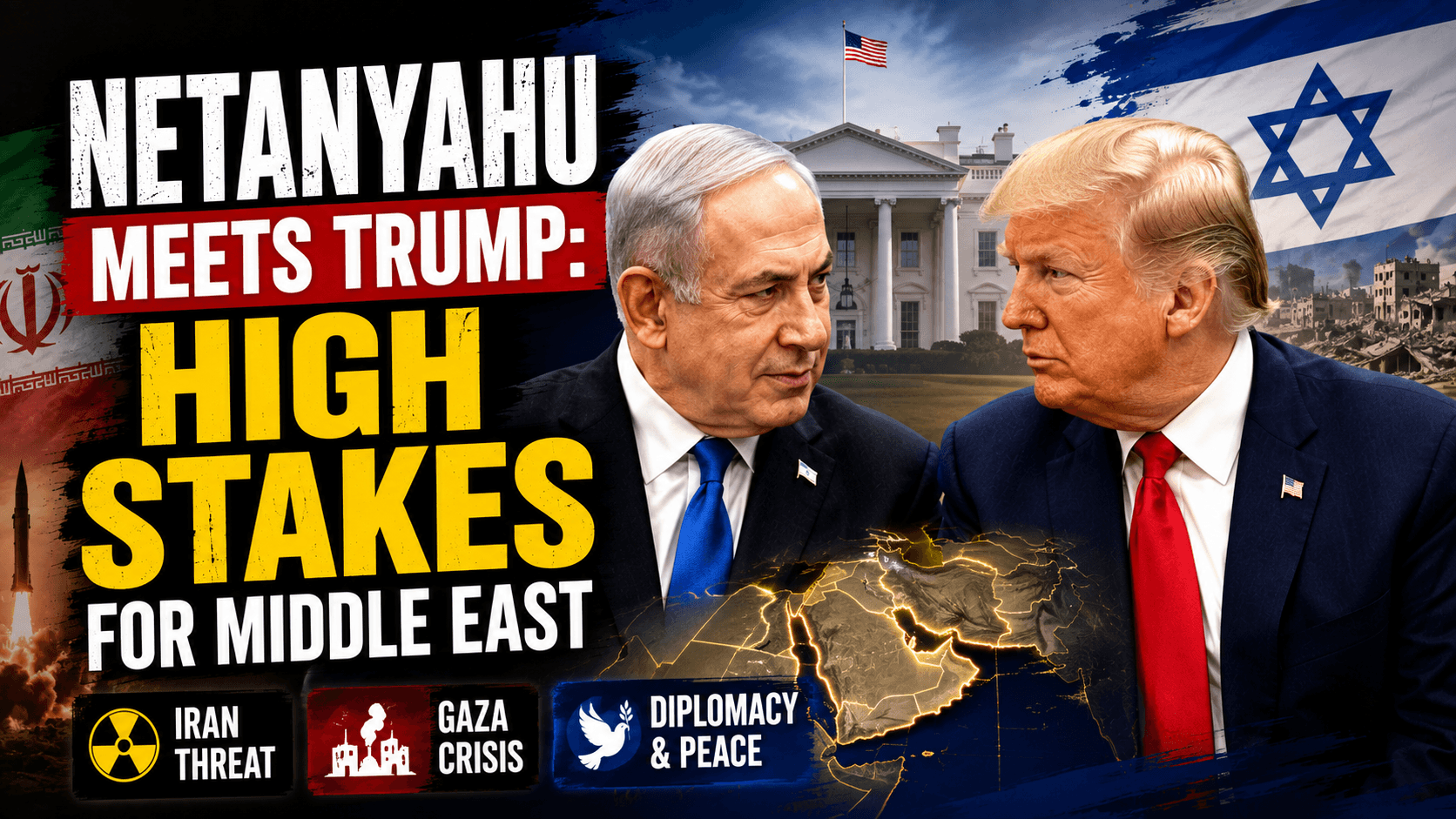
Gaza Conflict and Humanitarian Situation
The ongoing situation in Gaza is another major issue expected to feature prominently in the discussions.
The conflict has generated international concern over civilian casualties, humanitarian access, reconstruction efforts, and long-term regional security.
The United States and Israel are expected to discuss:
* Humanitarian assistance.
* Security coordination.
* Efforts to reduce violence.
* Long-term governance and reconstruction challenges.
* Regional cooperation aimed at improving stability.
While both governments remain committed to Israel's security, international attention has also focused on protecting civilians and improving humanitarian conditions.
Future of the Abraham Accords
The meeting is also expected to examine opportunities for expanding the **Abraham Accords**, the series of normalization agreements between Israel and several Arab countries.
Both leaders have previously expressed support for broadening regional cooperation through diplomatic engagement and economic partnerships.
Officials are expected to explore whether additional countries could eventually participate in future normalization initiatives, although analysts caution that current regional tensions may complicate such efforts.
Expanding diplomatic relations remains an important long-term objective for both governments.
Strengthening U.S.-Israel Strategic Partnership
The United States and Israel have maintained a close strategic partnership for decades, cooperating extensively on defense, intelligence, cybersecurity, and regional security.
The White House meeting provides an opportunity to reaffirm that partnership while reviewing evolving security challenges.
Topics likely to be discussed include:
* Intelligence cooperation.
* Missile defense systems.
* Counterterrorism coordination.
* Regional military developments.
* Economic and technological cooperation.
Both governments continue to describe their relationship as a cornerstone of regional security.
Domestic Political Importance
The meeting also carries political significance for both leaders.
For Prime Minister Netanyahu, the visit offers an opportunity to demonstrate continued international support while addressing domestic concerns related to security and foreign policy.
For President Trump, the discussions reinforce the administration's focus on Middle East diplomacy and its commitment to maintaining close ties with Israel.
Political analysts suggest that successful outcomes from the meeting could strengthen both leaders' positions at home.
Global Reactions
Governments across Europe, the Middle East, and Asia are closely monitoring the outcome of the White House talks.
Regional partners are particularly interested in whether the discussions produce progress on de-escalation efforts, humanitarian cooperation, or renewed diplomatic initiatives.
Financial markets and energy analysts are also paying close attention because developments in the Middle East can influence global oil prices, trade routes, and investor confidence.
What Could Come Next?
Although no major agreements have been announced ahead of the meeting, observers expect joint statements outlining areas of cooperation.
Possible outcomes include:
* Enhanced security coordination.
* Expanded intelligence sharing.
* Continued diplomatic engagement on Iran.
* Additional humanitarian initiatives related to Gaza.
* Renewed efforts to strengthen regional partnerships.
The precise impact will depend on subsequent diplomatic negotiations and developments across the Middle East.
Conclusion
Prime Minister Benjamin Netanyahu's meeting with President Donald Trump is widely regarded as one of the most important diplomatic engagements of the year. Taking place amid heightened tensions involving Iran, the humanitarian crisis in Gaza, and broader regional security concerns, the discussions have the potential to influence the direction of U.S.-Israel relations and Middle East diplomacy.
While immediate policy decisions may emerge following the talks, the broader significance lies in how both leaders seek to balance security, diplomacy, and regional stability during a period of considerable geopolitical uncertainty. As the international community watches closely, the outcomes of the meeting could shape future cooperation between Washington and Jerusalem while influencing peace and security efforts across the region.
Get More News on Swaggbuzz