
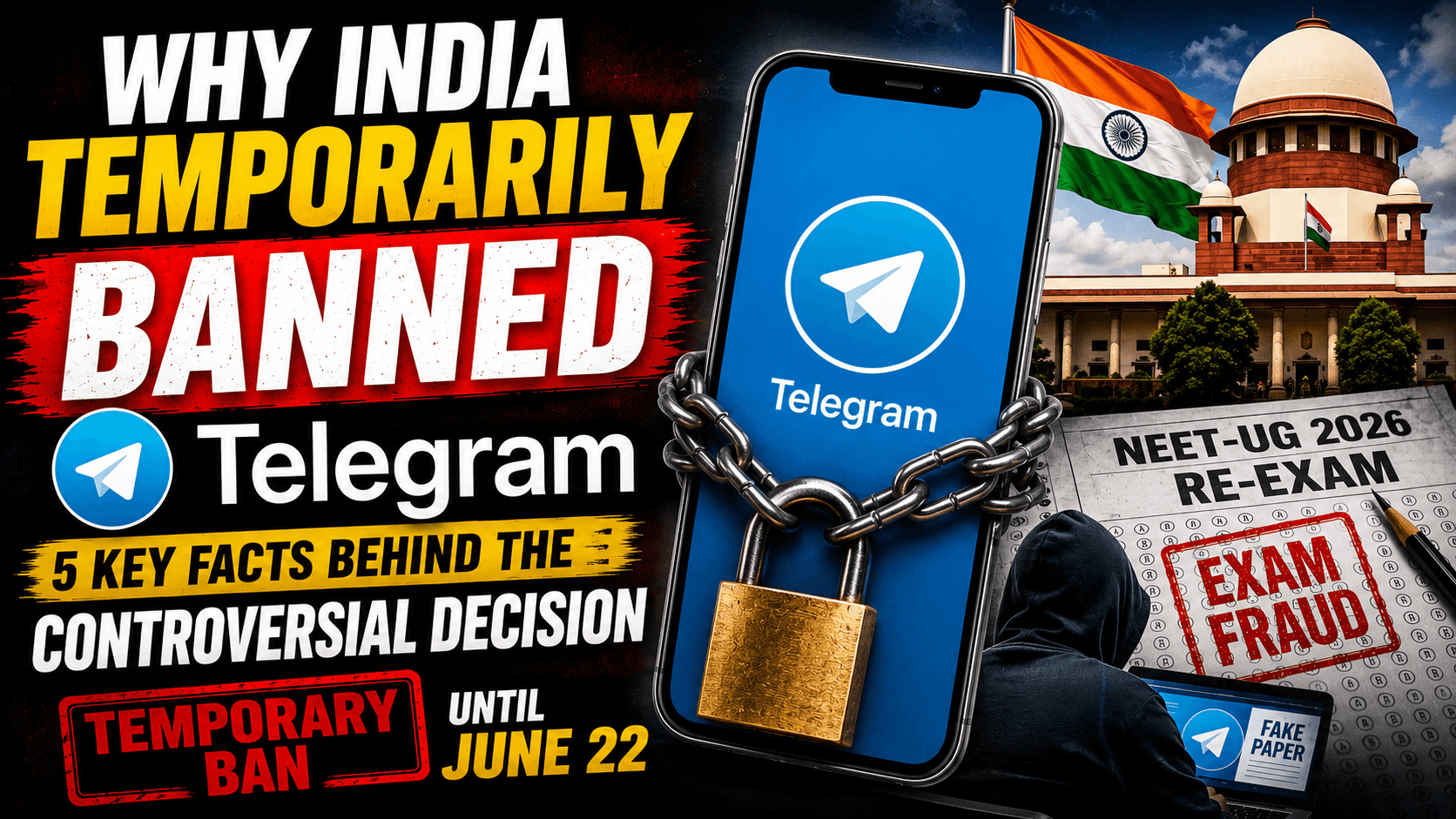
Why India Temporarily Banned Telegram
India's decision to temporarily block Telegram has sparked nationwide debate, affecting millions of users and raising questions about digital freedom, exam security, and platform accountability.
Siddhaanth Raghav
Why India Temporarily Banned Telegram: 5 Key Facts Behind the Controversial Decision
India's decision to temporarily block Telegram has sparked nationwide debate, affecting millions of users and raising questions about digital freedom, exam security, and platform accountability.
The government ordered a temporary restriction on Telegram until June 22, just days before the NEET-UG 2026 re-examination, one of India's most important medical entrance tests. Officials say the move is aimed at preventing cheating, misinformation, and the spread of fake exam papers.
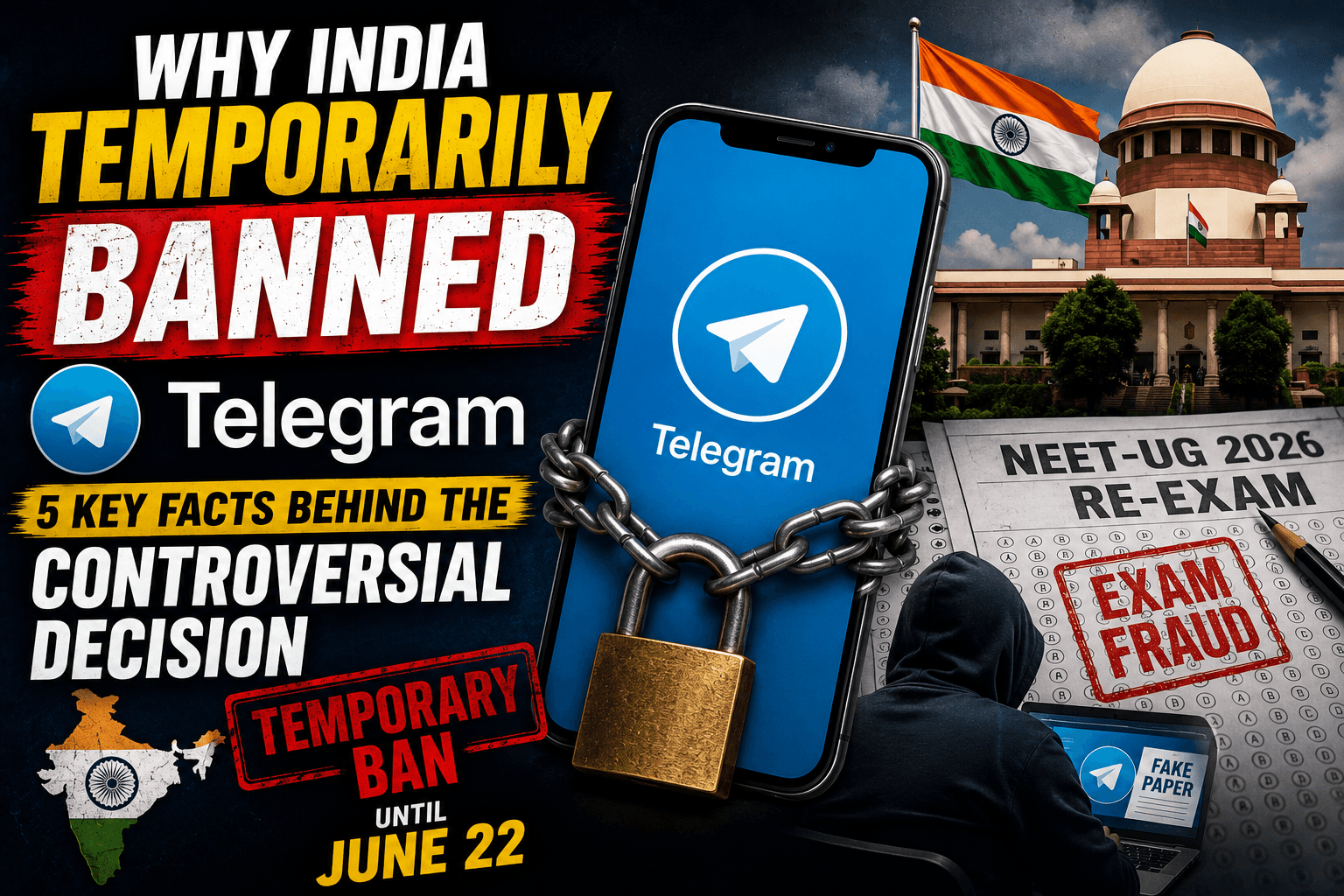
1. Telegram Was Allegedly Used in NEET Exam Fraud
According to government agencies and the National Testing Agency (NTA), organized cheating networks were using Telegram to distribute fake question papers and misleading information related to the NEET examination. Authorities claim the platform became a key tool for fraudsters targeting students.
2. The Ban Is Temporary
Unlike permanent platform bans seen in some countries, India's restriction is currently scheduled to remain in effect only until June 22. The government says the objective is to secure the NEET re-examination process and prevent further exam-related scams during this critical period.
3. Telegram's Editing Feature Has Also Been Targeted
Authorities have gone beyond simply restricting access to the platform. Telegram was also directed to disable certain message-editing capabilities in India until June 30. Officials argue that the feature was allegedly used to manipulate timestamps and create false evidence of paper leaks after exams had already taken place.
4. Telegram Has Challenged the Order
The move has not gone unchallenged. Telegram has reportedly taken legal action against the government's order, arguing that the restriction affects millions of legitimate users who rely on the platform for communication, business, education, and community discussions.
5. The Decision Has Triggered Political and Public Debate
While supporters say the ban is necessary to protect honest students, critics argue that blocking an entire platform punishes ordinary users rather than addressing the root causes of exam paper leaks. The decision has sparked criticism from opposition leaders, digital rights advocates, and technology commentators.
A Bigger Debate Beyond Telegram
The temporary Telegram ban highlights a growing challenge facing governments worldwide: balancing digital freedom with public safety and exam integrity. As online platforms become increasingly important in everyday life, authorities are under pressure to prevent misuse without disrupting legitimate users.
With the NEET re-examination approaching, all eyes will be on whether the restriction achieves its intended goal. Regardless of the outcome, the controversy has reignited discussions about cybersecurity, online accountability, and the future of digital regulation in India.
Get More Updates on Swaggbuzz