
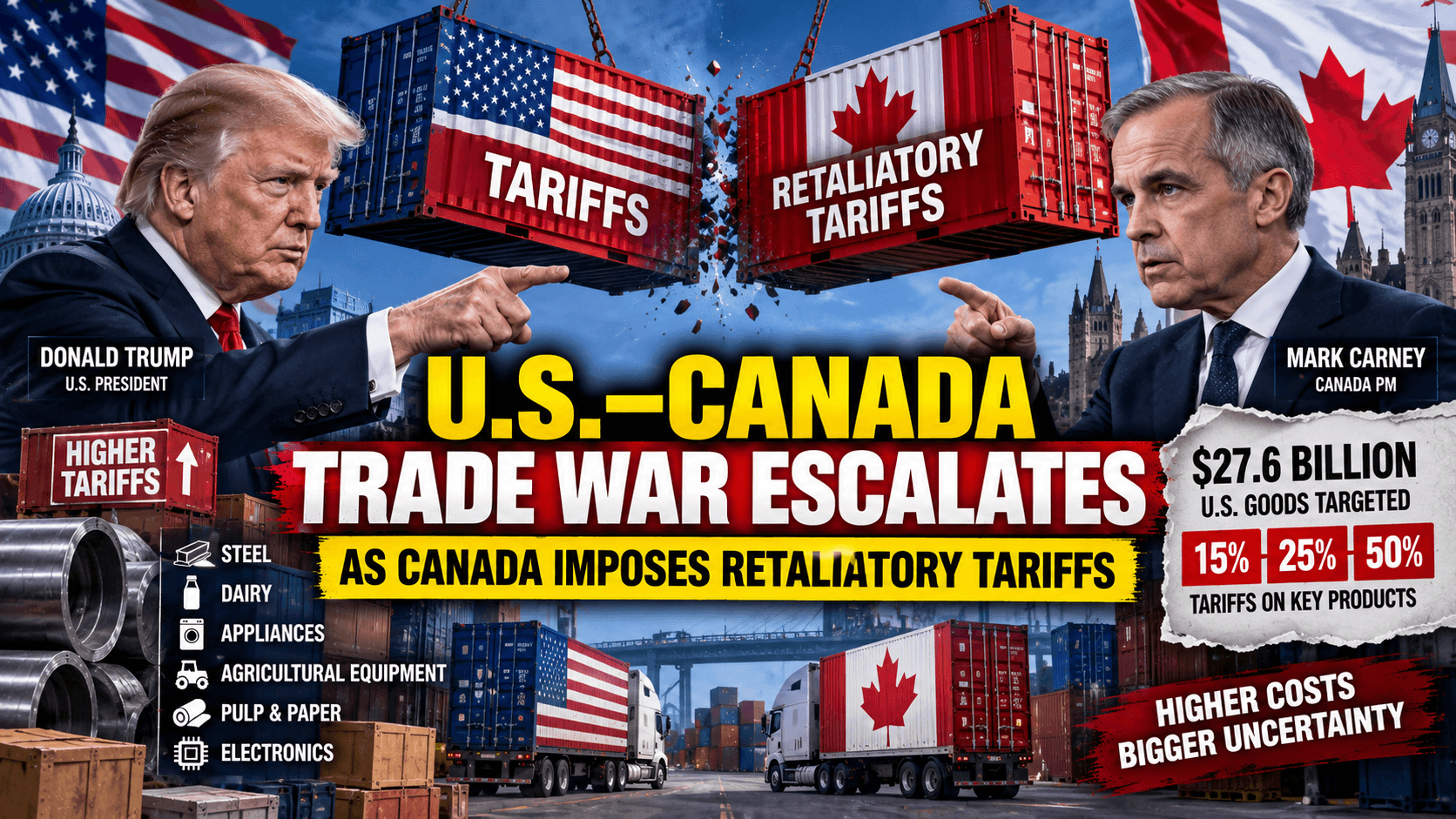
U.S.–Canada Trade War Escalates as Canada Imposes Retaliatory Tariffs
WASHINGTON / OTTAWA, September 8, 2026 — The trade dispute between the United States and Canada has entered a new and more confrontational phase after Canada imposed retaliatory tariffs on billions of dollars worth of American goods, following the collapse of trade negotiations between the two longtime economic partners.
The latest measures, which took effect on September 8, cover approximately $27.6 billion worth of U.S. imports and include tariffs of 15%, 25% and 50%, depending on the product. The duties target sectors including steel, dairy, appliances, agricultural equipment, pulp and paper, and electronics.
Canada Responds With Dollar-for-Dollar Tariffs
Canada's latest tariffs are designed to match U.S. measures imposed on Canadian products.
The escalation follows Washington's decision to impose a 50% tariff on approximately $27.6 billion of Canadian goods. Ottawa has described its response as a proportional countermeasure intended to protect Canadian industries and create leverage in future negotiations.
The new Canadian duties cover a wide range of American products, increasing costs for companies involved in cross-border trade.
Trade Talks Have Broken Down
The latest escalation follows the collapse of U.S.–Canada trade negotiations in August.
Canadian Prime Minister Mark Carney has criticized Washington's negotiating approach and said Canada remains willing to engage in serious discussions. U.S. President Donald Trump, meanwhile, has continued to threaten additional tariffs and other measures against Canadian businesses.
The breakdown has created uncertainty around the future of the two countries' deeply integrated trading relationship.
Auto Industry Faces Additional Pressure
The automobile sector is among the industries facing further uncertainty.
Trump has threatened to increase tariffs on Canadian-made vehicles and auto parts to 50% from January 2027. Any additional duties could put further pressure on manufacturers and suppliers whose production networks operate across the U.S.–Canada border.
Trump has also threatened action against Canadian aerospace manufacturer Bombardier, adding another layer to the dispute between the two countries.
USMCA Future Comes Under Pressure
The escalating dispute is also raising questions about the future of the **United States-Mexico-Canada Agreement (USMCA)**, the trade framework governing much of North American commerce.
The agreement is facing an important review, while the latest tariff battle has made the economic relationship between Washington and Ottawa increasingly uncertain. Analysts warn that prolonged trade restrictions could weaken investment and disrupt established supply chains.

Businesses and Consumers Brace for Higher Costs
The consequences of the tariff dispute could extend beyond governments and major corporations.
Manufacturers that rely on imported components may face higher production costs, while retailers could eventually pass some additional expenses on to consumers. Cross-border trucking, agriculture, manufacturing and other industries are also exposed to disruptions as tariffs increase the cost of moving goods between the two countries.
Canada is particularly exposed because the United States remains its dominant export market. Reuters reported that around 68% of Canada's exports are directed to the U.S., highlighting the importance of the relationship to the Canadian economy.
No Immediate Resolution in Sight
Despite the escalating rhetoric and tariffs, Canadian officials have continued to leave the door open to future negotiations.
However, with both sides imposing increasingly significant trade barriers and Washington signaling the possibility of additional measures, businesses are preparing for a prolonged period of uncertainty.
The latest tariff measures mark another major escalation in an 18-month trade dispute between two of North America's closest economic partners. Whether the confrontation develops into a longer-term restructuring of continental trade or eventually leads the two governments back to the negotiating table remains uncertain.
Get More News on Swaggbuzz
Author
About the author
Siddhaanth Raghav
Topics