
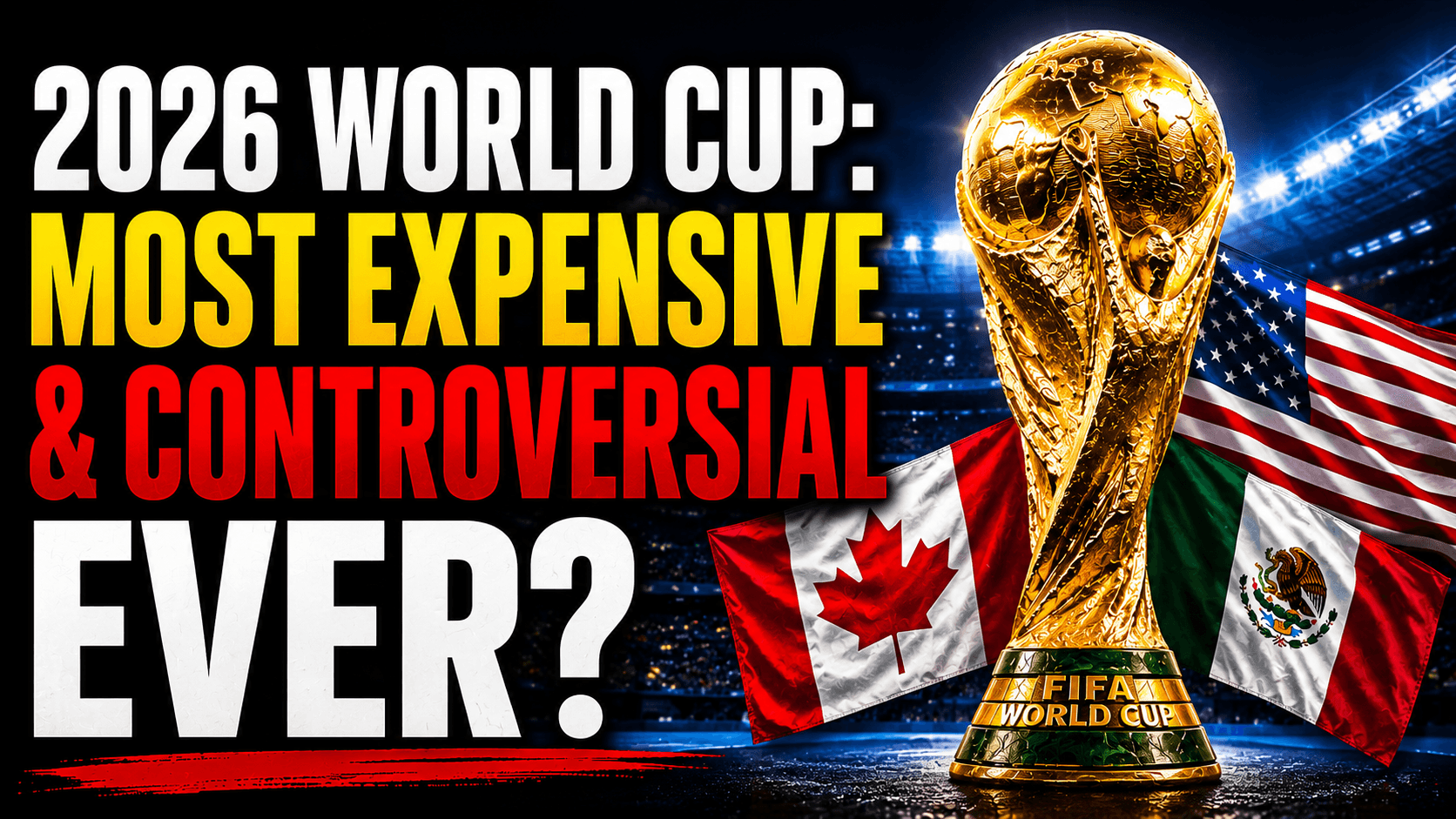
Reasons Why the 2026 FIFA World Cup Most Expensive and Controversial Tournament
The 2026 FIFA World Cup is already making history before a ball has even been kicked.
Siddhaanth Raghav
6 Reasons Why the 2026 FIFA World Cup Could Become the Most Expensive and Controversial Tournament Ever
The 2026 FIFA World Cup is already making history before a ball has even been kicked. Hosted across the United States, Canada, and Mexico, the tournament is expected to be the largest World Cup ever, featuring 48 teams, more matches, bigger stadiums, and potentially record-breaking revenues.
But behind the excitement lies a growing debate about soaring ticket prices, dynamic pricing models, and whether football's biggest event is becoming too expensive for ordinary fans.

Here are six reasons why the 2026 World Cup could become the most controversial and economically significant tournament in football history.
Ticket Prices Have Reached Record Levels
Fans attending matches are facing some of the highest prices ever seen at a World Cup. Premium tickets for major matches and the final are selling for thousands of dollars, while even group-stage games can cost hundreds. Many supporters argue that attending the tournament is becoming increasingly difficult for average football fans.
FIFA Could Generate More Than $7 Billion
Sports economists estimate that FIFA could earn more than $7 billion from ticket sales and hospitality packages alone. That would be several times higher than revenues generated during previous World Cups and would make the tournament one of the most lucrative sporting events ever organized.
Dynamic Pricing Is Changing Football Economics
For the first time on such a large scale, FIFA is using demand-based pricing similar to systems used by airlines and major entertainment companies. Ticket prices rise as demand increases, creating significant revenue opportunities but also criticism from fans who believe football is becoming overly commercialized.
The Tournament Is Bigger Than Ever Before
The 2026 World Cup will feature 48 national teams instead of 32, resulting in more matches, more travel, and a larger global audience. The tournament will stretch across North America, making it the largest World Cup ever held in terms of geography and participation.
Politics and Football Are Intertwined
The competition arrives during a period of major geopolitical tensions and economic disputes. The three host nations are navigating trade disagreements, while international conflicts involving participating countries have added another layer of complexity to the tournament's global significance.
FIFA's Business Model Is Under Scrutiny
Unlike previous World Cups, where host nations invested heavily in new stadiums and infrastructure, FIFA is largely using existing venues while maximizing ticket revenue. Critics argue that the organization is benefiting from record income while local authorities continue to shoulder security, transport, and operational costs.
A Turning Point for Global Football
The 2026 FIFA World Cup promises to deliver unforgettable football moments, but it may also redefine the business of sports. Supporters, economists, and football officials will be watching closely to see whether FIFA's new approach becomes the future of major sporting events or serves as a warning about the growing commercialization of the game.
As football's biggest tournament expands to unprecedented levels, one question remains: can the World Cup still belong to the fans when attending it costs more than ever before?
Get More News on Swaggbuzz