
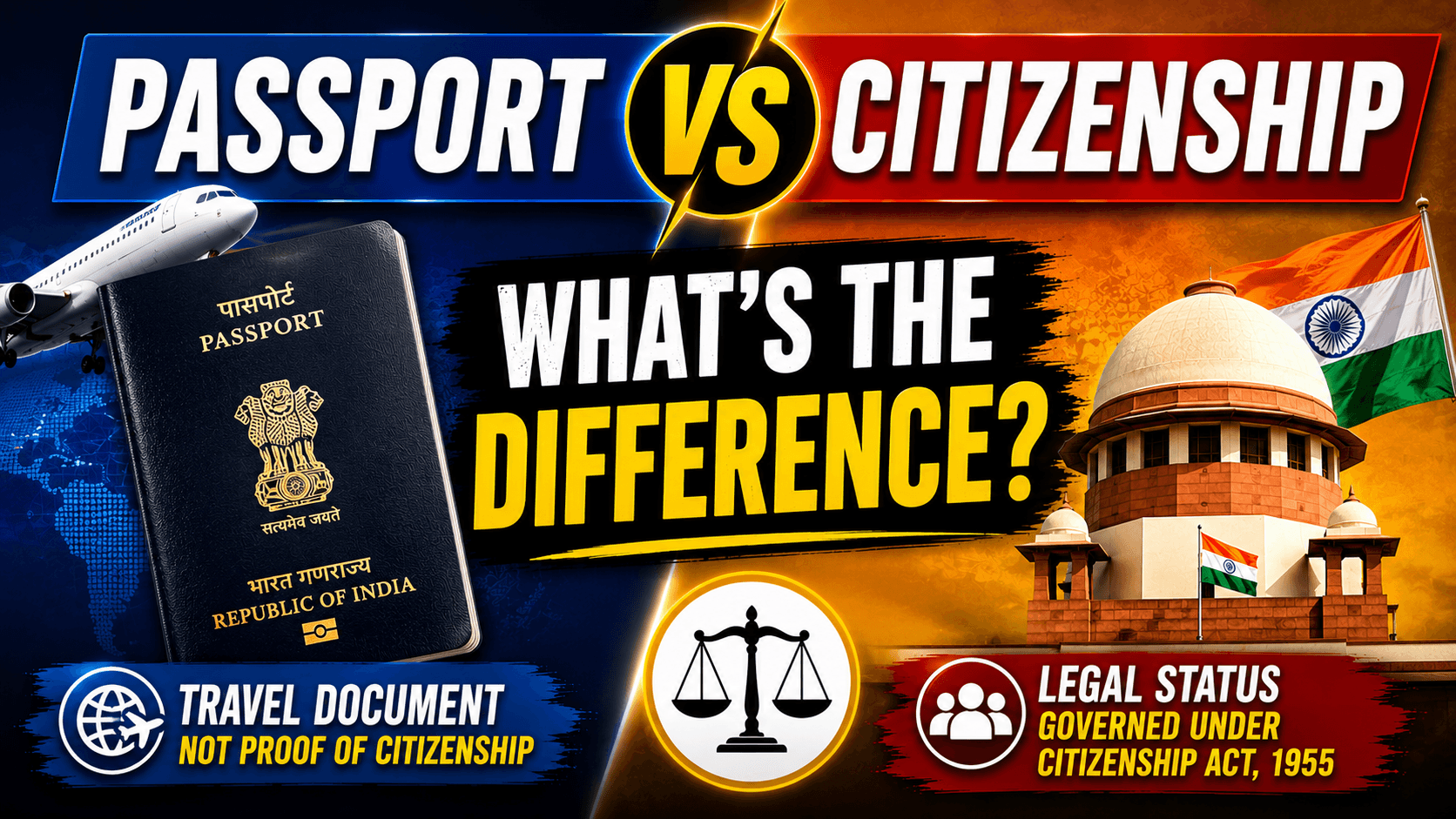
Passport vs Citizenship: What's the Difference?
For many people, an Indian passport is considered the ultimate proof of being an Indian citizen.
Siddhaanth Raghav
Passport vs Citizenship: What's the Difference?
For many people, an Indian passport is considered the ultimate proof of being an Indian citizen. However, a recent clarification by the Government of India has sparked a nationwide discussion by stating that a passport is not conclusive proof of citizenship. The statement has left many wondering: if a passport is not enough, then what legally establishes Indian citizenship?
The answer lies in understanding the difference between a passport and citizenship under Indian law.
Why Has the Issue Come Into Focus?
The debate began after the Ministry of External Affairs (MEA) clarified that an Indian passport is issued under Passports Act, 1967, while citizenship is governed separately by the Citizenship Act, 1955.
According to the government, this is not a new rule or policy. A passport is primarily a travel document issued after identity and document verification. However, in cases where citizenship itself is legally questioned, authorities may examine additional records instead of relying only on the passport.
What Does an Indian Passport Prove?
An Indian passport is an official government-issued document that allows citizens to travel internationally. It is widely accepted as proof of identity and nationality for purposes such as:
- International travel
- Visa applications
- Banking and financial services
- Government verification
- Identity authentication
For everyday purposes, a passport remains one of the most trusted government documents.
What Is Proof of Citizenship?
Unlike some countries, India does not issue a universal citizenship certificate to every citizen.
Citizenship can be acquired in different ways, including:
- By birth
- By descent
- By registration
- By naturalisation
Through incorporation of territory
Depending on how citizenship was acquired, authorities may rely on documents such as birth records, citizenship certificates, government records, or other legally recognized evidence.
This means there is no single document that automatically serves as conclusive proof of citizenship in every legal situation.
Why the Difference Matters
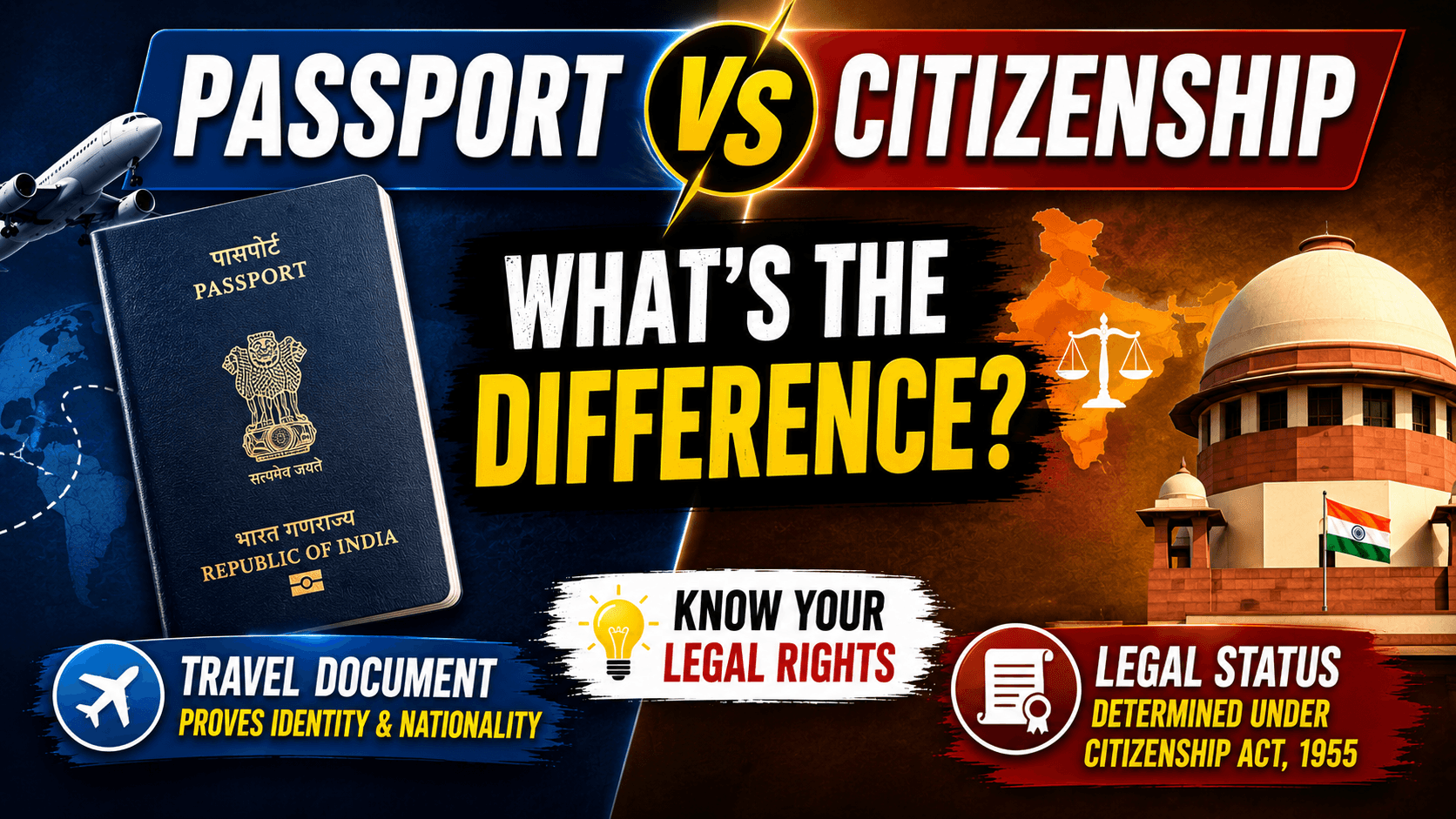
A passport confirms that the government has issued a valid travel document to the holder. Citizenship, on the other hand, is a legal status determined under the Citizenship Act, 1955.
In rare legal disputes involving citizenship, officials may examine multiple documents before reaching a decision. This distinction is important in legal proceedings but does not affect how most people use their passports in daily life.
What Does This Mean for Citizens?
For ordinary passport holders, there is no immediate change.
- Your passport remains valid for:
- International travel
- Identity verification
- Visa applications
- Financial and official documentation
The government's clarification mainly applies to exceptional legal cases where citizenship itself becomes the subject of investigation or judicial review.
Conclusion
The recent debate has highlighted an important legal distinction between a passport and citizenship. While an Indian passport remains one of the country's most reliable identity and travel documents, citizenship is determined under a separate legal framework.
For the vast majority of citizens, the clarification does not change how passports are used. Instead, it serves as a reminder that different government documents have different legal purposes, and citizenship may be established through multiple forms of official evidence depending on the circumstances.