
Nuclear Submarine Raises Fresh Environmental
A decades-old Soviet nuclear submarine resting on the ocean floor has once again become the focus of international attention as scientists and environmental experts warn.
Siddhaanth Raghav
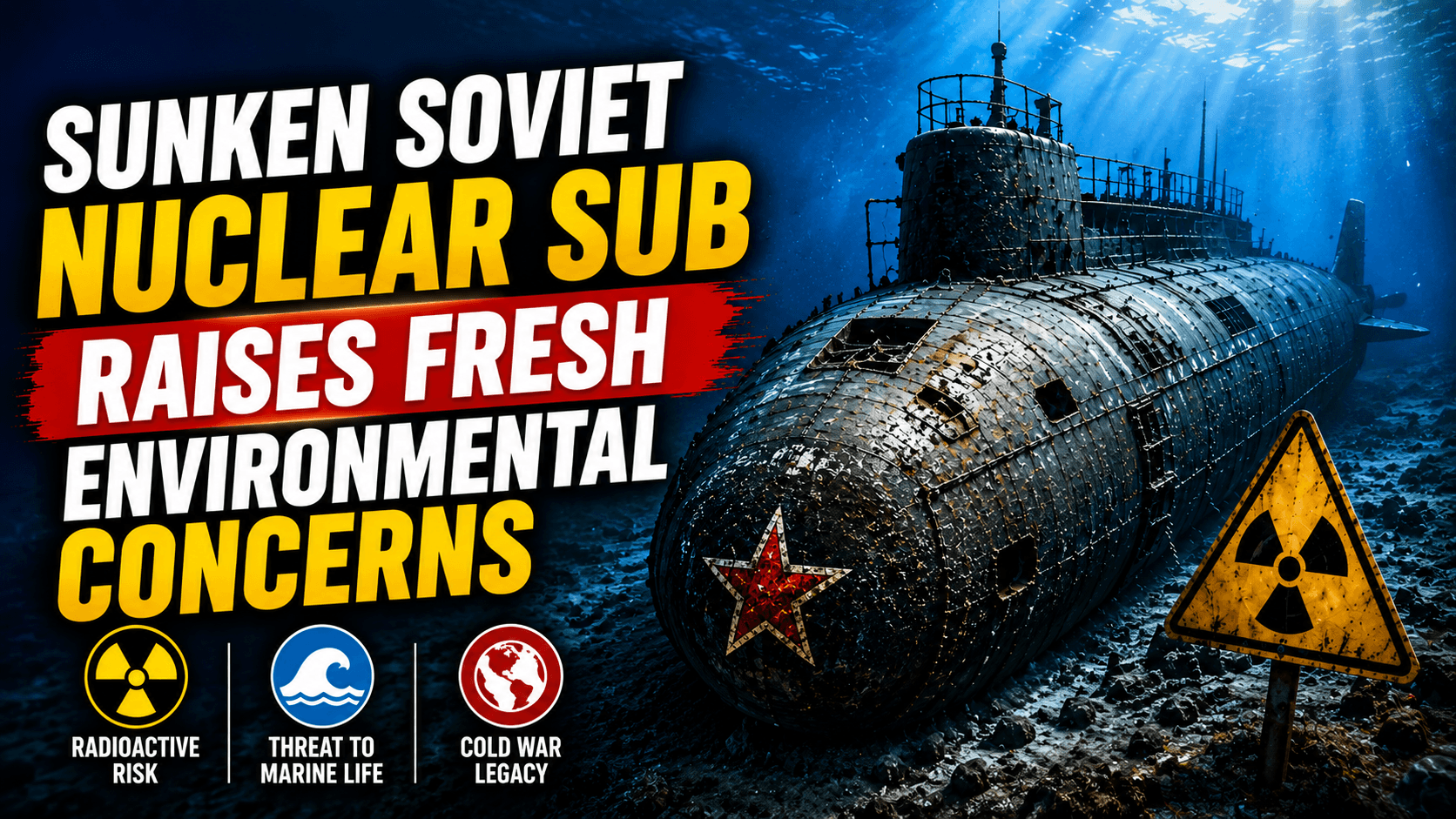
Sunken Soviet Nuclear Submarine Raises Fresh Environmental Concerns Over Radioactive Contamination
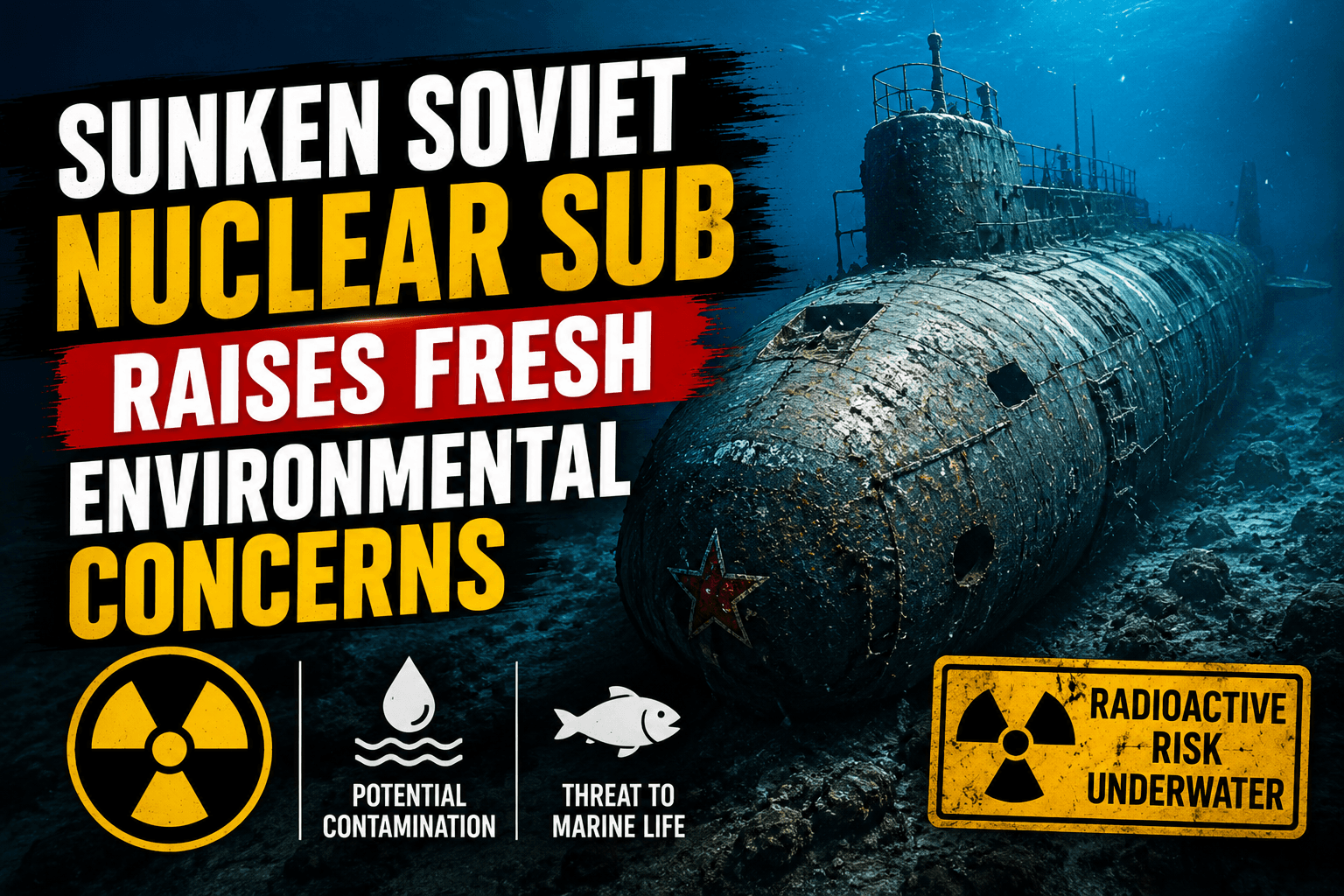
A decades-old Soviet nuclear submarine resting on the ocean floor has once again become the focus of international attention as scientists and environmental experts warn about the long-term risks posed by aging underwater nuclear wrecks. The submarine, which sank during the Cold War era, continues to contain radioactive material, leading experts to describe it as a potential environmental hazard if its structure deteriorates over time.
Although there is no confirmed evidence of a major radioactive leak at present, specialists say continuous monitoring is essential to prevent future risks to marine ecosystems and nearby coastal regions.
A Cold War Relic Still Underwater
The submarine sank several decades ago during the Soviet era and has remained submerged ever since.
Unlike conventional shipwrecks, nuclear-powered submarines can contain reactors, nuclear fuel, and radioactive components that require careful long-term management.
As the wreck ages, scientists continue to assess its structural condition and the potential impact on the surrounding environment.
Why Experts Are Concerned
One of the biggest concerns is corrosion.
After spending decades underwater, metal structures naturally weaken due to constant exposure to seawater. If protective barriers around radioactive materials were to fail, harmful substances could eventually enter the marine environment.
For this reason, experts often refer to such wrecks as long-term environmental risks that require ongoing scientific observation.
Possible Environmental Impact
A significant radioactive leak could affect marine ecosystems in several ways, including:
- Contamination of seawater.
- Damage to marine biodiversity.
- Risks to fish populations.
- Potential impacts on commercial fisheries.
- Long-term environmental recovery challenges.
Researchers emphasize that these are potential risks being studied and monitored, rather than confirmed outcomes.
Importance of Continuous Monitoring
Governments and scientific organizations regularly monitor nuclear wreck sites using underwater surveys, radiation measurements, and environmental assessments.
These efforts help experts:
- Detect any changes in radiation levels.
- Evaluate the condition of the submarine.
- Protect nearby ecosystems.
- Plan future containment or recovery operations if required.
Regular monitoring plays an important role in reducing uncertainty and improving environmental preparedness.
The Legacy of the Cold War
The submarine is one of several military assets left behind from the Cold War that continue to present environmental challenges decades later.
Many countries are still managing the long-term consequences of aging nuclear infrastructure, including decommissioned submarines, reactors, and radioactive waste.
These issues demonstrate how historical military activities can create lasting environmental responsibilities.
International Cooperation Matters
Because oceans connect multiple countries, experts believe international cooperation is essential when dealing with underwater nuclear hazards.
Sharing scientific data, conducting joint environmental studies, and developing safe containment strategies can help reduce risks while protecting marine resources for future generations.
Conclusion
The renewed attention surrounding the sunken Soviet nuclear submarine serves as a reminder that the environmental effects of the Cold War continue to be felt today. While there is no confirmed large-scale radioactive contamination, experts agree that careful monitoring and responsible management remain essential.
As governments and scientists continue studying the wreck, the focus remains on protecting marine ecosystems, ensuring public safety, and preventing future environmental harm.
Get More News on Swaggbuzz