
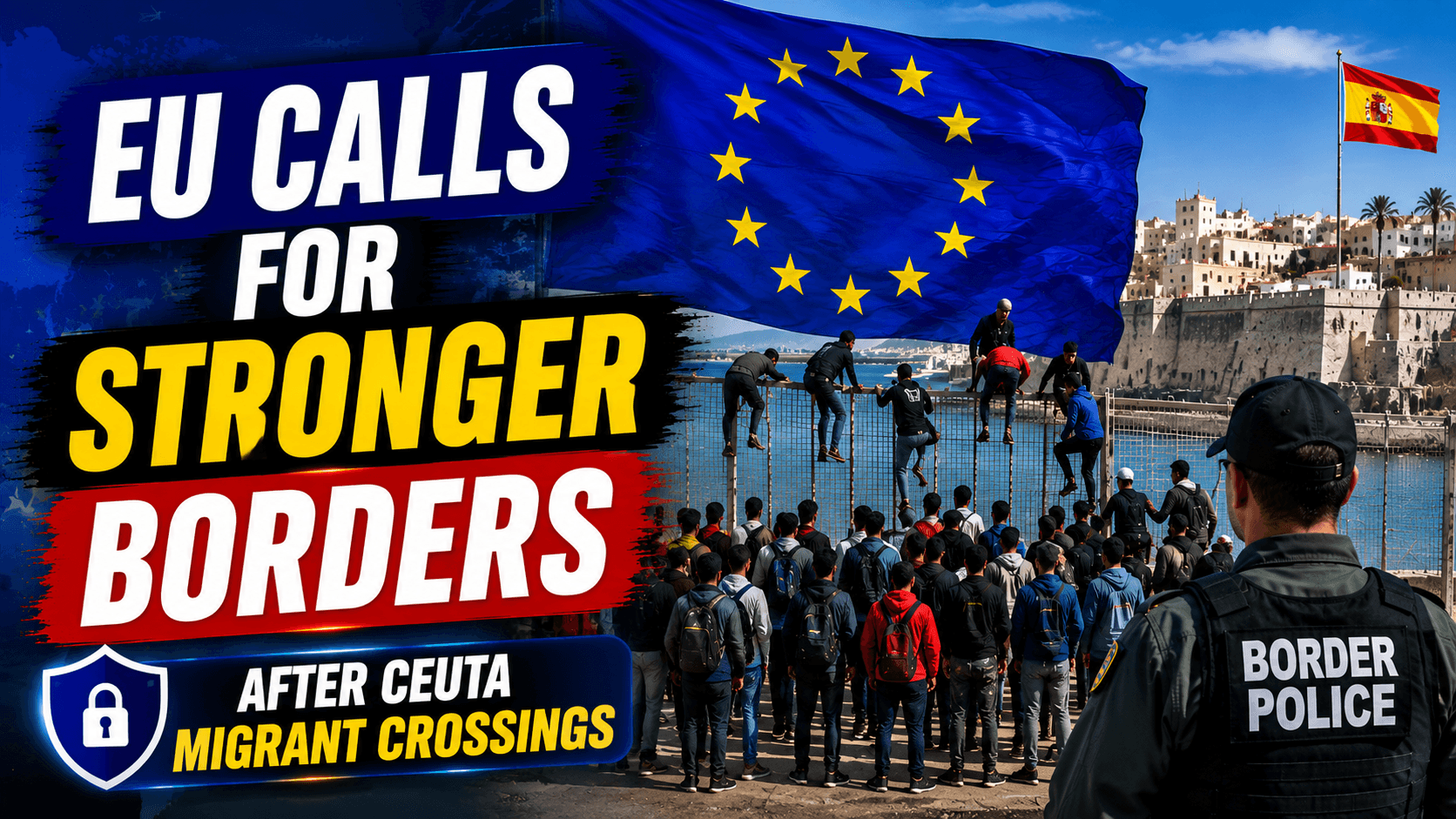
Migration Crisis Sparks Push for Tougher Border Security
The European Union has renewed calls for stronger external border protection following the recent migrant crossings into **Ceuta**, Spain's autonomous territory on the North African coast. The large-scale arrivals have intensified debate over migration policy.
Siddhaanth Raghav
EU Calls for Stronger Borders After Ceuta Migrant Crossings: Migration Crisis Sparks Push for Tougher Border Security
European Leaders Seek Enhanced External Border Protection Following Mass Migrant Arrivals in Spain's Ceuta Enclave
The European Union has renewed calls for stronger external border protection following the recent migrant crossings into **Ceuta**, Spain's autonomous territory on the North African coast. The large-scale arrivals have intensified debate over migration policy, border security, and humanitarian responsibilities, prompting EU leaders to advocate closer cooperation among member states and neighboring countries.
European Commission President **Ursula von der Leyen** has emphasized the need for a more coordinated approach to managing migration while supporting Spain's efforts to respond to the crisis. The developments have placed migration once again at the center of political discussions across the European Union.
Ceuta Crisis Triggers Renewed Debate
The latest discussions follow a significant surge in migrants attempting to enter Ceuta from Morocco.
The influx placed considerable pressure on local authorities, emergency responders, and reception facilities, prompting Spain to reinforce border operations and request continued European support.
The incident has become one of the most closely watched migration developments in Europe this year, raising questions about the effectiveness of existing border management policies.
EU Calls for Stronger External Borders
European Commission President Ursula von der Leyen stressed that protecting the European Union's external borders remains essential for maintaining the integrity of the Schengen Area and ensuring an orderly migration system.
She expressed support for Spain's management of the situation while encouraging greater coordination between EU institutions, member states, and neighboring countries.
According to EU officials, strengthening external border management is viewed as a key element of broader migration reform efforts.
Cooperation With Neighboring Countries
The European Union is also seeking deeper cooperation with countries located along major migration routes.
Officials believe that closer collaboration can help:
- Combat migrant smuggling networks.
- Improve border surveillance.
- Strengthen information sharing.
- Address irregular migration.
- Support legal migration pathways where appropriate.
Cooperation with Morocco remains particularly important because of its role in managing migration flows toward Spain.
Balancing Security and Humanitarian Responsibilities
While many European leaders support stronger border controls, they have also emphasized that migration management must remain consistent with international humanitarian obligations.
EU institutions continue to stress the importance of:
- Protecting vulnerable migrants.
- Respecting international asylum procedures.
- Ensuring access to humanitarian assistance.
- Preventing loss of life during dangerous border crossings.
Humanitarian organizations have urged governments to balance security measures with the protection of fundamental human rights.
Political Reactions Across Europe
The Ceuta crisis has generated differing political responses among European governments.
Several member states have argued for stricter border enforcement, faster return procedures for migrants without legal permission to remain, and stronger action against organized trafficking networks.
Others have highlighted the need for comprehensive migration policies that address both border management and the underlying causes of migration, including conflict, poverty, and political instability.
The issue is expected to remain a major topic during upcoming European policy discussions.
Pressure on Spain
Spain continues to play a central role in managing migration along the European Union's southwestern border.
Authorities have increased security deployments around Ceuta while working to process new arrivals and provide humanitarian assistance.
Spanish officials have also called for continued support from European partners, emphasizing that migration is a shared challenge requiring collective action.
Wider European Migration Challenge
Migration remains one of the European Union's most significant policy issues.
The bloc continues to face challenges related to:
- Border security.
- Asylum processing.
- Human trafficking.
- Refugee protection.
- Burden-sharing among member states.
The latest developments in Ceuta have reinforced calls for reforms aimed at improving coordination while ensuring effective management of external borders.
What Could Happen Next?
European officials are expected to continue discussions on strengthening migration policies and enhancing cooperation among member states.
Potential measures under consideration include:
- Increased funding for border management.
- Expanded support for border agencies.
- Enhanced surveillance technology.
- Stronger cooperation with transit countries.
- Continued humanitarian assistance for vulnerable migrants.
Future policy decisions will likely seek to balance security objectives with legal and humanitarian commitments.
International Attention
The events in Ceuta have attracted global attention as governments and international organizations monitor developments closely.
Migration experts note that similar pressures may continue if underlying drivers such as conflict, economic hardship, and climate-related challenges remain unresolved.
The European Union's response to the current situation could influence migration policy discussions well beyond the region.
Conclusion
The European Union's renewed call for stronger external borders following the Ceuta migrant crossings reflects the growing urgency surrounding migration management across Europe. While EU leaders have expressed support for Spain's efforts to secure its border, they have also emphasized the importance of cooperation, humanitarian protection, and long-term policy reform.
As discussions continue, the challenge for European policymakers will be to develop solutions that strengthen border security while upholding international legal obligations and protecting vulnerable people seeking safety and opportunity. The outcome of these debates is likely to shape the future of EU migration policy for years to come.
Get More News on Swaggbuzz