
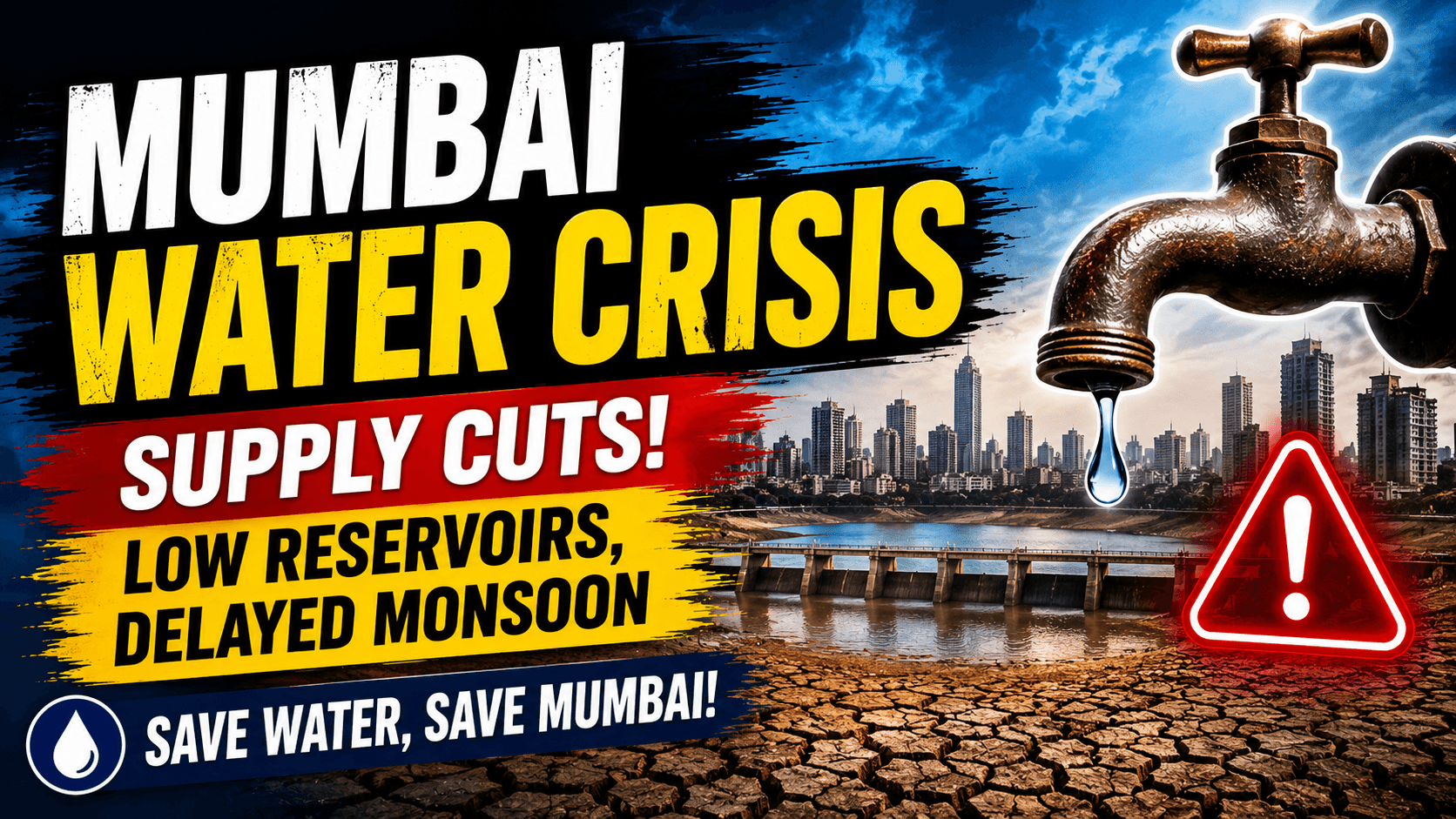
Low Reservoir Levels, Delayed Monsoon Trigger Supply Cuts Across the City
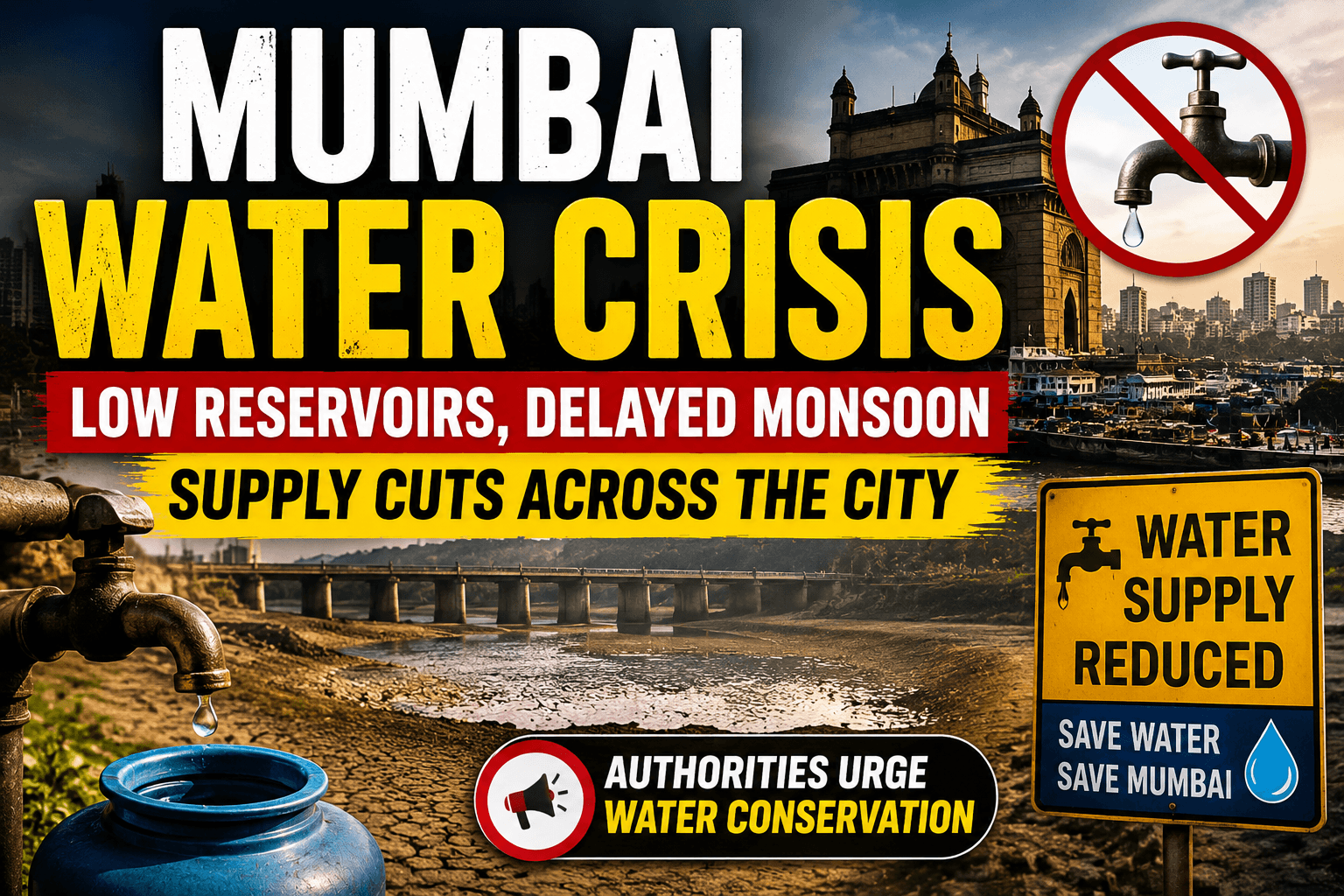
Authorities Urge Water Conservation as Mumbai Faces One of Its Most Challenging Water Shortages in Years.
Siddhaanth Raghav
Mumbai Water Crisis: Low Reservoir Levels, Delayed Monsoon Trigger Supply Cuts Across the City
Authorities Urge Water Conservation as Mumbai Faces One of Its Most Challenging Water Shortages in Years
Mumbai is grappling with a growing water crisis after below-normal rainfall and a delayed southwest monsoon significantly reduced water levels in the city's reservoirs. The shortage has prompted the Brihanmumbai Municipal Corporation (BMC) to introduce water conservation measures, affecting millions of residents as officials work to manage the limited supply.
The situation has highlighted the vulnerability of India's financial capital to changing weather patterns and increasing pressure on its water resources. While recent rainfall has offered some relief, authorities say sustained monsoon showers will be essential to restore reservoir levels and ensure a stable water supply in the coming months.
Why Is Mumbai Facing a Water Crisis?
Mumbai relies on seven reservoirs—Bhatsa, Upper Vaitarna, Middle Vaitarna, Modak Sagar, Tansa, Tulsi, and Vihar—for its daily water supply. Together, these reservoirs provide drinking water to more than 13 million residents.
This year, the delayed arrival of the southwest monsoon and lower-than-average rainfall caused reservoir storage to decline rapidly. As water reserves fell, civic authorities were forced to implement conservation measures to ensure that available supplies could last until rainfall improved.
The crisis underscores how heavily Mumbai depends on seasonal rainfall to meet its growing water demand.
Water Supply Restrictions Introduced
In response to declining reservoir levels, the BMC announced a series of measures aimed at reducing water consumption across the city.
These include:
- A reduction in water supply to residential areas.
- Restrictions on water use for construction activities.
- Reduced water allocation for industrial and commercial establishments.
- Temporary suspension of new water connections in some cases.
- Appeals to citizens to avoid unnecessary water usage.
Officials have stated that these steps are precautionary and intended to prevent more severe shortages if reservoir levels remain low.
Impact on Residents and Businesses
The water shortage has affected households, businesses, and public services across Mumbai.
Many residents have reported lower water pressure and shorter supply durations, forcing families to store water and adopt conservation practices. Housing societies have also introduced their own water-saving measures, including limits on vehicle washing, gardening, and other non-essential uses.
Businesses that depend heavily on water, such as restaurants, hotels, and construction companies, have also experienced operational challenges due to reduced supply.
Climate Change and Urban Water Stress
Experts say Mumbai's recurring water shortages are becoming increasingly linked to climate variability.
Irregular monsoon patterns, changing rainfall intensity, and longer dry spells have made water management more challenging for many Indian cities. Rapid urbanisation and population growth have further increased demand for limited freshwater resources.
Climate scientists believe cities like Mumbai will need to strengthen water conservation strategies and improve infrastructure to adapt to increasingly unpredictable weather conditions.
The Importance of Reservoir Management
Efficient reservoir management plays a crucial role in ensuring a stable water supply throughout the year.
Water authorities continuously monitor storage levels, rainfall forecasts, and daily consumption to determine whether conservation measures are necessary. During years of weak monsoon rainfall, careful management becomes essential to avoid exhausting available reserves before the rainy season fully arrives.
Recent rainfall has begun to improve water levels in some reservoirs, but officials say continued precipitation will be necessary before restrictions can be eased.
Long-Term Solutions
Urban planners and environmental experts believe Mumbai needs a combination of short-term conservation measures and long-term infrastructure improvements to reduce the risk of future water crises.
Potential solutions include:
* Expanding rainwater harvesting systems.
* Reducing leakage in water distribution networks.
* Recycling treated wastewater for non-drinking purposes.
* Promoting water-efficient appliances and conservation practices.
* Developing additional storage and supply infrastructure.
* Protecting catchment areas surrounding reservoirs.
Together, these measures could improve the city's resilience against future periods of low rainfall.
Public Cooperation Is Key
Authorities have urged residents to use water responsibly until reservoir levels recover.
Simple actions such as repairing leaking taps, limiting unnecessary water use, collecting rainwater where possible, and avoiding wastage can collectively help reduce pressure on Mumbai's water supply system during periods of scarcity.
Public participation remains one of the most effective tools in managing urban water shortages.
Conclusion
Mumbai's current water crisis serves as a reminder of the challenges facing rapidly growing cities that depend heavily on seasonal rainfall. While recent monsoon showers have brought some relief, the episode highlights the need for stronger water management, improved infrastructure, and greater public awareness.
As climate patterns continue to evolve, ensuring a reliable and sustainable water supply will remain one of Mumbai's most important urban planning priorities. The city's response to this crisis could help shape future water conservation strategies across India.
Get More News on Swaggbuzz