
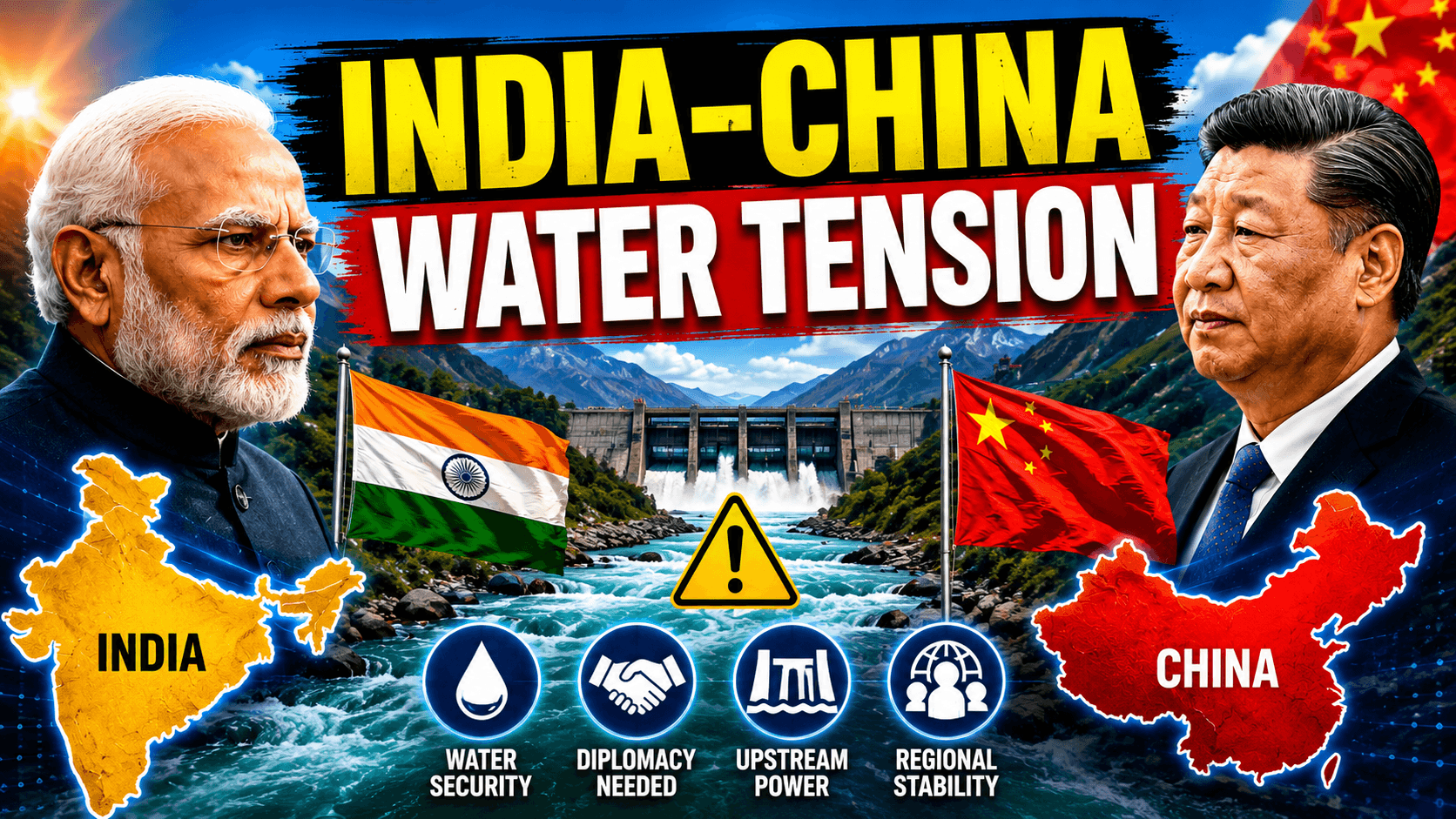
India-China Water Tensions: Can Rivers Become a New Geopolitical Weapon?
Water has become a new point of discussion in South Asian geopolitics as debates around India, China, and Pakistan's control over major rivers continue to grow. Recent comments from Chinese analysts suggesting that China's position as an upstream country could influence water discussions
Siddhaanth Raghav
India-China Water Tensions: Can Rivers Become a New Geopolitical Weapon?
Water has become a new point of discussion in South Asian geopolitics as debates around India, China, and Pakistan's control over major rivers continue to grow. Recent comments from Chinese analysts suggesting that China's position as an upstream country could influence water discussions have renewed questions about whether rivers could become tools of political pressure.
The debate comes amid tensions over the Indus Waters Treaty between India and Pakistan and concerns about China's management of rivers originating from the Tibetan Plateau.
Why Did the Water Debate Begin?
The discussion intensified after India reviewed its approach toward the Indus Waters Treaty with Pakistan following rising tensions between the two countries.
The treaty, signed in 1960 with the involvement of the World Bank, divides the use of the Indus river system between India and Pakistan. It has survived several conflicts and remains one of the world's most significant water-sharing agreements.
However, political disagreements between the two nations have brought renewed attention to the strategic importance of water resources.
China's Role in the Water Debate
China enters the conversation because several important Asian rivers originate from the Tibetan Plateau, which is controlled by Beijing.
The Brahmaputra River, known as the Yarlung Tsangpo in Tibet, begins in China before flowing into India and Bangladesh. Because China is located upstream, its dam projects and river management decisions are closely watched by downstream countries.
Some Chinese commentators have suggested that if water becomes a strategic issue in South Asia, China's upstream position should also be considered.
Can China Stop Water Flow to India?
Experts say the reality is more complicated.
Although China controls the upper sections of certain rivers, completely stopping major rivers such as the Brahmaputra would be extremely difficult.
A large amount of the Brahmaputra's water volume comes from rainfall and tributaries after the river enters India, especially during the monsoon season.
However, large infrastructure projects, dams, and changes in river management can still create concerns about water flow, environmental impact, and transparency.
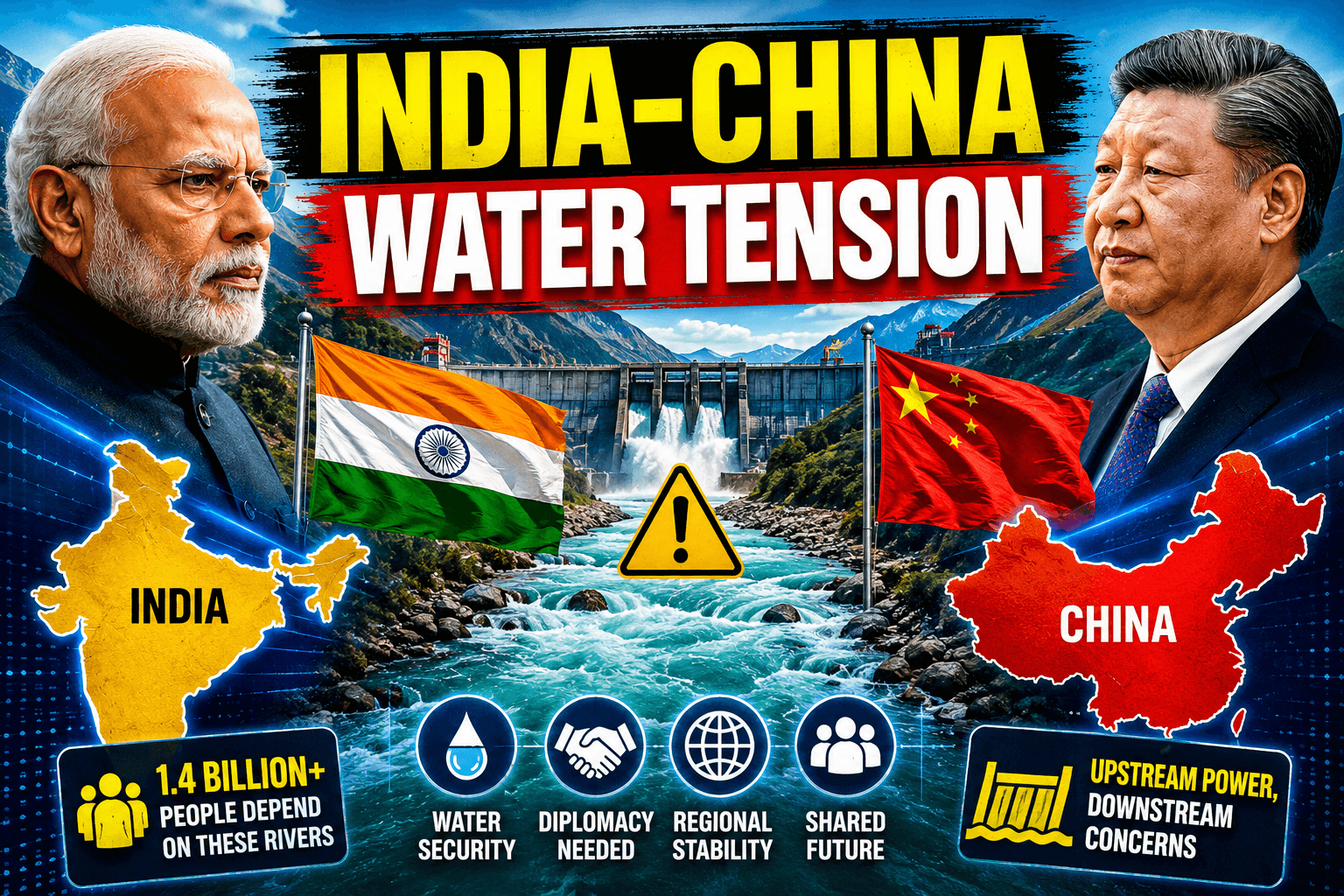
India’s Concerns Over Chinese Projects
India has repeatedly monitored China's dam construction and water infrastructure activities on rivers flowing from Tibet.
New Delhi has emphasized the need for:
- Transparency in river data sharing.
- Protection of downstream interests.
- Responsible water management.
- Regional cooperation.
India has also developed its own water infrastructure projects to improve management and energy generation.
Water Security: A Growing Global Issue
The India-China-Pakistan discussion highlights a larger global challenge: water security.
As climate change, population growth, and increasing demand put pressure on freshwater resources, rivers shared between countries are becoming more strategically important.
Many experts believe future diplomacy will increasingly focus on cooperation over natural resources, including water.
Cooperation or Conflict?
Despite political tensions, experts argue that cooperation remains the best approach for managing shared rivers.
International river systems require communication, scientific data sharing, and long-term agreements to avoid misunderstandings between neighbouring countries.
Water connects millions of people across borders, making responsible management essential for regional stability.
Conclusion
The debate over India, China, and Pakistan's water resources shows how rivers have become an important part of modern geopolitics. While concerns exist about upstream control and strategic influence, experts say the situation is far more complex than simply stopping or releasing water.
As Asia faces growing environmental and political challenges, cooperation and transparent water management will be critical to ensuring stability and protecting the needs of millions who depend on these rivers.
Get More News on swaggbuzz