
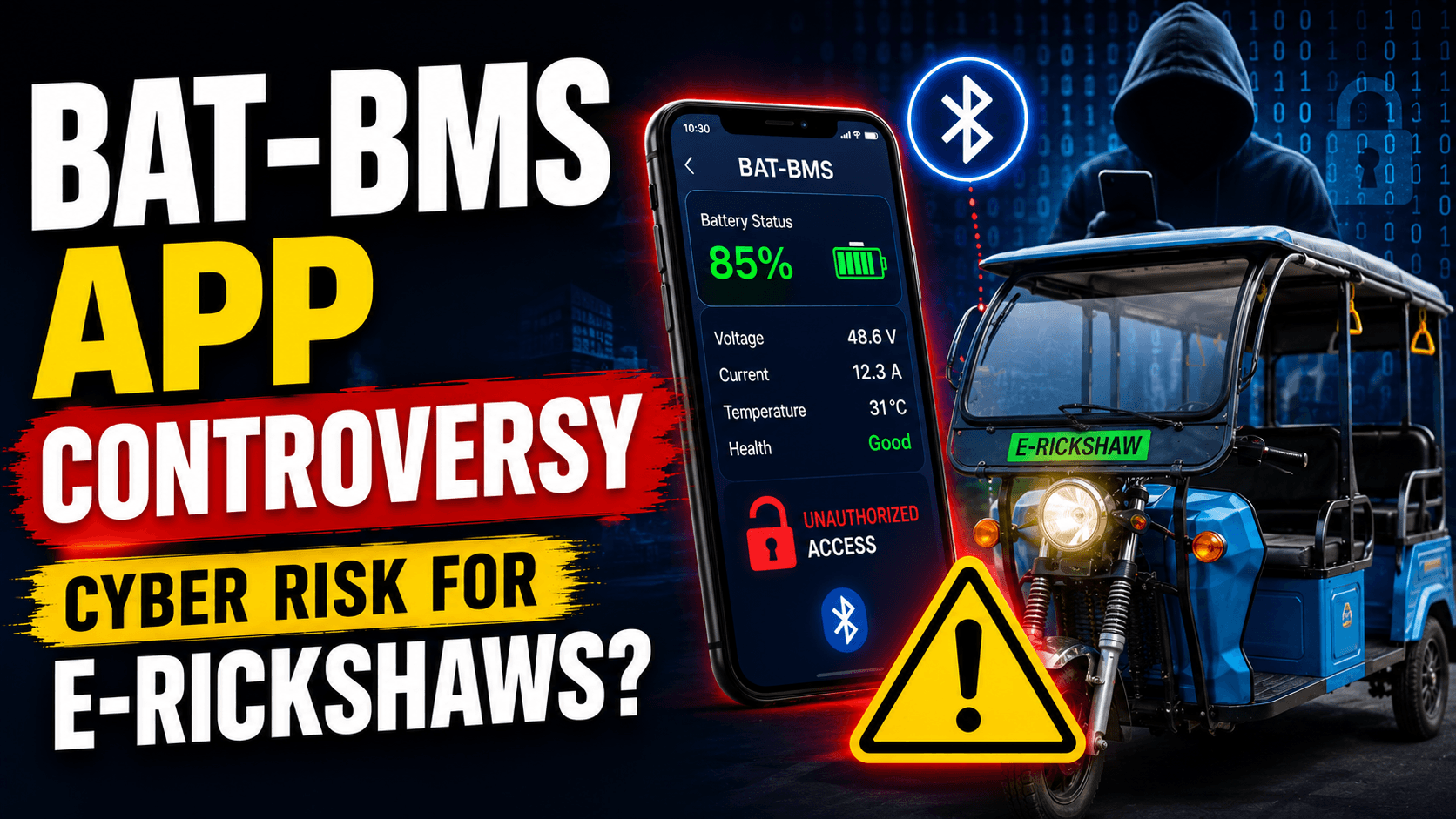
How E-Rickshaw Battery Technology Raised New Cybersecurity Concerns
A new controversy involving the BAT-BMS app and electric rickshaws has sparked a wider conversation about cybersecurity risks in India's fast-growing electric vehicle (EV) ecosystem.
Siddhaanth Raghav
BAT-BMS App Controversy: How E-Rickshaw Battery Technology Raised New Cybersecurity Concerns
A new controversy involving the BAT-BMS app and electric rickshaws has sparked a wider conversation about cybersecurity risks in India's fast-growing electric vehicle (EV) ecosystem. Reports and viral social media videos claimed that some people were using battery management applications to interfere with certain e-rickshaws, causing inconvenience and concern among drivers.
The incident has highlighted an important question for the future of electric mobility: as vehicles become smarter and more connected, how secure are the technologies that power them?
What Is the BAT-BMS App?
BAT-BMS stands for Battery Management System, a type of application designed to connect with compatible lithium battery systems.
These apps are generally created to help users and technicians monitor important battery information, including:
- Battery charge percentage.
- Voltage levels.
- Battery health.
- Temperature.
- Performance data.
Such technology plays an important role in electric vehicles by helping maintain battery safety and efficiency.
Why Did the App Become Controversial?
The issue gained attention after videos circulated online showing people allegedly using battery management apps to disturb some e-rickshaw drivers.
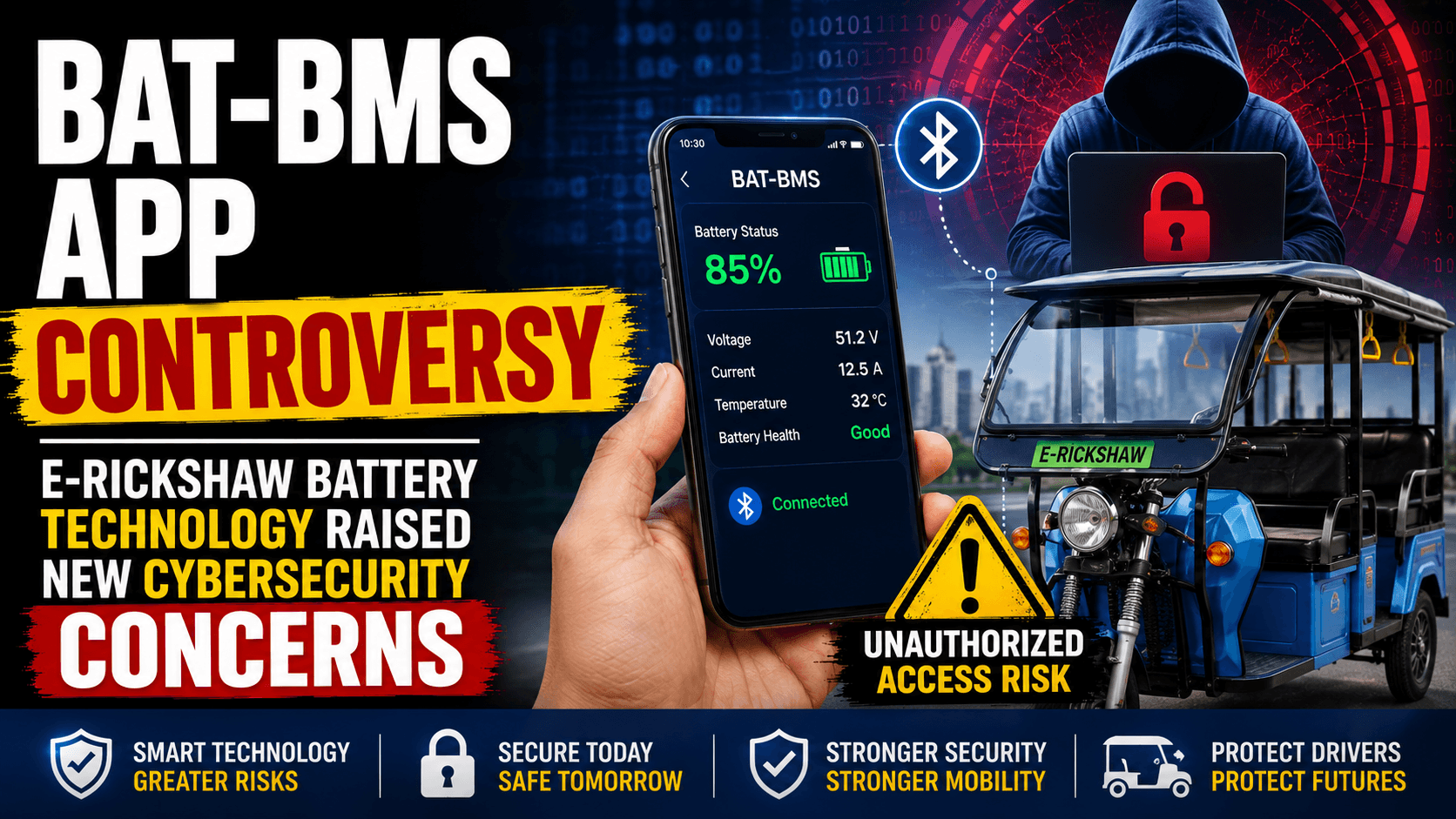
Reports suggested that certain battery systems using unsecured Bluetooth connections could allow nearby users to access controls without proper authentication.
This raised concerns because any unexpected disruption to an electric vehicle can create problems for drivers, passengers, and road safety.
Many social media users criticized these actions, pointing out that e-rickshaw drivers depend on their vehicles for daily income and should not become targets of technology misuse.
Are All E-Rickshaws at Risk?
Experts say the issue does not affect every e-rickshaw or electric vehicle.
The problem appears to be linked mainly to specific battery systems that lack strong digital security protections. Modern EV systems with proper authentication, encryption, and security controls are designed to prevent unauthorized access.
The incident has shown that cybersecurity must become a key part of electric vehicle development, just like battery performance and driving range.
EV Growth Brings New Challenges
India's electric vehicle market is expanding rapidly, with e-rickshaws playing a major role in affordable urban transportation.
Millions of people depend on these vehicles because they are:
- Low-cost.
- Environmentally friendly.
- Useful for short-distance travel.
- A source of employment for many drivers.
However, as vehicles become more dependent on software, Bluetooth connectivity, and smart monitoring systems, manufacturers must also focus on digital safety.
Importance of Cybersecurity in Electric Vehicles
The BAT-BMS controversy highlights why connected vehicle security is becoming increasingly important.
Experts recommend stronger measures such as:
- Secure app authentication.
- Encrypted Bluetooth connections.
- Regular software updates.
- Better testing of battery systems.
- Stronger EV technology standards.
These steps can help protect drivers and prevent misuse of connected vehicle features.
Impact on E-Rickshaw Drivers
For many drivers, e-rickshaws are not just vehicles — they are a primary source of income.
Any disruption caused by misuse of technology can affect their earnings and create unnecessary stress. The incident has increased awareness about the need to protect everyday users as India moves toward a more digital transportation system.
The Future of Smart Mobility
The rise of electric vehicles represents a major transformation in transportation. Smart batteries, mobile apps, and connected systems can make vehicles more efficient and easier to maintain.
However, innovation must be balanced with security. Building trust in EV technology will require manufacturers, regulators, and technology providers to work together.
Conclusion
The BAT-BMS app controversy has become more than just a viral incident involving e-rickshaws. It has opened a larger discussion about cybersecurity, responsible technology use, and the future of electric mobility.
As India continues its shift toward electric vehicles, ensuring that smart systems remain safe and secure will be essential. Stronger protections can help drivers benefit from new technology without facing unnecessary risks.
Get More Informative News on Swaggbuzz