
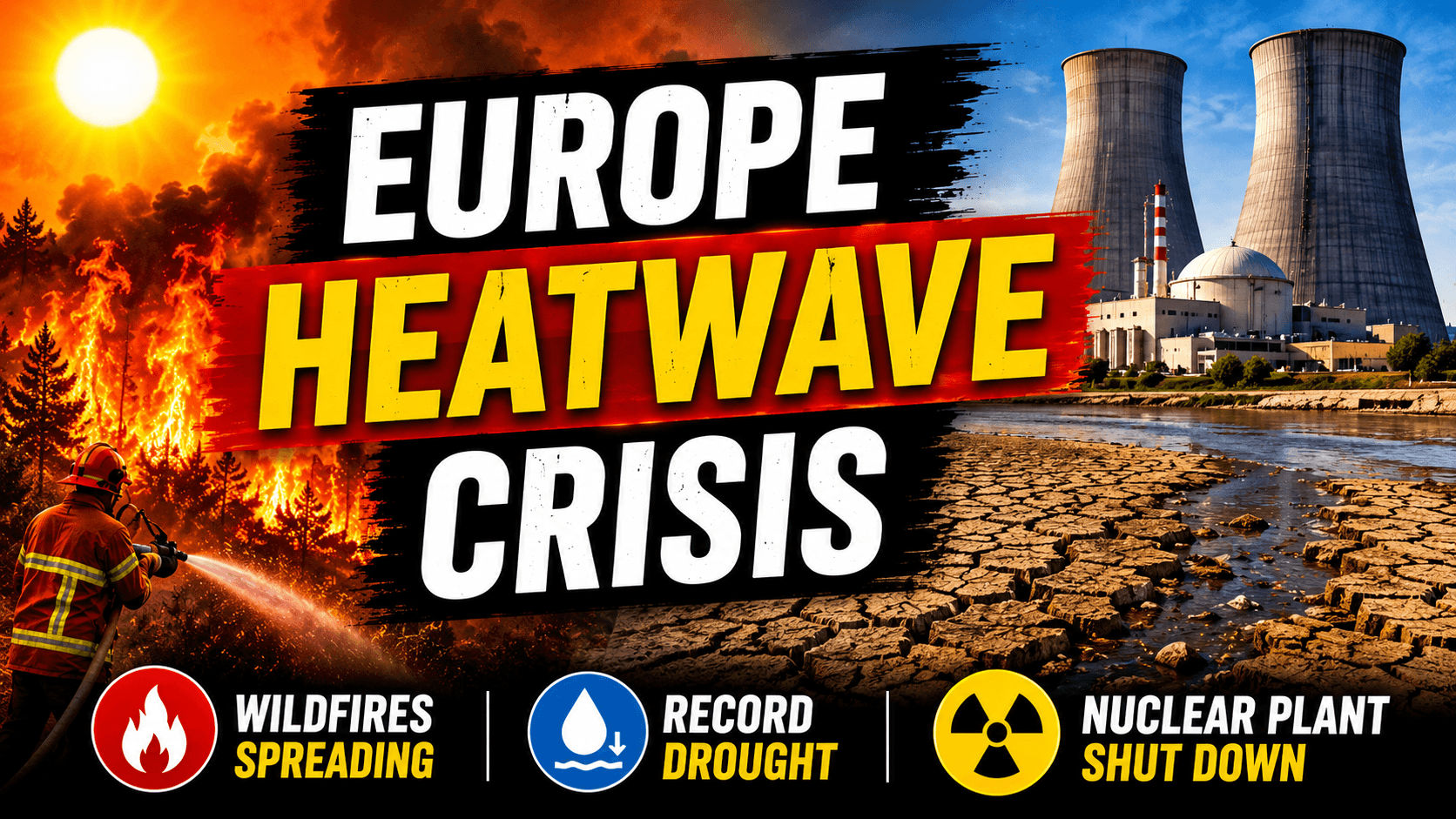
Europe Heatwave Crisis Wildfires Spread as Record Drought Disrupts Nuclear Power
France and parts of England are battling multiple wildfires as dry vegetation and extreme temperatures create dangerous conditions for firefighters.
Siddhaanth Raghav
Europe Heatwave Crisis: Wildfires Spread as Record Drought Disrupts Nuclear Power
Europe is facing another major heatwave as exceptionally high temperatures and prolonged drought fuel wildfires, strain water supplies and disrupt energy infrastructure across several countries.
France and parts of England are battling multiple wildfires as dry vegetation and extreme temperatures create dangerous conditions for firefighters. At the same time, record-low water levels in the Danube River have forced Romania to shut down its entire Cernavodă nuclear power plant because there was not enough river water available for adequate reactor cooling.
The developments highlight how extreme heat can affect not only public health and the environment but also critical infrastructure and electricity supplies.
France Battles Multiple Wildfires
France is experiencing an exceptionally dry year, with several wildfires breaking out across the country.
A new fire in the Landes region in southwestern France forced more than 500 residents of Luglon to evacuate as hundreds of firefighters worked to contain the blaze. Other fires have also been reported in regions that are not normally associated with such severe wildfire conditions.
France has already experienced a major wildfire season this summer. A large blaze near Bordeaux previously forced hundreds of thousands of people from their homes.
The combination of high temperatures, dry vegetation and limited rainfall has created conditions in which fires can spread rapidly.
Central England Also Hit by Wildfires
The United Kingdom is also dealing with the consequences of extreme heat.
On August 13, London recorded a temperature of 38.1°C, making it the hottest day of 2026 in the UK so far and one of the country's hottest days on record. The heat contributed to difficult conditions for emergency services dealing with wildfires in central England.
Several fires were reported across the West Midlands, with some homes destroyed.
The scale of the fires has added pressure to emergency services at a time when much of the country is already experiencing unusually dry conditions.
Record-Low Danube Creates Energy Problems
One of the most striking consequences of Europe's drought has emerged in Romania.
The country's Cernavodă nuclear power plant depends on water from the Danube to cool its reactors. As the river reached exceptionally low levels, operators were unable to maintain normal cooling conditions.
Romania subsequently began shutting down its remaining operational reactor. The other reactor had already been taken offline in late July. Both units, each with a capacity of about 706 megawatts, are now offline.
The plant normally supplies roughly 20% of Romania's electricity, making the shutdown an important challenge for the country's energy system.
Why Low River Levels Affect Nuclear Plants
Nuclear power plants require reliable cooling systems to remove heat generated during electricity production.
Cernavodă uses Danube water as part of its cooling system. When river levels become exceptionally low, the amount of water available for cooling can fall below operational requirements.
This does not mean the plant is experiencing a nuclear accident. Romanian authorities and the plant operator have emphasized that the shutdown is a controlled operational measure and does not represent a nuclear safety incident.
The situation nevertheless demonstrates how drought can create unexpected vulnerabilities for infrastructure that depends on rivers.
Romania Took Extraordinary Measures
Romanian authorities attempted to keep the nuclear plant operating as Danube levels declined.
Measures included efforts to redirect water toward the plant and other emergency interventions designed to improve the flow available for cooling.
Despite those efforts, water levels eventually fell below the necessary operational threshold, leading to the shutdown of the remaining reactor.
The government has also encouraged consumers to reduce electricity use during periods of high demand and increased reliance on alternative sources and electricity imports.
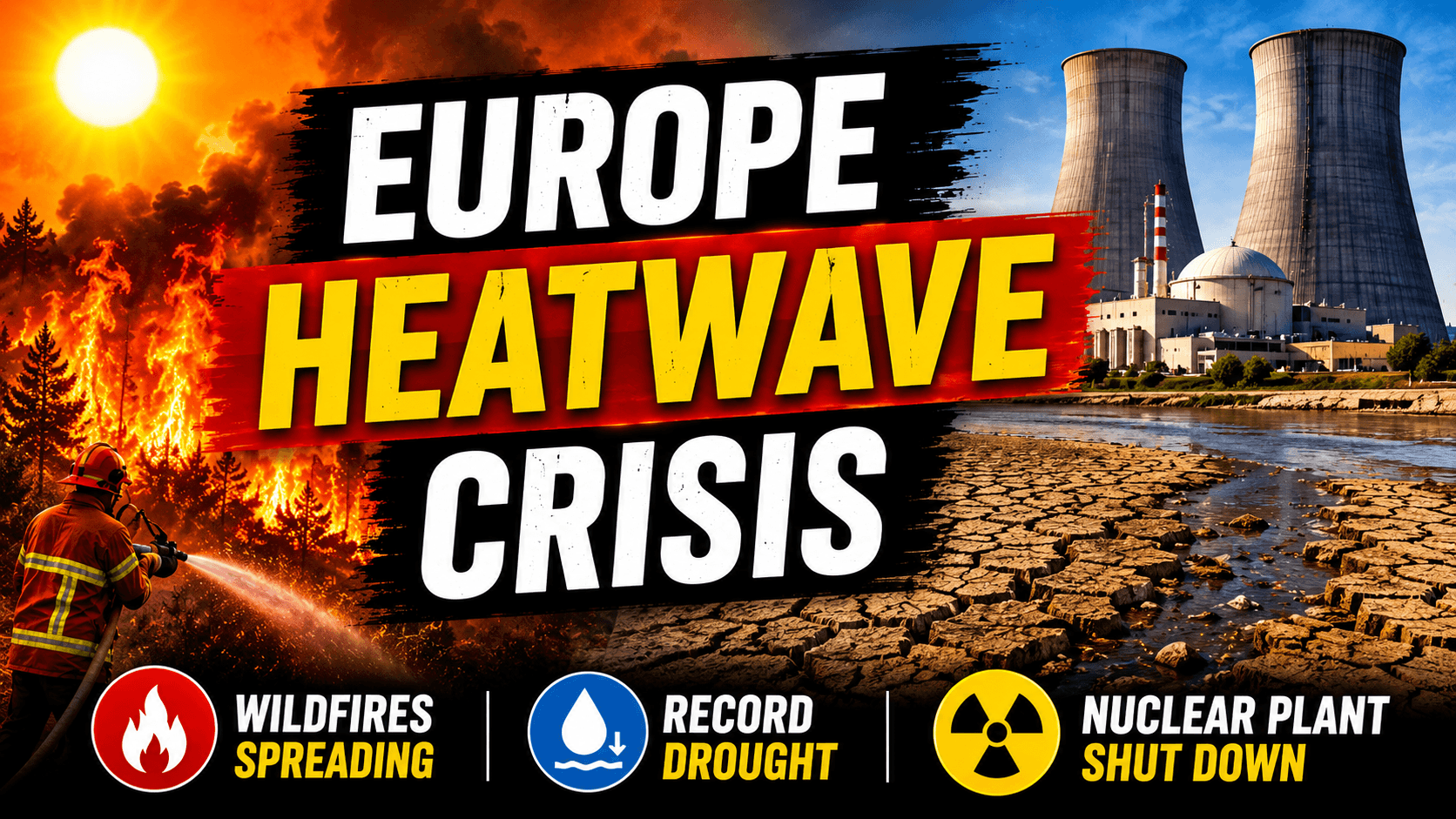
Heat Is Also Affecting France's Nuclear Fleet
Romania is not the only European country facing problems with nuclear generation.
France's nuclear fleet has also been affected by the heatwave. Several reactors have been shut down or had their output reduced because high river temperatures and low water levels can make it difficult to operate within environmental limits governing the discharge of heated water.
Reuters reported that heat-related restrictions were expected to reduce French nuclear production significantly, with several reactors affected.
France remains capable of meeting its electricity needs, but the disruptions illustrate how extreme weather can affect even major low-carbon power systems.
A Wider European Drought
The problems extend well beyond France, England and Romania.
The Danube and other major European rivers have experienced exceptionally low water levels after months of drought and repeated heatwaves. Reduced river flows have affected shipping, agriculture, ecosystems and electricity generation.
Hungary's Paks nuclear plant has also had to reduce output because of low Danube levels, demonstrating that the problem is regional rather than isolated to Romania.
Extreme Heat Creates Multiple Risks
The current European heatwave is demonstrating how interconnected climate risks can become.
Extreme temperatures can dry vegetation and increase wildfire danger. At the same time, drought reduces river flows, affecting agriculture, transport and power generation.
Higher temperatures can also increase electricity demand for cooling while simultaneously making some forms of electricity generation more difficult.
This combination can put additional pressure on national electricity systems.
What Could Happen Next?
The immediate priority for affected countries is to contain wildfires, protect communities and maintain reliable energy supplies.
In Romania, the duration of the nuclear shutdown will depend partly on Danube water levels and operating conditions. Reports indicate that the outage could continue while drought conditions persist.
Longer term, the events are likely to intensify discussions about how European infrastructure can be adapted to more frequent periods of extreme heat and drought.
Conclusion
Europe's latest heatwave is creating consequences far beyond uncomfortable temperatures.
Wildfires are spreading across parts of France and England, while record-low Danube water levels have forced Romania to shut down its entire Cernavodă nuclear power plant.
The situation demonstrates the growing connection between extreme weather, water availability, wildfire risk and energy security. As heatwaves and droughts become more challenging, European countries face increasing pressure to make critical infrastructure more resilient to extreme environmental conditions.
Get More News on Swaggbuzz