
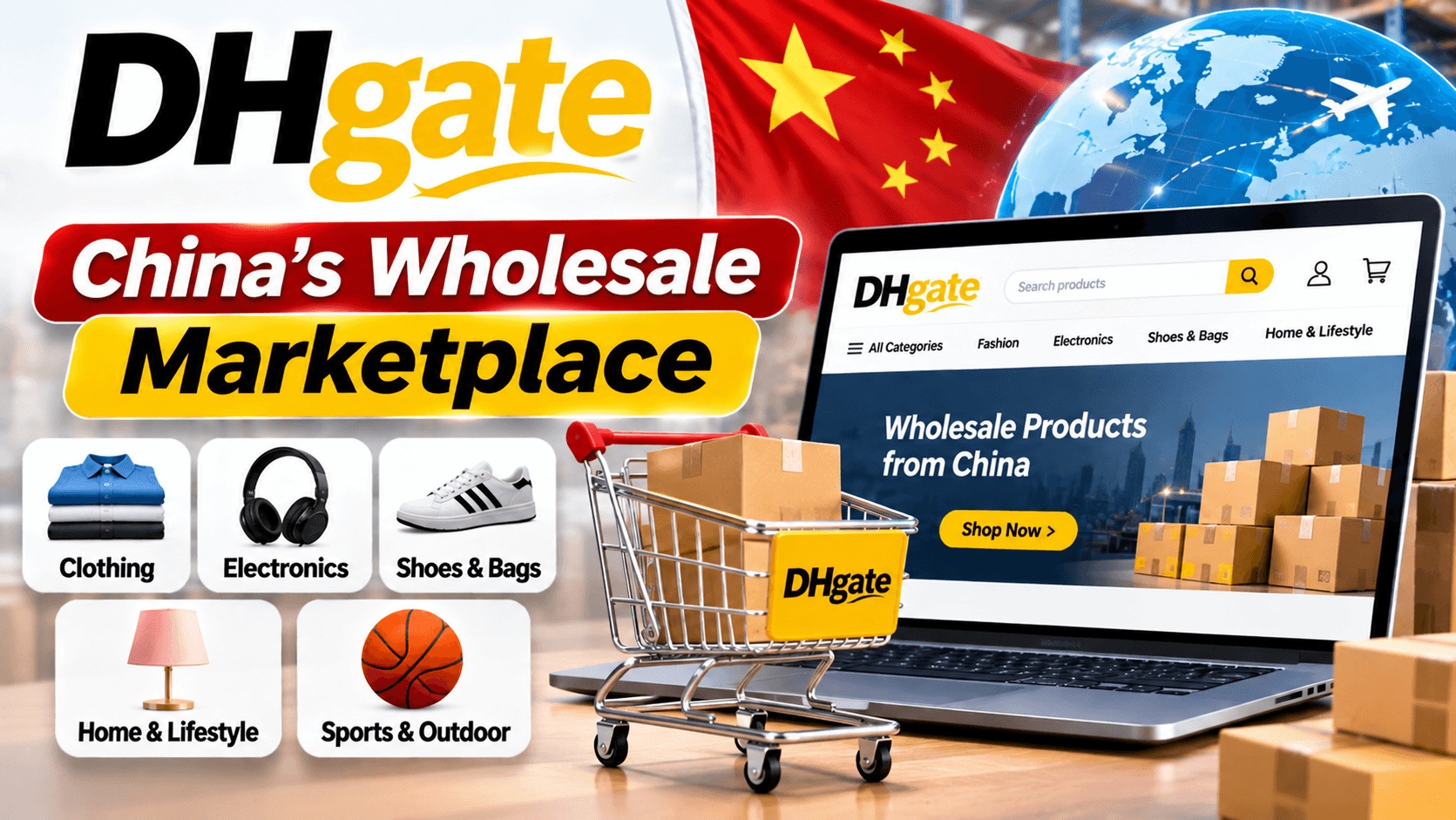
DHgate: How China's E-Commerce Marketplace Connects Manufacturers With Global Buyers
The global e-commerce industry has transformed the way businesses source products, manage supply chains and reach international customers. Among the platforms contributing to this change is DHgate, a China-based cross-border e-commerce marketplace that connects manufacturers, wholesalers and suppliers with buyers around the world.
Founded in 2004 and headquartered in Beijing, DHgate primarily focuses on business-to-business (B2B) trade while also serving individual consumers. The platform provides access to a wide range of products and allows businesses to source merchandise from international suppliers through an online marketplace.
What Is DHgate?
DHgate is an online wholesale marketplace designed to simplify international trade between Chinese suppliers and overseas buyers.
The company takes its name from Dunhuang, a historic Chinese city associated with the ancient Silk Road trading network. Its business model reflects a similar objective: connecting sellers and buyers across geographical boundaries through digital commerce.
Unlike traditional retail businesses that purchase and maintain their own inventory, DHgate primarily operates as a marketplace where independent sellers list products and buyers place orders through the platform.
According to company information published by Akamai, DHgate had more than 77 million registered buyers across over 225 countries and regions as of December 2023, connecting them with more than 2.6 million sellers.
How Does DHgate Work?
DHgate operates through an online marketplace model that brings suppliers and international buyers together.
The process generally involves three main participants:
- Suppliers and manufacturers: Businesses list their products, provide product information and manage order fulfilment.
- Buyers: Individuals and businesses browse available products, compare sellers and place orders.
- Marketplace infrastructure: DHgate facilitates product discovery, transactions, customer support and international trade services.
The platform also supports bulk purchasing, allowing business buyers to source multiple units of products rather than relying exclusively on individual retail orders.
This model helps smaller businesses access international suppliers without establishing direct relationships with manufacturers in every market.
Product Categories Available on DHgate
DHgate offers products across numerous categories, serving different consumer and business requirements.
Some major categories include:
- Clothing and fashion accessories
- Electronics and consumer gadgets
- Footwear and bags
- Home and lifestyle products
- Sports and outdoor merchandise
- Beauty and personal-care accessories
- Business and general merchandise
The availability of products depends on individual sellers and applicable marketplace policies.
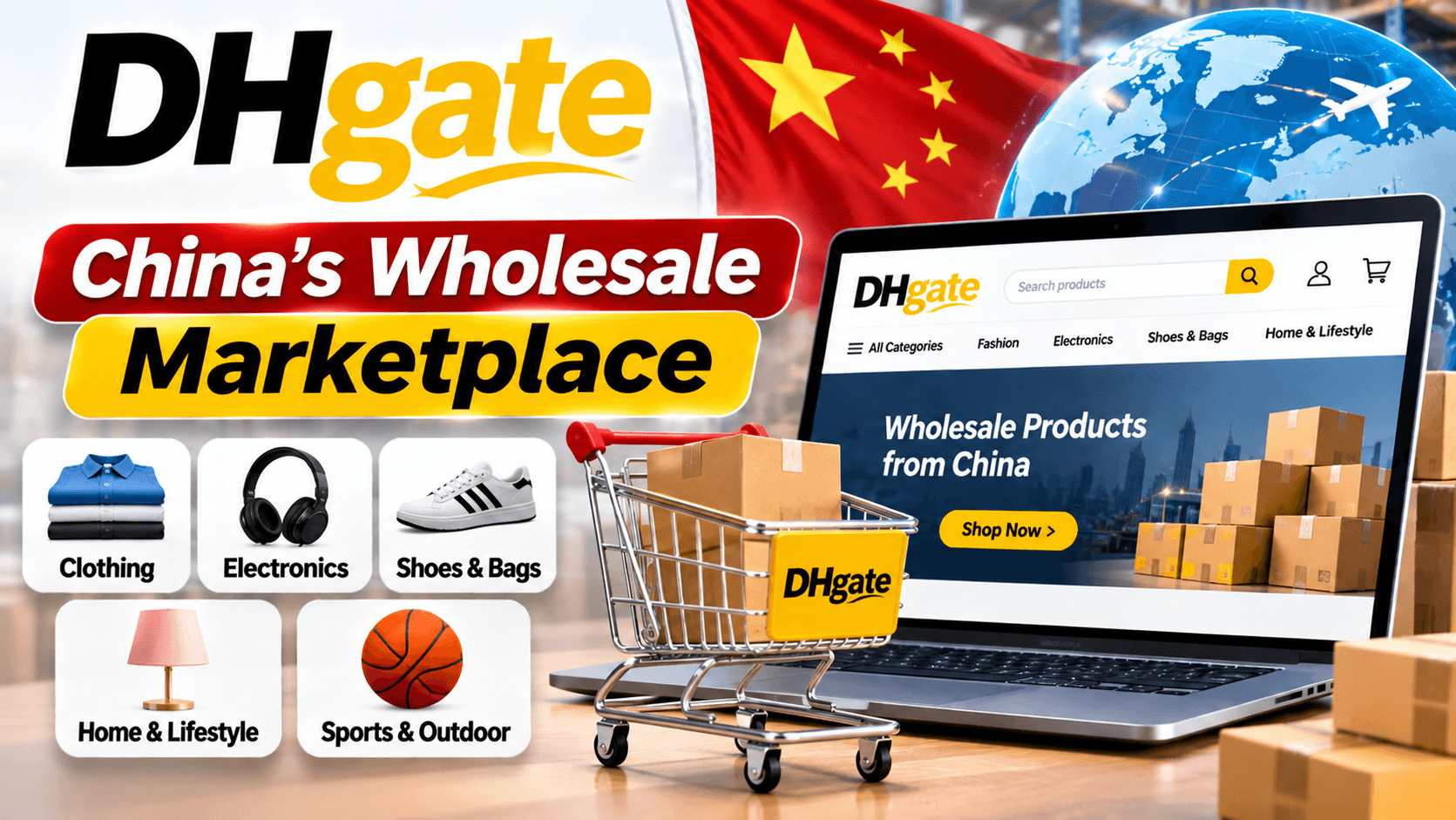
DHgate's International E-Commerce Business Model
One of the main features of DHgate is its focus on cross-border commerce. The platform enables businesses to discover suppliers in China and other markets without depending entirely on traditional import and wholesale networks.
Its business model is built around several important services:
1. Supplier and buyer connectivity
DHgate provides a digital marketplace where manufacturers, wholesalers and buyers can discover one another.
2. Wholesale transactions
The platform supports bulk orders and quantity-based purchasing, making it relevant to businesses that require merchandise in larger volumes.
3. International logistics
Cross-border delivery services help sellers fulfil orders to buyers in different countries.
4. Digital payment infrastructure
Online payment facilities support transactions between buyers and sellers across international markets.
5. Business support services
Marketplace-related services, including customer support and transaction management, help facilitate international commerce.
Why Has DHgate Gained International Attention?
DHgate has attracted international attention because of growing interest in direct sourcing from Chinese manufacturers.
Social media discussions and online shopping trends have also increased awareness of the platform, particularly among consumers interested in understanding how international wholesale marketplaces operate.
Its long-standing presence in cross-border e-commerce has made it part of the wider conversation about global supply chains, affordable sourcing and the growth of digital marketplaces.
Challenges Facing DHgate
Despite its international reach, DHgate faces several challenges commonly associated with large online marketplaces.
- Product quality: Products are supplied by independent sellers, so quality and consistency can differ between listings.
- Counterfeit concerns: The US Trade Representative has repeatedly identified DHgate in its Notorious Markets reports because of concerns about counterfeit products appearing on the platform. This highlights the importance of stronger seller monitoring and intellectual property protection.
- International shipping: Cross-border deliveries can involve longer transit times, customs procedures and additional charges.
- Seller reliability: The marketplace depends on individual sellers, making seller verification, transparent product information and dispute handling important factors.
These challenges demonstrate why marketplace trust, product authenticity and consumer protection remain important issues for international e-commerce companies.
The Future of Cross-Border E-Commerce
The growth of platforms such as DHgate reflects a broader transformation in international trade. Digital marketplaces are creating new connections between manufacturers, wholesalers, small businesses and consumers.
As cross-border online shopping continues to develop, companies in this sector will need to focus on logistics efficiency, payment security, seller accountability and product transparency.
DHgate's development illustrates how technology can make international sourcing more accessible while also highlighting the regulatory and operational challenges that come with managing a global marketplace.
Conclusion
DHgate has established itself as a recognised participant in China's cross-border e-commerce industry by connecting suppliers with buyers across international markets.
Its marketplace model demonstrates the growing role of digital platforms in wholesale trade and global product sourcing. However, maintaining buyer confidence will depend on product quality, reliable sellers, transparent transactions and stronger controls against counterfeit merchandise.
As international e-commerce evolves, DHgate remains an example of how digital marketplaces are changing the structure of global trade.
Get on Dhgate
Author
About the author
Siddhaanth Raghav
Topics