
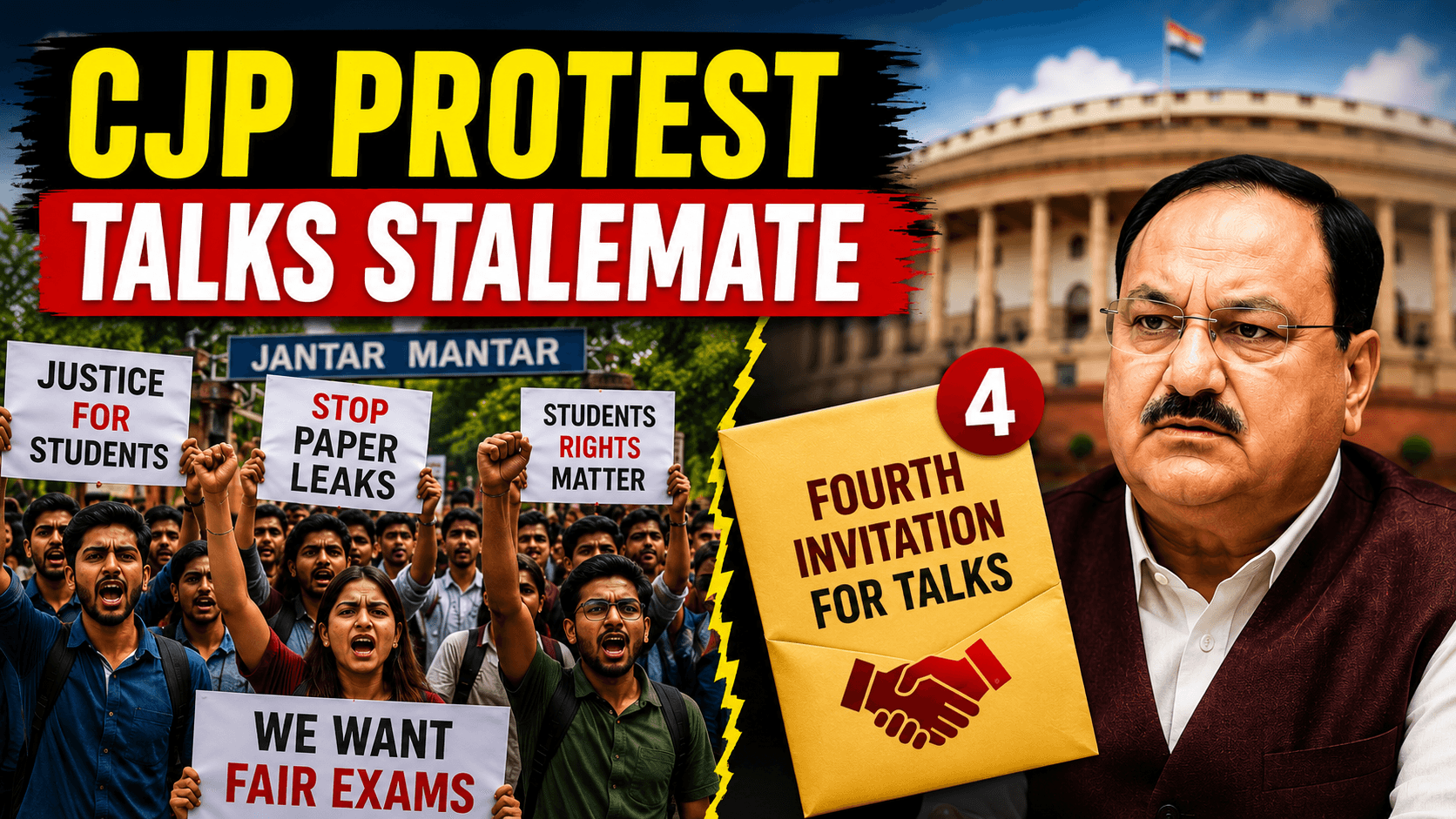
Deadlock Continues as Students' Protest Movement Seeks Neutral Venue
The standoff between the Central government and the student-led CJP protest movement continued on Wednesday after the government extended its fourth invitation for talks, urging protest representatives to meet Union Minister and BJP National President
Siddhaanth Raghav
CJP Protest Live Updates: Government Sends Fourth Invitation for Talks, Protesters Reject Meeting at JP Nadda's Residence
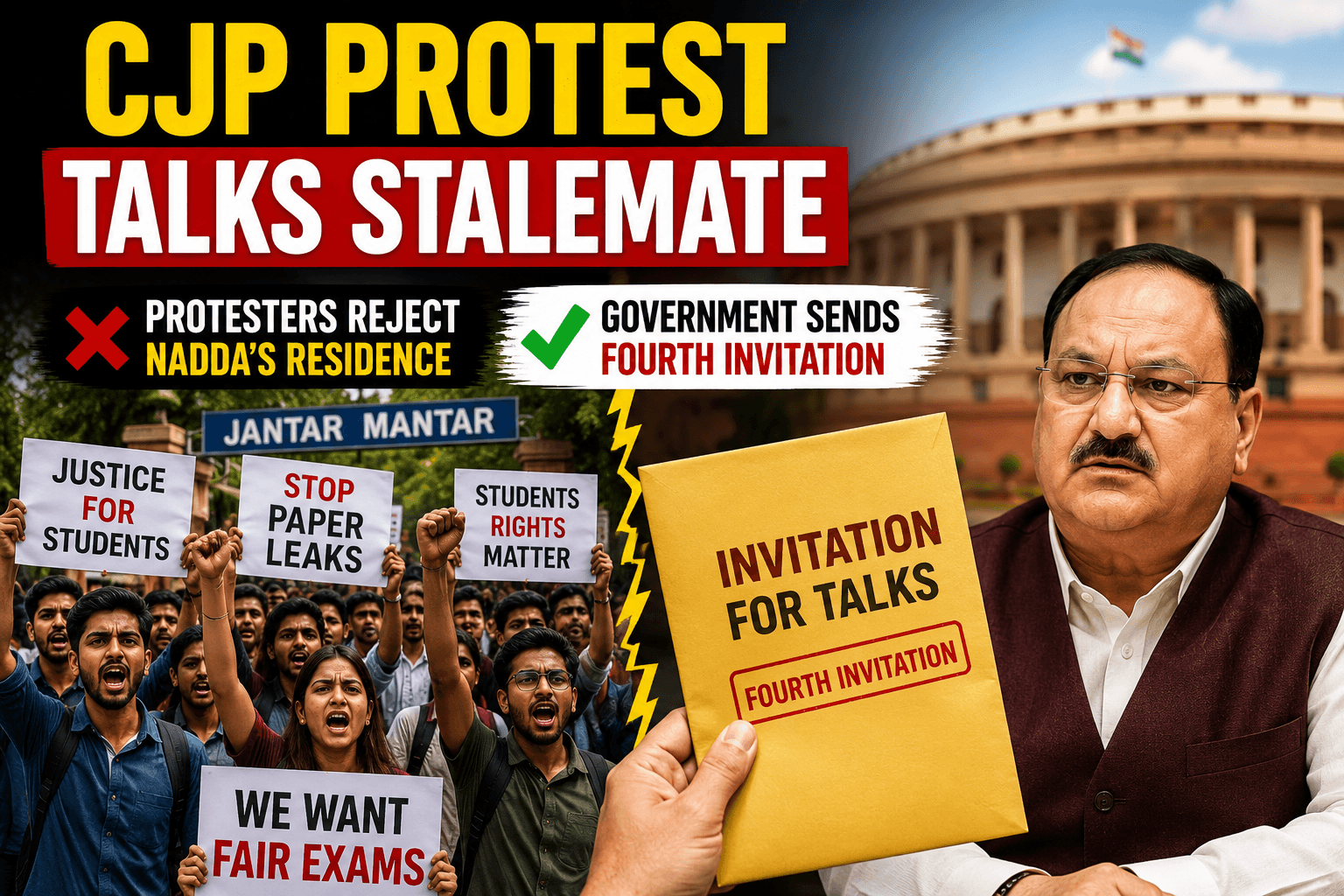
The standoff between the Central government and the student-led CJP protest movement continued on Wednesday after the government extended its **fourth invitation for talks**, urging protest representatives to meet Union Minister and BJP National President **J.P. Nadda** at either his official residence or office. However, the protesters declined the offer, insisting that any dialogue should take place at a **neutral venue** or at the **Jantar Mantar protest site**, where demonstrations have been ongoing.
The disagreement over the venue has become the latest obstacle in efforts to resolve the nationwide agitation, which began over alleged examination paper leaks and has since evolved into a broader movement demanding education reforms, transparency in recruitment processes, and accountability from the government.
Government Renews Call for Dialogue
The Centre reiterated that it remains committed to resolving the impasse through discussions rather than confrontation.
Union Minister of State **Jitendra Singh** confirmed that the government had sent a **fourth formal invitation** to representatives of the protest movement, emphasizing that ministers were prepared to meet the student leaders and listen to their concerns.
Officials stated that holding discussions at J.P. Nadda's residence or office would allow senior government representatives to participate directly in the negotiations while ensuring adequate security arrangements.
The government maintained that dialogue remains the most effective path toward finding a peaceful resolution to the ongoing protests.
CJP Rejects Proposed Meeting Venue
Despite welcoming the idea of negotiations in principle, CJP leaders declined the government's latest invitation because of the proposed venue.
Movement representatives argued that meeting at the residence or office of a senior political leader could undermine the neutrality of the discussions.
Speaking to reporters, CJP spokespersons said the organization remains willing to engage with the government but only if the talks are held at **Jantar Mantar** or another mutually agreed neutral location nearby.
According to the protesters, conducting discussions at the protest site would demonstrate transparency and ensure that students' concerns remain central to the negotiations.
Protest Movement Continues
The demonstrations have continued for several days, attracting students, youth organizations, civil society groups, and opposition leaders from across the country.
Participants are demanding stronger safeguards against examination paper leaks, improved transparency in recruitment examinations, faster investigations into alleged irregularities, and greater accountability for those responsible.
Many protesters argue that repeated examination controversies have undermined public confidence in India's education and recruitment systems while affecting the careers of millions of young aspirants.
Parliament Debate Intensifies
The student protests have also become a major issue during the ongoing Monsoon Session of Parliament.
Opposition parties have repeatedly raised the matter in both Houses, accusing the government of failing to adequately address examination-related concerns.
Congress leader Rahul Gandhi has alleged that numerous paper leaks over the past decade have damaged the future of millions of students and called for stronger reforms.
Government ministers have rejected these allegations, highlighting measures already introduced to improve examination security and strengthen legal action against those involved in malpractice.
Government Defends Its Position
The Centre has emphasized that several reforms are already underway to improve the integrity of competitive examinations.
Officials point to enhanced digital monitoring, stricter anti-cheating legislation, encrypted question paper distribution systems, and improved coordination between investigative agencies as evidence of ongoing reforms.
Finance Minister Nirmala Sitharaman stated that authorities have acted against those accused in examination-related cases and reiterated that the government remains open to constructive dialogue with student representatives.
According to the government, repeated invitations for talks demonstrate its willingness to engage rather than escalate tensions.
Venue Emerges as Key Point of Disagreement
Although both sides have expressed support for dialogue, the location of the proposed meeting has become the central point of disagreement.
Government representatives believe discussions at an official venue would facilitate participation by senior ministers and ensure appropriate administrative arrangements.
Protest leaders, however, insist that negotiations should take place in a politically neutral setting to build trust and reinforce the independence of the dialogue process.
Political observers note that resolving this procedural issue could pave the way for substantive discussions on examination reforms and student concerns.
Public and Political Reactions
The continuing standoff has generated significant public attention.
Student organizations have largely backed the demand for a neutral venue, arguing that the location of negotiations should reflect mutual respect between the government and protesters.
Meanwhile, leaders from the ruling coalition have urged demonstrators to accept the government's invitation and begin formal discussions without further delay.
Political analysts believe the dispute illustrates the broader challenge of balancing symbolic political considerations with the practical need for dialogue during periods of public unrest.
What Students Are Demanding
Beyond the issue of meeting venues, protesters continue to raise several key demands, including:
- Stronger safeguards against examination paper leaks.
- Greater transparency in recruitment and entrance examinations.
- Faster investigations into examination fraud.
- Strict punishment for individuals involved in organized paper leak networks.
- Long-term reforms to restore confidence in India's education system.
Education experts have also called for increased use of secure digital technologies, enhanced cybersecurity, biometric verification, and independent oversight to strengthen examination processes nationwide.
Looking Ahead
The coming days will determine whether both sides can overcome the disagreement over the meeting venue and begin formal negotiations.
If talks proceed, they could provide an opportunity to address the concerns raised by students while reducing tensions that have affected public demonstrations and parliamentary proceedings.
Until then, protests are expected to continue, with student organizations maintaining pressure on the government to implement meaningful reforms.
Conclusion
The government's fourth invitation for talks with CJP representatives reflects continued efforts to resolve the ongoing student protest through dialogue. However, the protesters' decision to reject a meeting at J.P. Nadda's residence or office has left negotiations at an impasse, with the venue emerging as the primary obstacle.
As demonstrations continue across the country and Parliament debates examination reforms, both the government and student leaders face growing pressure to find common ground. Whether that happens may depend not only on the issues under discussion but also on reaching agreement about where those conversations should take place.
Get More News on Swaggbuzz