
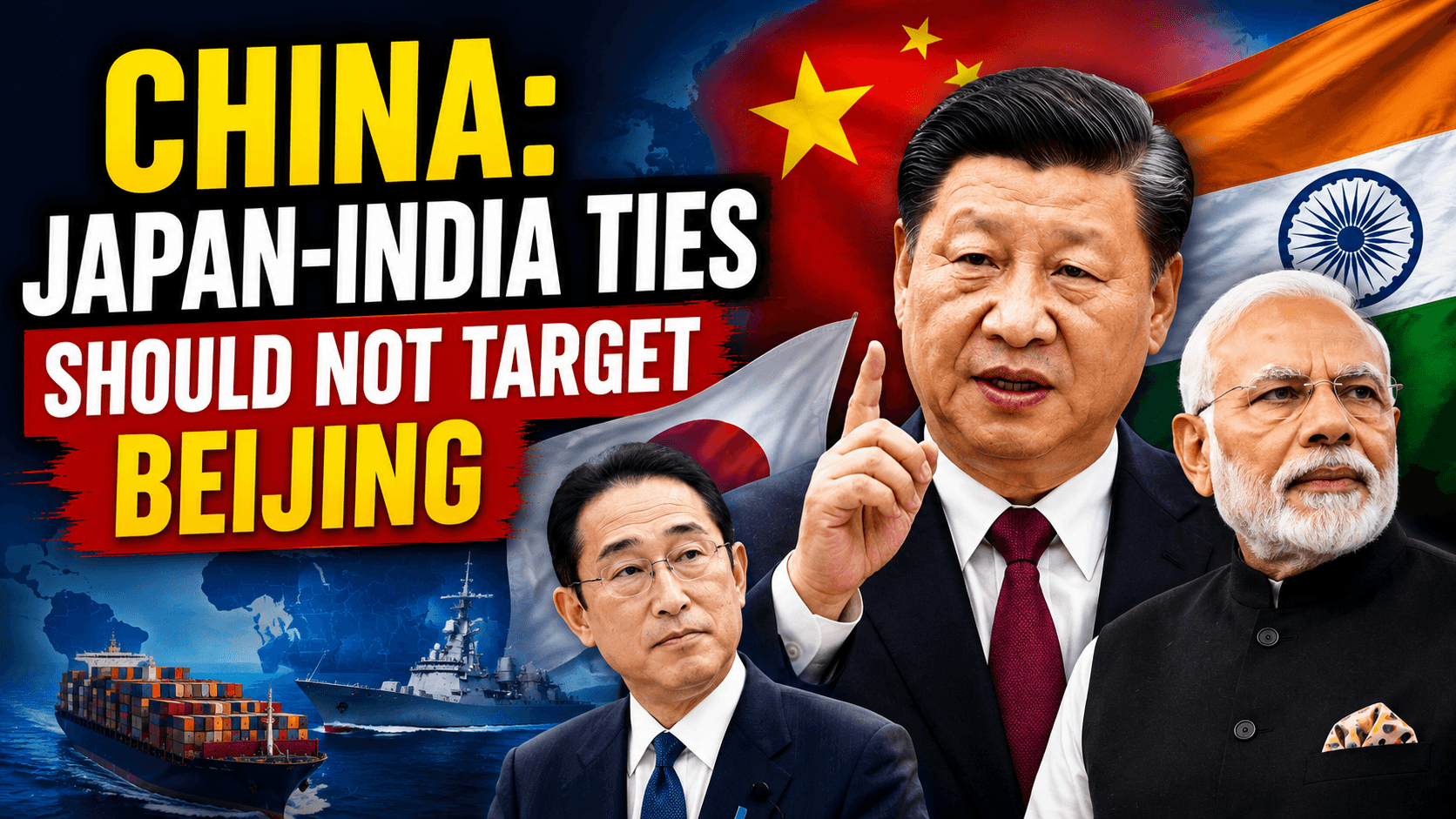
China Says Japan-India Cooperation ‘Should Not Target’ Beijing
China has responded to the strengthening partnership between Japan and India, saying that cooperation between the two Asian powers "should not target" Beijing. The remarks come as New Delhi and Tokyo continue to expand their relationship across defence, technology, trade, and regional security.
Siddhaanth Raghav
China Says Japan-India Cooperation ‘Should Not Target’ Beijing Amid Growing Regional Ties
China has responded to the strengthening partnership between Japan and India, saying that cooperation between the two Asian powers **"should not target" Beijing**. The remarks come as New Delhi and Tokyo continue to expand their relationship across defence, technology, trade, and regional security.
The statement reflects the growing geopolitical competition in the Indo-Pacific region, where countries are building new partnerships while trying to maintain diplomatic balance with China.
China Responds to Growing India-Japan Partnership
Beijing said that cooperation between countries should contribute to regional peace and stability rather than be directed against any third party.
China's reaction follows increasing engagement between India and Japan in areas such as maritime security, infrastructure development, economic cooperation, and advanced technologies.
Both India and Japan have repeatedly stated that their partnership is based on shared interests and aims to promote stability, development, and a rules-based international order.
Why Are India and Japan Strengthening Relations?
India and Japan have developed a close strategic relationship over the years. Their cooperation has expanded beyond traditional diplomacy into areas including:
- Defence and security cooperation.
- Critical technology development.
- Infrastructure investment.
- Supply chain partnerships.
- Clean energy projects.
- Maritime cooperation.
Japan has also been a major investor in India's infrastructure projects, while both countries have worked together on initiatives aimed at improving connectivity and economic growth.
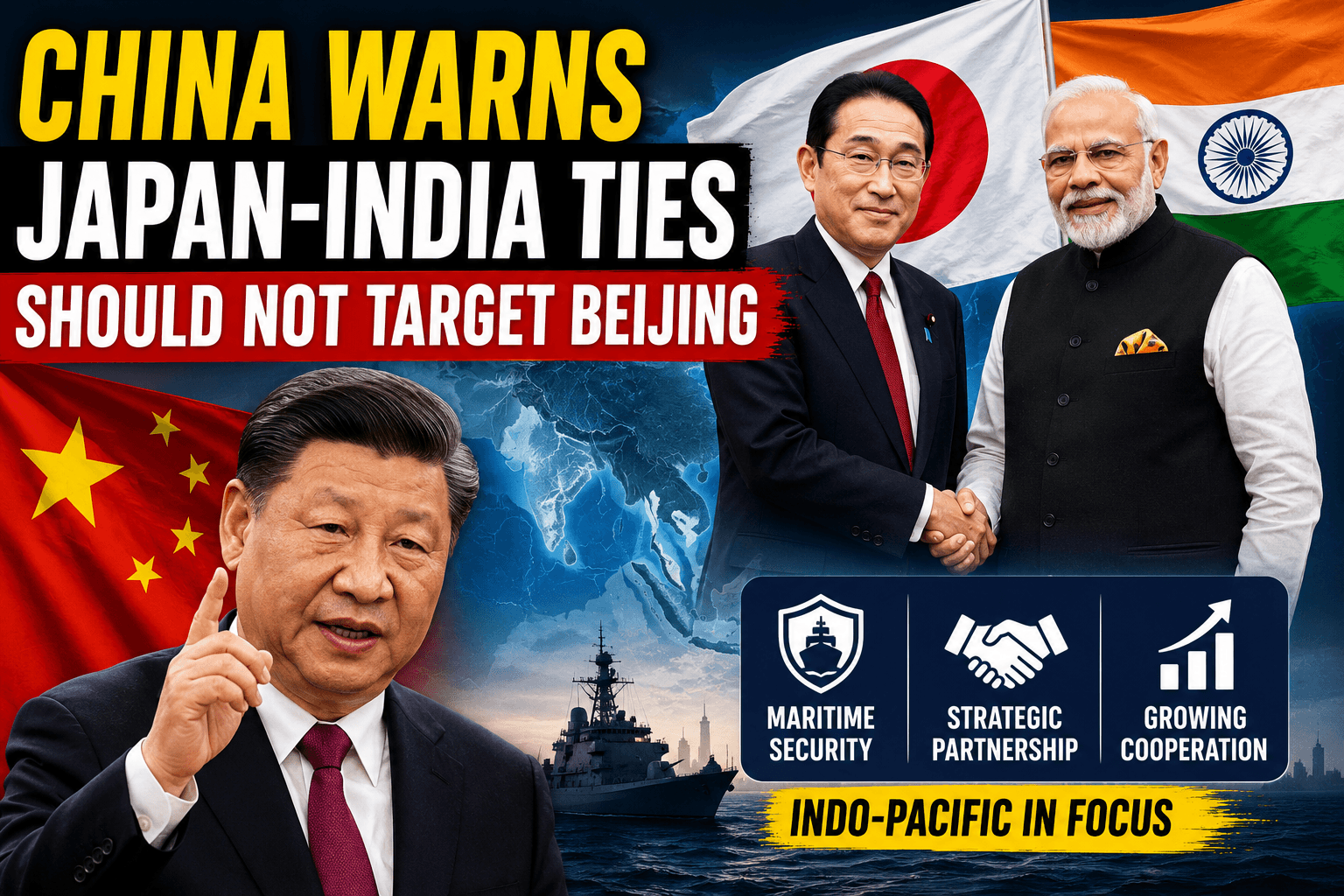
Indo-Pacific Region at the Center of Attention
A major factor behind closer Japan-India ties is the increasing importance of the Indo-Pacific region.
Both countries support the idea of free, open, and rules-based Indo-Pacific, where international laws are respected and trade routes remain secure.
The Indo-Pacific contains some of the world's busiest shipping lanes, making regional stability important for global trade and economic security.
However, China's expanding military presence and influence in the region have led several countries to strengthen strategic cooperation.
China's Concerns Over Regional Alliances
China has often expressed concerns about partnerships involving countries such as India, Japan, the United States, and Australia.
Beijing argues that regional cooperation should not create divisions or attempt to contain any country's growth.
Chinese officials have said that nations should focus on cooperation, mutual trust, and development instead of forming groups that increase tensions.
India's Independent Foreign Policy Approach
India has maintained that its foreign partnerships are based on national interests and are not aimed against any particular country.
New Delhi continues to engage with multiple global powers while following an independent foreign policy approach.
India has strengthened relations with Japan and Western nations, while also maintaining diplomatic and economic engagement with China despite differences on several issues.
Japan's Role in Regional Security
Japan has increased its focus on regional security in recent years, especially as geopolitical competition grows in Asia.
Tokyo has expanded defence partnerships, increased investment in strategic sectors, and worked with like-minded countries to support regional stability.
Japan views cooperation with India as an important part of its broader engagement with Asia and the Indo-Pacific.
Growing Competition in Asia
The latest comments from China highlight the changing balance of power in Asia.
As major economies compete for influence, countries are forming new partnerships in technology, trade, and security. At the same time, maintaining diplomatic communication remains important to avoid misunderstandings and regional instability.
Experts believe the future of the Indo-Pacific will depend on how major powers manage competition while continuing cooperation in areas of shared interest.
Conclusion
China's statement that Japan-India cooperation "should not target" Beijing reflects the complex geopolitical environment in Asia. While India and Japan describe their partnership as focused on peace, growth, and stability, China remains cautious about alliances it believes could challenge its regional influence.
As global attention increasingly shifts toward the Indo-Pacific, relations among China, India, and Japan will continue to play a major role in shaping the future of Asian diplomacy and security.
Get More Informative News on Swaggbuzz