
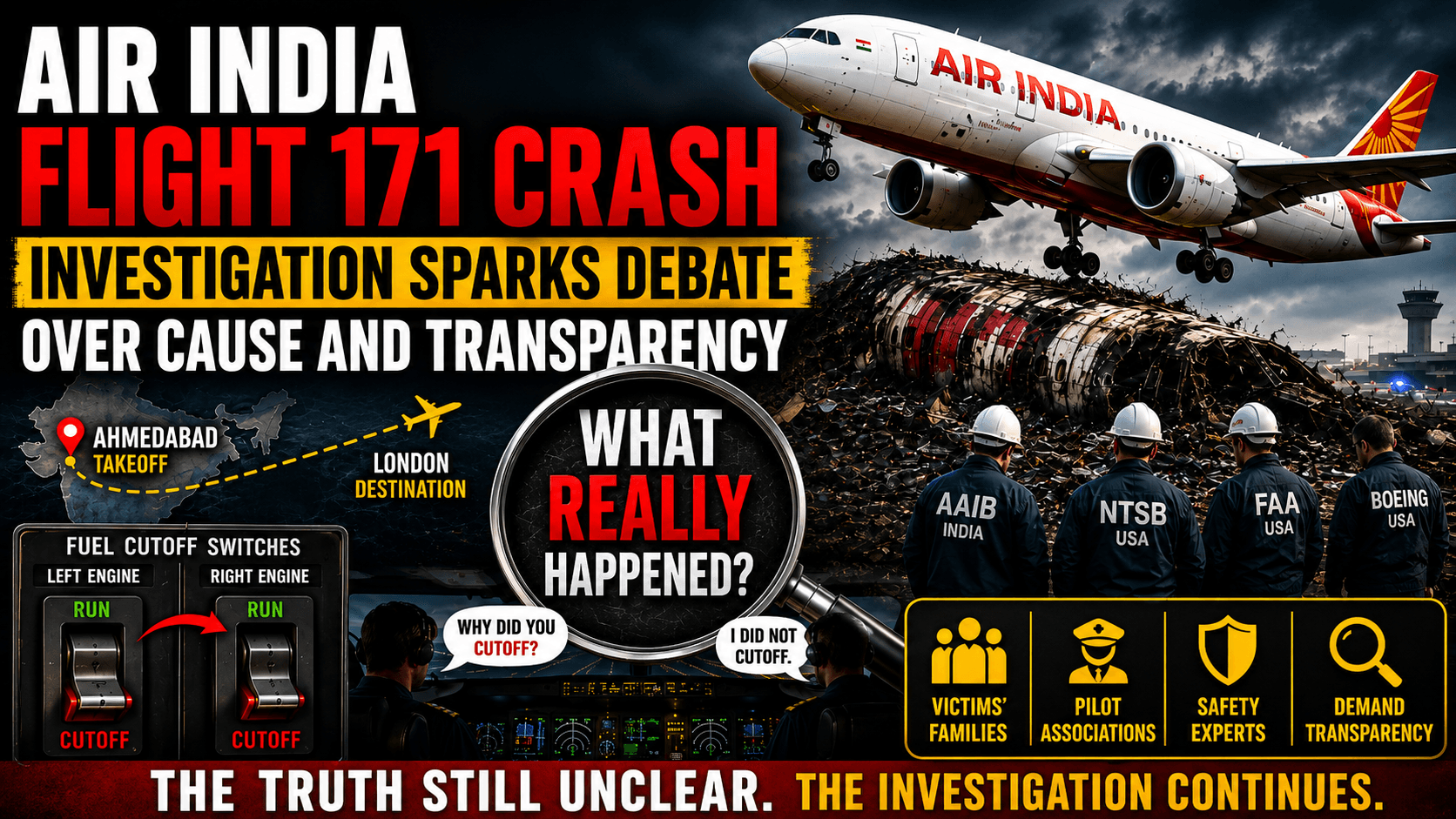
Air India Flight 171 Crash Investigation Sparks Debate Over Cause
More than a year after the tragic crash of Air India Flight 171, the investigation into what caused the disaster continues to generate intense debate among aviation experts, pilots, safety campaigners, and victims' families.
Siddhaanth Raghav
Air India Flight 171 Crash Investigation Sparks Debate Over Cause and Transparency
More than a year after the tragic crash of Air India Flight 171, the investigation into what caused the disaster continues to generate intense debate among aviation experts, pilots, safety campaigners, and victims' families.
The Boeing 787 Dreamliner crashed just seconds after taking off from Ahmedabad on June 12, 2025, while operating a scheduled flight to London. The accident claimed the lives of 241 people on board, with only one passenger surviving. Several people on the ground were also killed, making it one of the deadliest aviation disasters in recent Indian history.
The Aircraft Accident Investigation Bureau (AAIB) of India has been leading the inquiry, assisted by experts from the United States, including representatives from Boeing, GE Aerospace, the Federal Aviation Administration (FAA), and the National Transportation Safety Board (NTSB).
Controversy intensified after the AAIB released its preliminary findings. According to the report, the aircraft's fuel cutoff switches moved from the "run" position to the "cutoff" position shortly after takeoff, causing both engines to lose fuel supply and rapidly lose thrust. The report also referenced a cockpit conversation in which one pilot questioned the other about the fuel cutoff action, while the second pilot reportedly denied doing so.
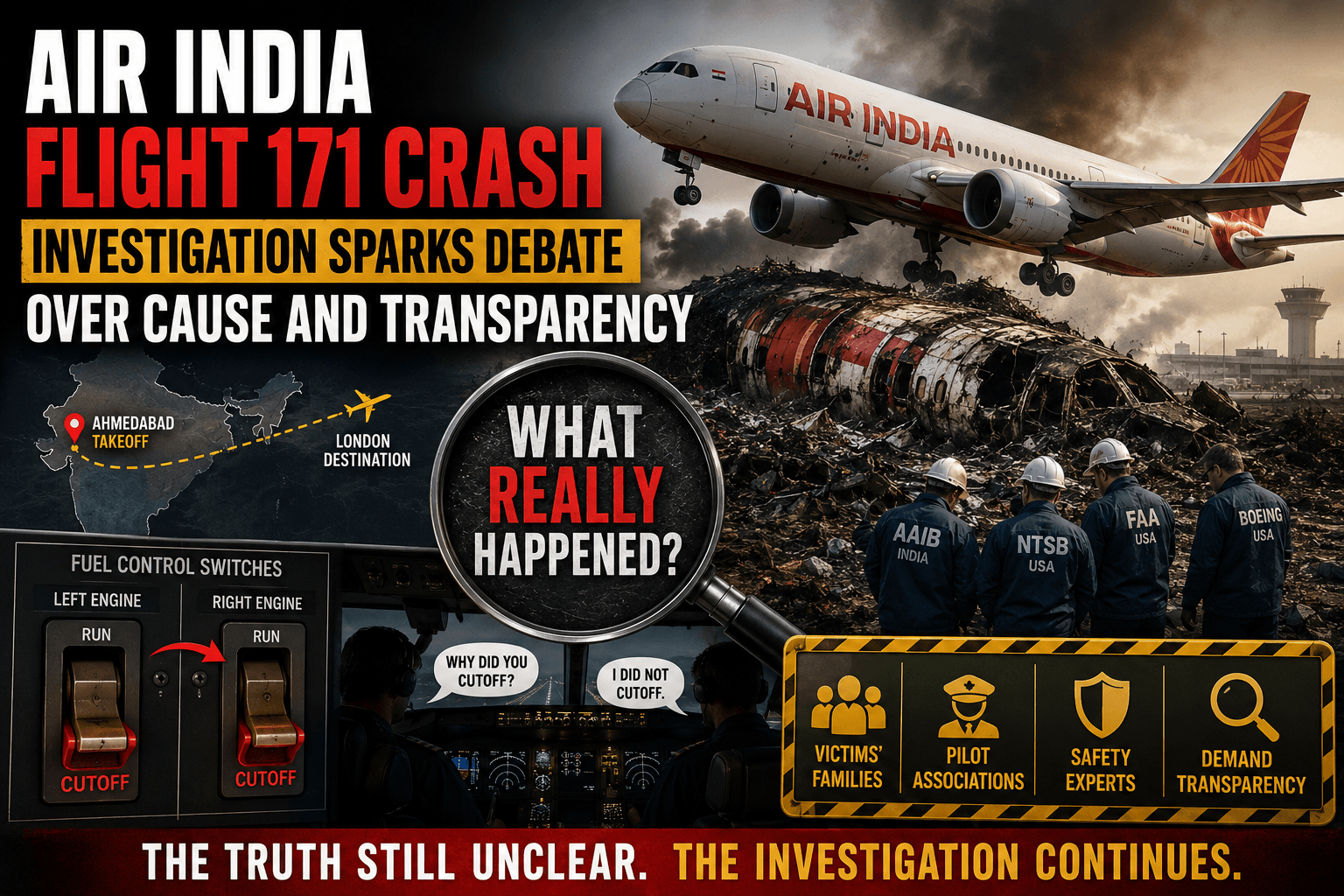
The findings quickly sparked speculation that human action inside the cockpit may have contributed to the crash. Some aviation experts suggested the possibility of deliberate pilot intervention, while others warned against drawing conclusions from an incomplete report.
Pilot associations and safety advocates strongly criticized the speculation, arguing that the preliminary report lacked crucial context and should not be used to assign blame. They emphasized that the investigation remains ongoing and that no final conclusions have been released.
Alternative theories have also emerged. Some experts and campaigners believe the aircraft may have suffered a major electrical failure that affected critical systems shortly after takeoff. According to this theory, a malfunction could have triggered automatic responses that cut fuel to the engines without direct pilot input.
Questions have also been raised regarding the deployment of the aircraft's emergency Ram Air Turbine (RAT), a backup system designed to provide power during major failures. Critics argue that the timing of the RAT's activation could indicate that a significant technical issue occurred before the loss of engine thrust.
The debate has highlighted broader concerns about transparency in aviation investigations. Families of victims, pilot organizations, and independent safety experts have called for greater disclosure of evidence and clearer communication from investigators.
For Boeing, the case is particularly significant because the 787 Dreamliner had maintained a strong safety record prior to the accident. Air India, meanwhile, continues to face scrutiny as it works to rebuild and strengthen its operations following years of financial and operational challenges.
As the aviation industry awaits the final report, many experts believe the findings will have important implications not only for Air India and Boeing but also for global aviation safety standards. Until then, the exact cause of Flight 171's tragic crash remains the subject of ongoing investigation and international debate.
Get More News on Swaggbuzz