
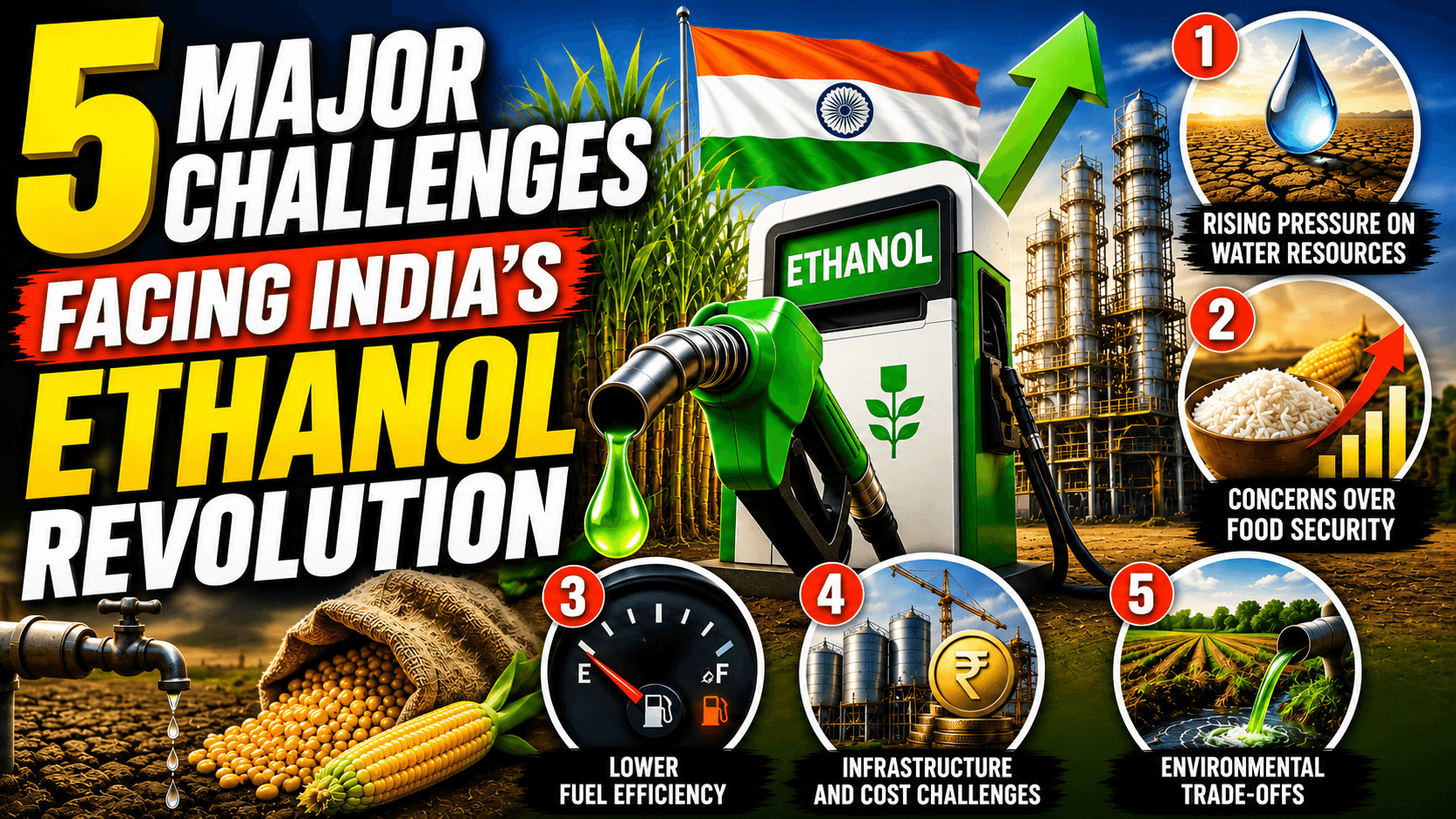
5 Major Challenges Facing India's Ethanol Revolution
India's ethanol blending program has been widely praised for helping reduce dependence on imported crude oil and supporting the country's transition toward cleaner energy.
Siddhaanth Raghav
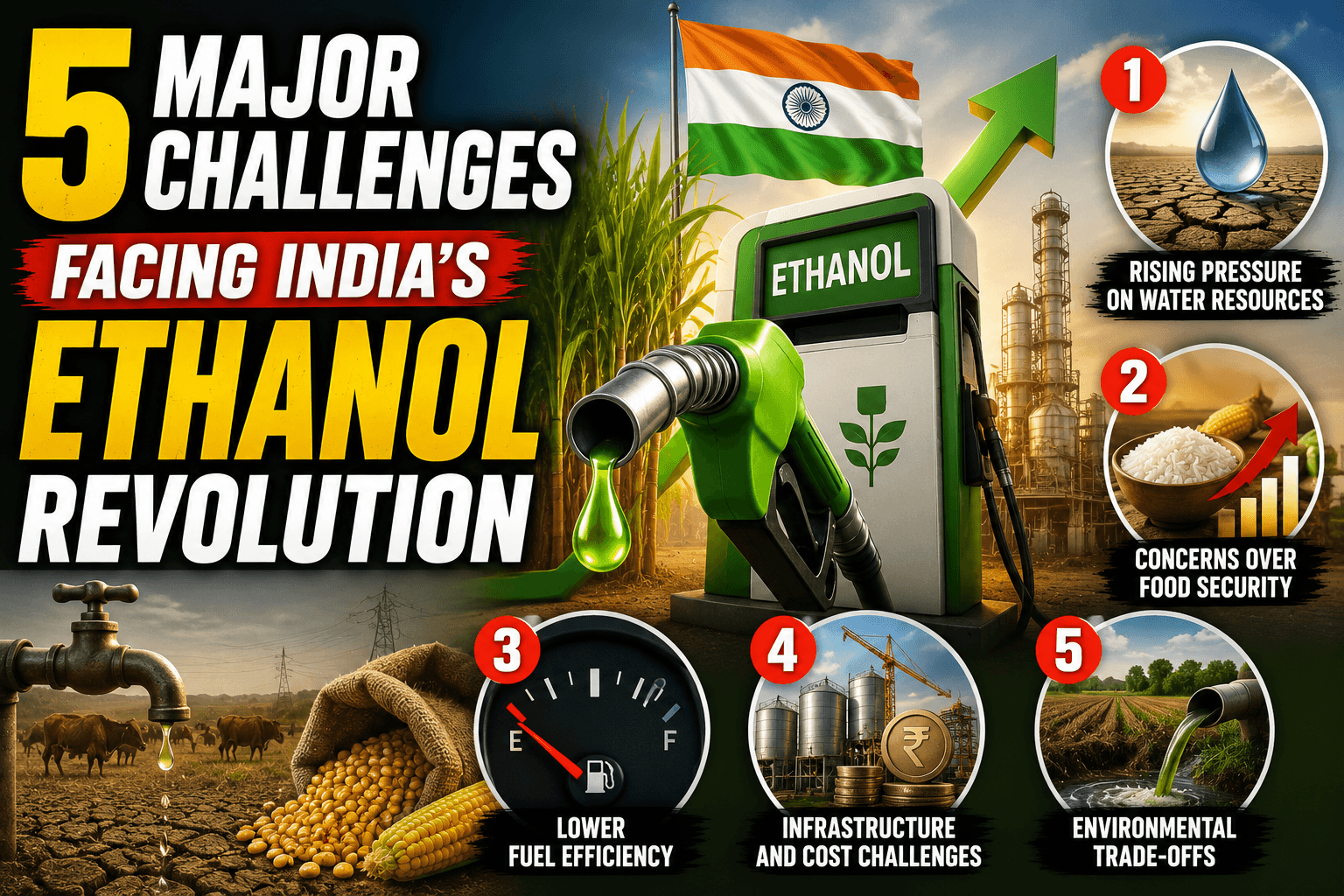
5 Major Challenges Facing India's Ethanol Revolution
India's ethanol blending program has been widely praised for helping reduce dependence on imported crude oil and supporting the country's transition toward cleaner energy. However, as ethanol production continues to expand, experts are increasingly highlighting several challenges that could impact the long-term sustainability of the initiative.
While ethanol offers environmental and economic benefits, concerns related to water usage, food security, and infrastructure continue to spark debate among policymakers, environmentalists, and industry experts.
1. Rising Pressure on Water Resources
One of the biggest concerns surrounding ethanol production is its heavy dependence on water-intensive crops such as sugarcane. Large-scale cultivation requires significant amounts of water, particularly in states that already face recurring water shortages.
Experts warn that increasing ethanol production without improving water management could place additional stress on India's groundwater reserves and agricultural resources.
2. Concerns Over Food Security
Ethanol is often produced from sugarcane, maize, and surplus grains. Critics argue that diverting food crops toward fuel production could affect food supplies and contribute to price increases, especially during years of poor harvests.
As India's population continues to grow, balancing food production with biofuel goals remains a key challenge.
3. Lower Fuel Efficiency
Although ethanol is considered a cleaner fuel, it contains less energy than conventional petrol. Vehicles running on higher ethanol blends may experience slightly lower fuel efficiency, potentially leading to increased fuel consumption over time.
Automobile manufacturers have been adapting engines to support higher ethanol blends, but concerns remain regarding performance in older vehicles.
4. Infrastructure and Cost Challenges
Expanding ethanol production requires substantial investment in processing plants, storage facilities, transportation networks, and blending infrastructure. These investments can increase operational costs and place financial pressure on both industry and government agencies.
Developing a nationwide supply chain capable of supporting higher blending targets remains a complex task.
5. Environmental Trade-Offs
While ethanol helps reduce carbon emissions from vehicles, its production can also have environmental consequences. Intensive farming practices may contribute to soil degradation, fertilizer runoff, and increased pressure on natural ecosystems.
Experts believe sustainable farming methods and diversified feedstocks will be essential to ensuring ethanol remains an environmentally responsible fuel alternative.
Balancing Growth and Sustainability
India's ethanol program has become a key part of the country's energy strategy, helping reduce oil imports and support rural economies. However, long-term success will depend on addressing challenges related to water conservation, agricultural sustainability, infrastructure development, and food security.
As India continues its push toward cleaner energy, policymakers will need to balance the benefits of ethanol with the environmental and economic realities that accompany rapid expansion.
Get More Informative News on Swaggbuzz