
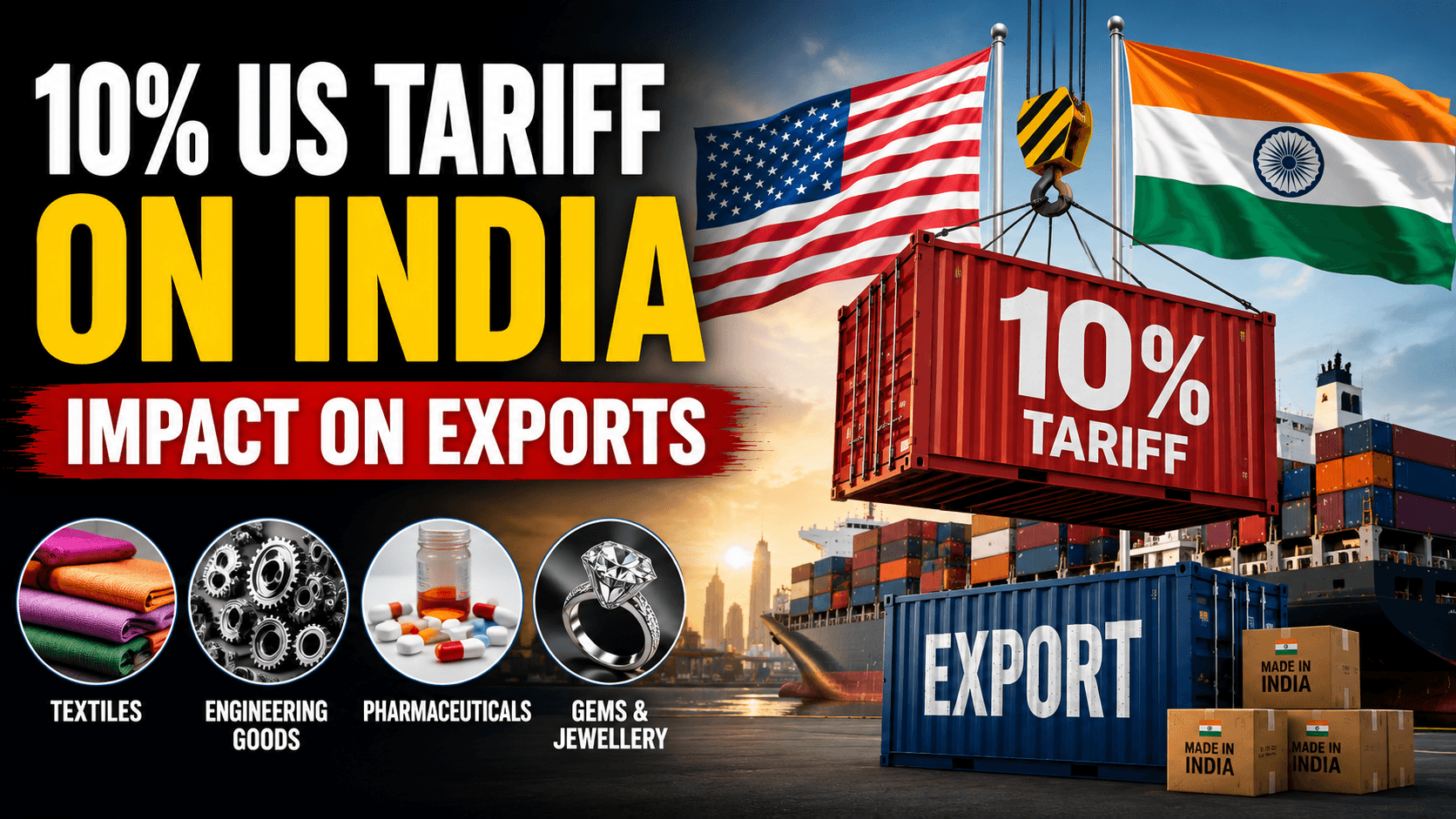
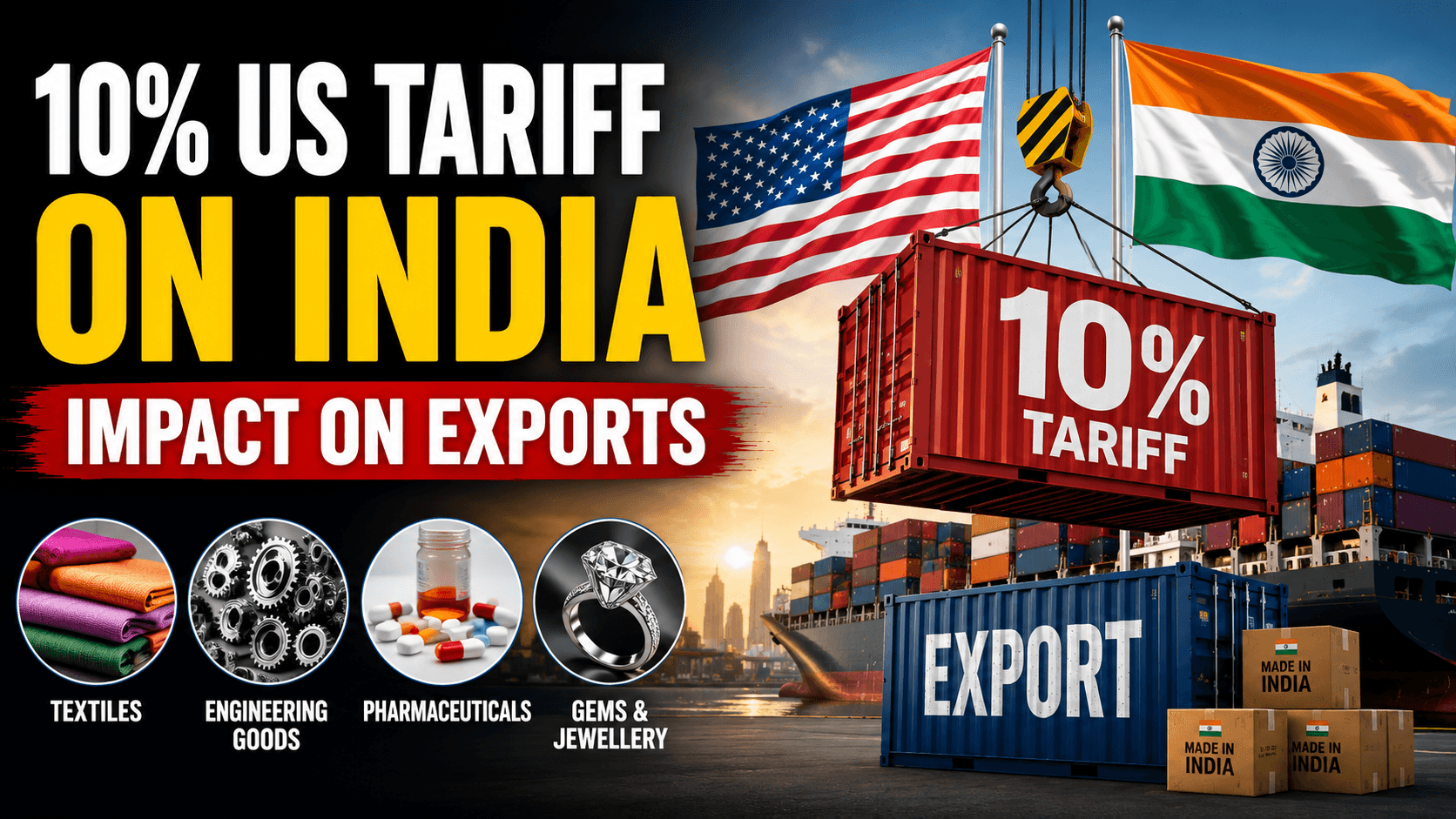
10% US Tariff on India: What It Means for the Country's Exports
The United States has imposed a 10% tariff on imports from India, mintroducing a new challenge for Indian exporters while reshaping trade dynamics between the world's two largest democracies.
Siddhaanth Raghav
New U.S. Trade Measure Could Reshape Export Strategies as Indian Businesses Assess the Impact
The United States has imposed a 10% tariff on imports from India, introducing a new challenge for Indian exporters while reshaping trade dynamics between the world's two largest democracies. The decision is part of a broader U.S. trade policy affecting dozens of trading partners and comes as global supply chains continue to adapt to shifting geopolitical and economic priorities.
For India, the United States is one of its largest export destinations, making any change in American trade policy significant for manufacturers, exporters, and businesses across multiple sectors. While trade experts believe the tariff may not severely disrupt India's export performance in the short term, it is expected to increase costs for several industries and encourage companies to rethink pricing, sourcing, and market strategies.
Why the United States Imposed the Tariff
The new tariff forms part of the U.S. administration's wider trade framework designed to strengthen domestic manufacturing and address concerns related to global supply chains.
Officials in Washington have argued that updated tariff measures are intended to promote fair trade practices, reduce dependence on vulnerable supply chains, and strengthen enforcement of trade regulations.
The policy applies to imports from multiple countries, with India now facing a 10% duty on a range of products entering the U.S. market.
Although the tariff introduces additional costs for exporters, analysts note that the rate is lower than some earlier projections, providing businesses with greater certainty for long-term planning.
Importance of the U.S. Market for India
The United States remains India's largest single-country export market, accounting for a significant share of merchandise exports each year.
Indian companies supply a wide range of products to American consumers and industries, including:
- Textiles and apparel
- Engineering goods
- Pharmaceuticals
- Gems and jewellery
- Chemicals
- Auto components
- Information technology-related products
- Agricultural products
Any increase in import duties can influence pricing, competitiveness, and purchasing decisions in one of India's most valuable overseas markets.
Which Sectors Could Be Most Affected?
While the exact impact will vary across industries, several export-oriented sectors may experience higher costs under the new tariff regime.
Textiles and Apparel
India's textile and garment exporters compete directly with manufacturers from countries such as Bangladesh, Vietnam, and China.
Additional tariffs could reduce price competitiveness for some Indian products unless exporters absorb part of the increased costs or improve operational efficiency.
Engineering Goods
Engineering exports—including machinery, industrial equipment, and manufactured components—could also experience pressure due to higher import costs in the U.S. market.
Companies may need to renegotiate contracts or diversify export destinations.
Gems and Jewellery
The gems and jewellery industry, which exports substantial quantities to the United States, may face slower demand if higher tariffs result in increased retail prices.
Luxury products are often more sensitive to price changes than essential goods.
Auto Components
Indian manufacturers supplying automobile parts to U.S. companies may experience increased pricing pressure as importers seek cost-effective alternatives.
However, long-term supplier relationships may help reduce the immediate impact.
Products That May Remain Less Affected
Trade experts note that not every Indian export will be equally impacted.
Certain categories, including selected energy products, fertilizers, food items, and strategically important industrial goods, remain outside the scope of the new tariff framework.
In addition, some Indian industries benefit from specialized products, long-term contracts, or limited global competition, reducing their exposure to tariff-related disruptions.
Impact on Indian Exporters
For exporters, the new tariff primarily translates into increased costs when selling goods in the U.S. market.
Businesses now face several possible options:
- Absorb part of the additional cost to remain competitive.
- Increase product prices in the U.S. market.
- Improve manufacturing efficiency to offset higher duties.
- Expand exports to alternative international markets.
- Diversify product portfolios to reduce dependence on a single market.
Large exporters with diversified operations may find it easier to adapt than smaller businesses with limited international exposure.
Economic Outlook
Economists generally believe the immediate macroeconomic impact on India is likely to remain manageable.
India's export basket has become increasingly diversified in recent years, while domestic consumption continues to serve as a major driver of economic growth.
Trade analysts also point out that global businesses continue to view India as an important manufacturing destination due to its large workforce, expanding industrial capacity, and ongoing infrastructure development.
As a result, many experts expect Indian exporters to adjust gradually rather than experience a sudden decline in overseas demand.
Trade Negotiations Could Shape the Future
The tariff decision may also influence ongoing trade discussions between India and the United States.
Both countries have expressed interest in expanding bilateral trade and strengthening economic cooperation across manufacturing, technology, defence, clean energy, and digital services.
Future negotiations could address tariff barriers, market access, and regulatory cooperation, potentially reducing trade friction over time.
Businesses will closely monitor diplomatic developments that may affect future export opportunities.
How Businesses Can Respond
Industry experts recommend several strategies for exporters adapting to the new trade environment.
Companies are expected to invest more heavily in:
- Supply chain optimization
- Automation and productivity improvements
- Product innovation
- Market diversification
- Value-added manufacturing
- Long-term customer partnerships
Improving competitiveness through quality, efficiency, and technology may help offset the impact of higher tariffs.
Looking Ahead
Although the new tariff presents challenges, India's export sector has demonstrated resilience during previous periods of global economic uncertainty.
Government support, expanding free trade agreements, improvements in logistics infrastructure, and growing manufacturing capabilities could help exporters navigate changing international trade conditions.
The coming months will reveal how businesses adjust their strategies and whether future trade negotiations lead to modifications in the current tariff structure.
Conclusion
The introduction of a 10% U.S. tariff on Indian imports marks an important development in bilateral trade relations. While exporters in sectors such as textiles, engineering goods, gems and jewellery, and auto components may face increased costs, economists believe the overall impact is likely to be manageable due to India's diversified export base and continued global demand for many of its products.
For Indian businesses, the focus will now shift toward improving efficiency, expanding into new markets, and adapting to evolving global trade conditions. As trade discussions between India and the United States continue, exporters will be watching closely for opportunities to strengthen competitiveness and maintain growth in one of their most important international markets.
Get More News on Swaggbuzz